What does Job 41:26 mean?
"The sword of him that layeth at him cannot hold: the spear, the dart, nor the habergeon." - Job 41:26
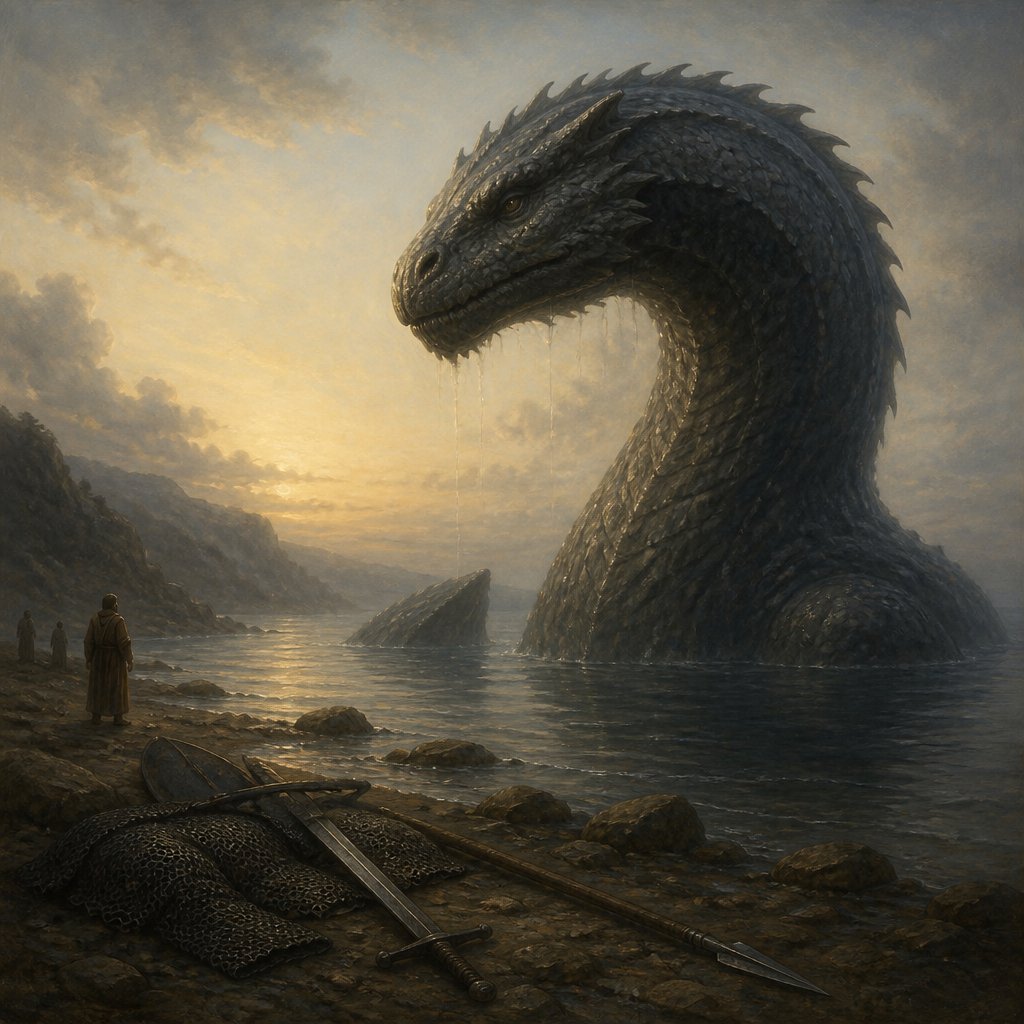
Job 41:26 (KJV) states, "The sword of him that layeth at him cannot hold: the spear, the dart, nor the habergeon." This verse is found in the book of Job, which is a part of the Old Testament. The book of Job is a complex and profound meditation on the problem of human suffering and the justice of God. It tells the story of a man named Job who experiences extreme hardship and suffering, yet remains faithful and steadfast in his belief in God.
In Job 41:26, the verse is part of a larger passage in which God is describing the leviathan, a mythical sea monster typically interpreted as a symbol of chaos and evil. The passage describes the leviathan as an unstoppable and powerful creature, and verse 26 specifically emphasizes its invincibility in battle, stating that no weapon wielded by a human can subdue it. This imagery serves to illustrate the overwhelming power and strength of the leviathan, emphasizing its superiority over human efforts to control or overcome it.
The theme of divine sovereignty and power is central to the book of Job, and this verse is no exception. In the larger context of the book, the suffering and struggles of Job are used to explore the limitations of human understanding and the incomprehensible nature of God's ways. The description of the leviathan in this passage serves as a reminder of God's unrivaled authority over all creation, including the most formidable and untamable forces of the natural world.
The language and imagery used in this verse also serve to emphasize the insignificance and futility of human strength and weaponry in the face of divine power. The mention of "the sword," "the spear," "the dart," and "the habergeon" highlights the various weapons and defenses commonly used in human warfare, all of which are ultimately ineffective against the leviathan. This serves as a powerful metaphor for the limits of human efforts to contend with the forces of chaos and evil in the world, highlighting the need for humility and reliance on God's strength and wisdom.
In addition to its thematic significance, this verse also contains rich symbolism that has been interpreted in various ways throughout the history of biblical interpretation. The leviathan has been understood as a symbol of primordial chaos, representing the wild and untamed forces of nature that are beyond human control. In some traditions, it has also been associated with the figure of Satan or the forces of evil, further reinforcing its significance as a representation of cosmic disorder and opposition to divine order.
Overall, Job 41:26 is a powerful and evocative verse that contributes to the larger themes and theological insights of the book of Job. Its vivid imagery and symbolic depth convey a profound message about the limits of human power and understanding in the face of divine sovereignty, while also emphasizing the need for humility and dependence on God's unfailing strength. As such, it continues to inspire reflection and interpretation among readers and scholars seeking to grapple with the profound mysteries of suffering, evil, and the nature of God.
Have questions about Job 41:26?
Dive deeper into this scripture with Bible Chat — an AI-powered tool for exploring God's Word through conversation. Ask questions, get context, and grow in your understanding of the Bible.
Get Our Apps


Job 41:26 Artwork

Job 41:26 - "The sword of him that layeth at him cannot hold: the spear, the dart, nor the habergeon."

"The sword of him that layeth at him cannot hold: the spear, the dart, nor the habergeon." - Job 41:26

Matthew 26:41

Job 26:1 - "But Job answered and said,"

Job 41:22 - "In his neck remaineth strength, and sorrow is turned into joy before him."

Job 41:17 - "They are joined one to another, they stick together, that they cannot be sundered."

Job 41:29 - "Darts are counted as stubble: he laugheth at the shaking of a spear."

Job 41:27 - "He esteemeth iron as straw, and brass as rotten wood."

Job 41:33 - "Upon earth there is not his like, who is made without fear."

Job 41:8 - "Lay thine hand upon him, remember the battle, do no more."

Job 41:23 - "The flakes of his flesh are joined together: they are firm in themselves; they cannot be moved."

Job 41:16 - "One is so near to another, that no air can come between them."

Job 41:24 - "His heart is as firm as a stone; yea, as hard as a piece of the nether millstone."

Job 41:15 - "His scales are his pride, shut up together as with a close seal."

Job 41:28 - "The arrow cannot make him flee: slingstones are turned with him into stubble."

Job 41:21 - "His breath kindleth coals, and a flame goeth out of his mouth."

Job 41:4 - "Will he make a covenant with thee? wilt thou take him for a servant for ever?"

Job 41:18 - "By his neesings a light doth shine, and his eyes are like the eyelids of the morning."

Job 41:19 - "Out of his mouth go burning lamps, and sparks of fire leap out."

Job 41:6 - "Shall the companions make a banquet of him? shall they part him among the merchants?"

Matthew 26:41 - "Watch and pray, that ye enter not into temptation: the spirit indeed is willing, but the flesh is weak."

"But Job answered and said," - Job 26:1

Job 41:9 - "Behold, the hope of him is in vain: shall not one be cast down even at the sight of him?"

Job 41:5 - "Wilt thou play with him as with a bird? or wilt thou bind him for thy maidens?"

Job 41:25 - "When he raiseth up himself, the mighty are afraid: by reason of breakings they purify themselves."

Job 41:32 - "He maketh a path to shine after him; one would think the deep to be hoary."

Job 41:12 - "I will not conceal his parts, nor his power, nor his comely proportion."

Job 41:14 - "Who can open the doors of his face? his teeth are terrible round about."

Job 41:34 - "He beholdeth all high things: he is a king over all the children of pride."

Job 41:2 - "Canst thou put an hook into his nose? or bore his jaw through with a thorn?"