What does Job 36:17 mean?
"But thou hast fulfilled the judgment of the wicked: judgment and justice take hold on thee." - Job 36:17
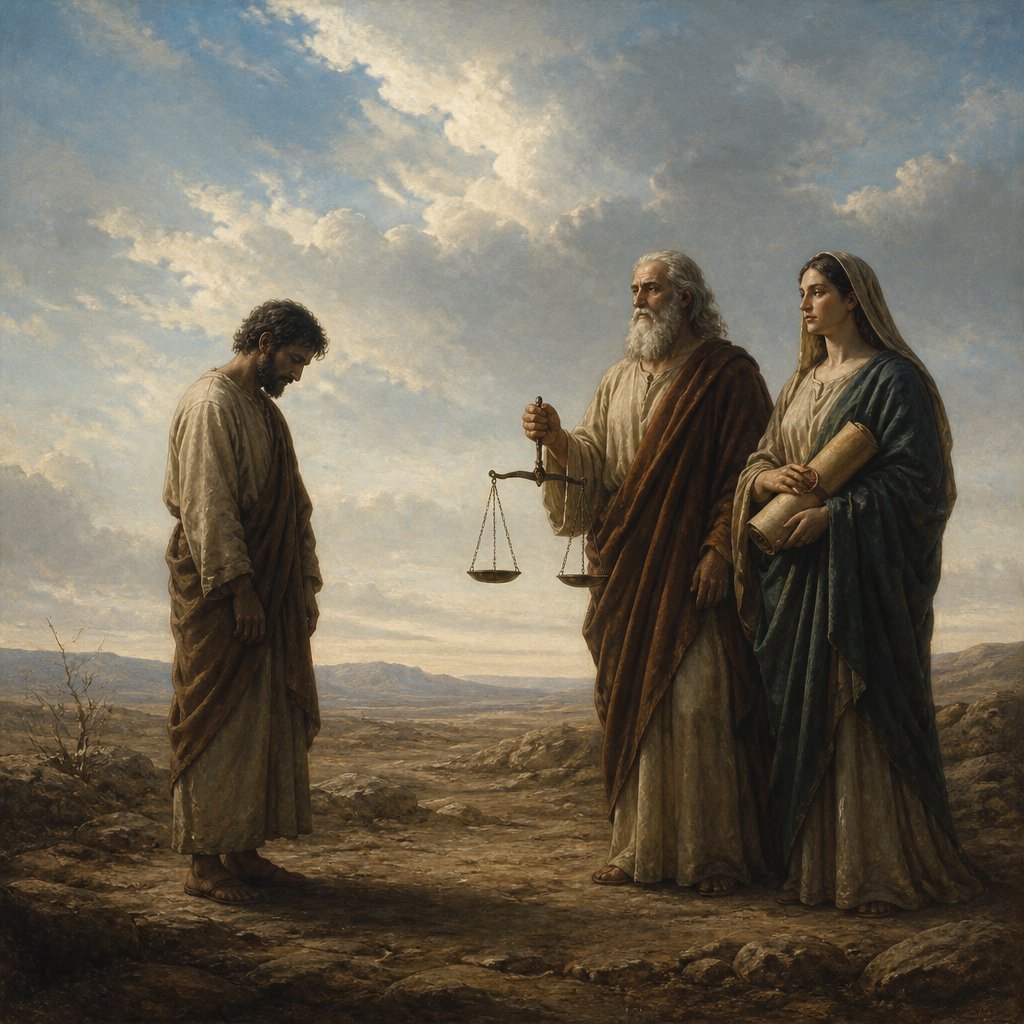
Job 36:17(KJV) states, "But thou hast fulfilled the judgment of the wicked: judgment and justice take hold on thee."
This verse comes from the Book of Job, which is a part of the Old Testament. The Book of Job is a complex and profound exploration of suffering, faith, and the nature of God. The verse in question is spoken by Elihu, one of Job's friends who attempts to provide wisdom and insight into Job's suffering.
The context of this verse is important to understand its meaning. Job is a righteous man who experiences unimaginable suffering. He loses his wealth, his children, and his health. Throughout the book, Job questions why a just and loving God would allow him to endure such anguish. His friends, including Elihu, attempt to provide explanations for his suffering, but their words often fall short of providing true comfort or understanding.
In this particular verse, Elihu is speaking to Job about the nature of God's justice. He is essentially telling Job that God's justice will prevail, even in the face of the wickedness that Job has experienced. The phrase "fulfilled the judgment of the wicked" suggests that Job has been subjected to the punishment that is typically reserved for the wicked, despite his own righteousness. This can be a difficult concept to accept, as it seems to conflict with traditional ideas of divine justice.
Elihu then speaks about "judgment and justice take hold on thee," implying that God's judgment and justice are actively seizing Job. This could be interpreted as a warning to Job that he should be mindful of his own actions and consider his own righteousness in the face of God's justice.
This verse raises important themes that are central to the Book of Job and to the broader biblical narrative. It raises questions about the nature of suffering, the justice of God, and the limits of human understanding. The idea that the righteous may suffer as if they were wicked challenges common assumptions about divine justice and the relationship between virtue and prosperity.
This verse also speaks to the broader theme of the sovereignty of God. Throughout the Book of Job, the characters grapple with the question of whether God is just and whether his actions can be understood by human beings. The verse may be seen as an assertion that God's judgments are inscrutable and that his justice will ultimately prevail, regardless of human perceptions and experiences of suffering.
Symbolically, this verse can be seen as a reminder of the mysterious and sometimes unfathomable ways of God. It challenges the reader to consider the limitations of human understanding and to trust in the ultimate justice of a higher power. The image of "judgment and justice taking hold" suggests a forceful and decisive action on the part of God, reinforcing the idea of his sovereignty and power.
In conclusion, Job 36:17(KJV) is a verse that contains rich and complex theological themes. It addresses the nature of suffering, the justice of God, and the limits of human understanding. Through the voice of Elihu, the verse challenges the reader to consider the mysterious ways of God and to trust in his ultimate justice, even in the face of suffering and hardship. It reminds us of the sovereignty of God and the need to approach the complexities of life with humility and faith.
Have questions about Job 36:17?
Dive deeper into this scripture with Bible Chat — an AI-powered tool for exploring God's Word through conversation. Ask questions, get context, and grow in your understanding of the Bible.
Get Our Apps


Job 36:17 Artwork

Job 36:17 - "But thou hast fulfilled the judgment of the wicked: judgment and justice take hold on thee."
"But thou hast fulfilled the judgment of the wicked: judgment and justice take hold on thee." - Job 36:17

Job 38:36

Job 38:36

Job 38:36

Job 38:36

Job 34:36 - "My desire is that Job may be tried unto the end because of his answers for wicked men."

Job 36:1 - "Elihu also proceeded, and said,"

Job 36:14 - "They die in youth, and their life is among the unclean."

Job 36:8 - "And if they be bound in fetters, and be holden in cords of affliction;"

Job 36:6 - "He preserveth not the life of the wicked: but giveth right to the poor."

Job 36:20 - "Desire not the night, when people are cut off in their place."

Job 36:9 - "Then he sheweth them their work, and their transgressions that they have exceeded."

Job 36:15 - "He delivereth the poor in his affliction, and openeth their ears in oppression."

Job 36:24 - "Remember that thou magnify his work, which men behold."

Job 36:12 - "But if they obey not, they shall perish by the sword, and they shall die without knowledge."

Job 36:28 - "Which the clouds do drop and distil upon man abundantly."

Job 36:33 - "The noise thereof sheweth concerning it, the cattle also concerning the vapour."

Job 36:31 - "For by them judgeth he the people; he giveth meat in abundance."

Job 36:32 - "With clouds he covereth the light; and commandeth it not to shine by the cloud that cometh betwixt."

Job 36:29 - "Also can any understand the spreadings of the clouds, or the noise of his tabernacle?"

Job 36:11 - "If they obey and serve him, they shall spend their days in prosperity, and their years in pleasures."

Job 36:25 - "Every man may see it; man may behold it afar off."

Job 36:10 - "He openeth also their ear to discipline, and commandeth that they return from iniquity."

Job 36:19 - "Will he esteem thy riches? no, not gold, nor all the forces of strength."

Job 36:30 - "Behold, he spreadeth his light upon it, and covereth the bottom of the sea."

Job 36:4 - "For truly my words shall not be false: he that is perfect in knowledge is with thee."

Job 36:5 - "Behold, God is mighty, and despiseth not any: he is mighty in strength and wisdom."

Job 36:22 - "Behold, God exalteth by his power: who teacheth like him?"

"Elihu also proceeded, and said," - Job 36:1