What does Job 30:4 mean?
"Who cut up mallows by the bushes, and juniper roots for their meat." - Job 30:4
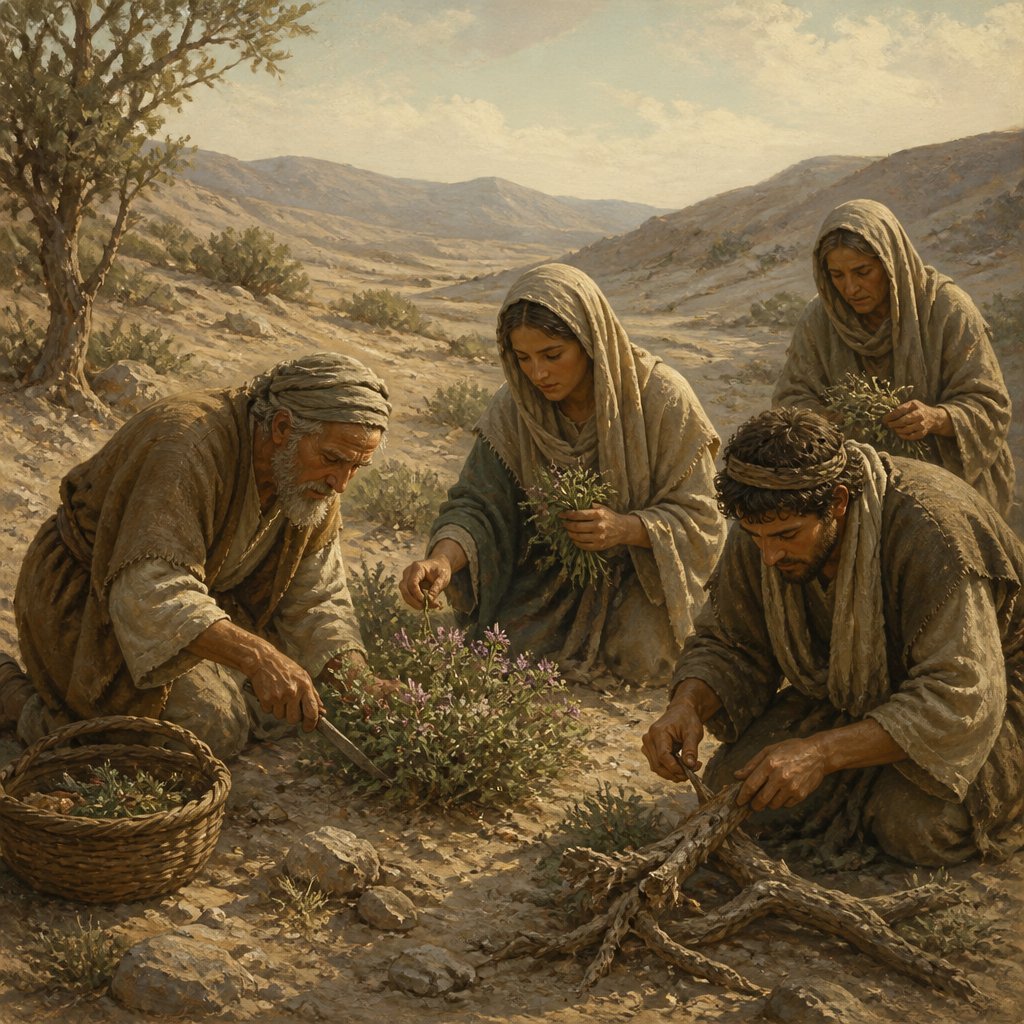
Job 30:4 (KJV) states, "Who cut up mallows by the bushes, and juniper roots for their meat." This verse is part of a larger passage in the book of Job, which is a profound and complex exploration of suffering, faith, and the nature of God.
In the context of the book of Job, this verse comes from a section where Job is lamenting his current state of suffering. Job was a righteous man who experienced immense loss, including the death of his children and the destruction of his possessions. He also suffered from painful sores covering his body. As he endured these trials, Job's friends came to comfort him, but they ended up engaging in theological and philosophical debates about the nature of suffering and the justice of God. Throughout the book, Job expresses his righteous indignation, questions God's justice, and ultimately seeks understanding in the midst of his suffering.
The specific verse, Job 30:4, refers to the degrading tasks that Job is forced to perform in his suffering. The mention of cutting up mallows and eating juniper roots reflects a state of extreme poverty and desperation. Mallow plants are known for their high nutritional value, and juniper roots would have been a last-resort food source for someone in a dire situation. These actions demonstrate Job's drastic change in circumstances, as he has gone from being a prosperous and respected man to experiencing the lowest form of degradation and suffering.
One of the key themes of the book of Job is the problem of human suffering and the question of why the righteous suffer. Job's story challenges the traditional understanding of divine reward and punishment, as he insists on his own righteousness even in the face of overwhelming adversity. The book explores the tension between human understanding and the mysteries of God's ways, ultimately pointing to the need for humility and trust in the divine plan, even when it seems incomprehensible.
The verse also serves as a symbolic representation of the depths of Job's suffering. The act of cutting up mallow by the bushes and eating juniper roots speaks to Job's extreme physical and emotional pain. It showcases the degradation and humiliation that he experiences, as he is reduced to foraging for food in the wilderness, a stark contrast to his previous life of wealth and comfort.
The mention of mallows and juniper roots can also be seen as a metaphor for spiritual nourishment and sustenance. Despite his physical suffering and desperation, Job's spiritual resilience and faith are evident throughout the book. His relentless pursuit of understanding and justice in the midst of his suffering reflects a profound and unwavering faith in God, despite his doubts and questioning.
In addition to its immediate context within the book of Job, this verse can also be viewed from a broader theological perspective. It speaks to the universal human experience of suffering and the search for meaning in the face of trials and tribulations. Job's story resonates with readers across cultures and times, as it grapples with timeless questions about the nature of God, the problem of evil, and the human struggle for understanding and faith in the midst of suffering.
In conclusion, Job 30:4 is a poignant and powerful verse that captures the depth of Job's suffering and his resilient faith in the face of unimaginable hardships. It symbolizes the stark contrast between his previous prosperity and his current state of degradation, as well as his unwavering spiritual strength in the midst of despair. The verse's inclusion in the book of Job serves to inspire contemplation and reflection on the enduring human quest for meaning and faith in the midst of suffering.
Have questions about Job 30:4?
Dive deeper into this scripture with Bible Chat — an AI-powered tool for exploring God's Word through conversation. Ask questions, get context, and grow in your understanding of the Bible.
Get Our Apps


Job 30:4 Artwork

Job 30:4 - "Who cut up mallows by the bushes, and juniper roots for their meat."
"Who cut up mallows by the bushes, and juniper roots for their meat." - Job 30:4

Job 30:30 - "My skin is black upon me, and my bones are burned with heat."

Job 30:28

Job 30:28

Job 30:28

Job 30:28

Job 30:28

Job 34:30 - "That the hypocrite reign not, lest the people be ensnared."

Job 30:6 - "To dwell in the clifts of the valleys, in caves of the earth, and in the rocks."

Job 38:30 - "The waters are hid as with a stone, and the face of the deep is frozen."

Job 30:29 - "I am a brother to dragons, and a companion to owls."

Job 30:9 - "And now am I their song, yea, I am their byword."

Job 30:27 - "My bowels boiled, and rested not: the days of affliction prevented me."

Job 30:7 - "Among the bushes they brayed; under the nettles they were gathered together."

"My skin is black upon me, and my bones are burned with heat." - Job 30:30

Job 22:30 - "He shall deliver the island of the innocent: and it is delivered by the pureness of thine hands."

Job 6:30 - "Is there iniquity in my tongue? cannot my taste discern perverse things?"

Job 30:25 - "Did not I weep for him that was in trouble? was not my soul grieved for the poor?"

Job 33:30 - "To bring back his soul from the pit, to be enlightened with the light of the living."

Job 30:13 - "They mar my path, they set forward my calamity, they have no helper."

Job 36:30 - "Behold, he spreadeth his light upon it, and covereth the bottom of the sea."

Job 21:30 - "That the wicked is reserved to the day of destruction? they shall be brought forth to the day of wrath."

Job 30:3 - "For want and famine they were solitary; fleeing into the wilderness in former time desolate and waste."

Acts 4:30

Acts 4:30

Job 30:31 - "My harp also is turned to mourning, and my organ into the voice of them that weep."

Job 30:17 - "My bones are pierced in me in the night season: and my sinews take no rest."

Job 30:10 - "They abhor me, they flee far from me, and spare not to spit in my face."

Acts 4:30