What does Job 29:25 mean?
"I chose out their way, and sat chief, and dwelt as a king in the army, as one that comforteth the mourners." - Job 29:25
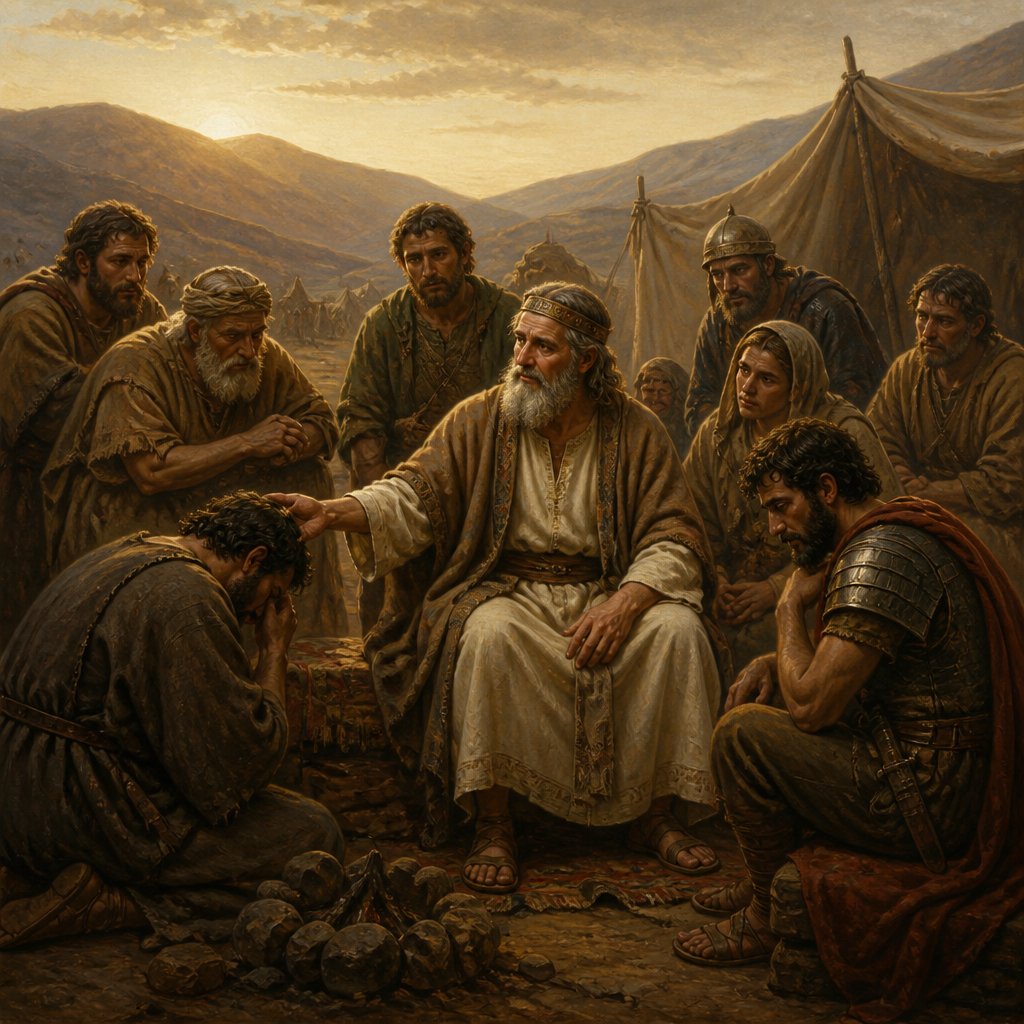
Job 29:25 (KJV) states, "I chose out their way, and sat chief, and dwelt as a king in the army, as one that comforteth the mourners." This verse comes from the book of Job in the Old Testament, and it is part of a larger passage in which Job reminisces about his former life and longs for the days when he was honored and respected by those around him.
In this verse, Job reflects on a time when he was held in high regard by his community. He mentions that he chose the way for others and sat as a chief, indicating his leadership role and influence. Job also compares himself to a king in the army who provides comfort to those who are grieving. These words convey a sense of power, authority, and benevolence.
The overarching theme of this verse is the contrast between Job's former glory and his current suffering. Job laments the loss of his status and the respect that he once held in his community. His recollections of better days emphasize the despair he feels in his present circumstances. This verse also touches on the idea of comfort and kindness, as Job longs for the ability to bring solace to those who are mourning.
The context of this verse is crucial to understanding its significance. In the preceding chapters of the book of Job, we learn about the extreme suffering and hardship that Job has endured. Despite being a righteous and blameless man, he has been stripped of his wealth, his health, and his loved ones, all as part of a test orchestrated by Satan and permitted by God. Job's friends visit him and offer various explanations for his suffering, but Job maintains his innocence and struggles to understand why he is being punished.
Given this context, Job 29:25 can be seen as a poignant expression of Job's yearning for the comfort and power he once possessed. It serves as a reminder of the drastic change in his circumstances and the loss of the respect and influence he once held. The verse also highlights Job's desire to bring solace to others, even as he himself is in the depths of despair.
Symbolism plays a significant role in this verse, as it underscores the themes of power, leadership, and compassion. Job's words evoke images of a king leading his army and providing comfort to the mourning, symbolizing his former position of authority and his innate compassion for others. The contrast between Job's past and present circumstances is symbolized by the image of a once-respected leader who now longs for the days when he was honored and revered.
In summary, Job 29:25 (KJV) captures Job's nostalgia for his former glory and his longing for the ability to bring comfort to others. It illuminates the profound suffering and sense of loss that Job experiences, while also highlighting his enduring compassion and desire to serve others. This verse serves as a poignant reflection on the complexities of human suffering, resilience, and the enduring pursuit of kindness and leadership, even in the face of overwhelming adversity.
Have questions about Job 29:25?
Dive deeper into this scripture with Bible Chat — an AI-powered tool for exploring God's Word through conversation. Ask questions, get context, and grow in your understanding of the Bible.
Get Our Apps


Job 29:25 Artwork

Job 29:25 - "I chose out their way, and sat chief, and dwelt as a king in the army, as one that comforteth the mourners."
"I chose out their way, and sat chief, and dwelt as a king in the army, as one that comforteth the mourners." - Job 29:25

Job 29:1 - "Moreover Job continued his parable, and said,"

Proverb 29:25

Proverb 29:25

Proverb 29:25

"Moreover Job continued his parable, and said," - Job 29:1

Job 39:13-25

Job 9:29 - "If I be wicked, why then labour I in vain?"

Job 29:15 - "I was eyes to the blind, and feet was I to the lame."

Job 30:29 - "I am a brother to dragons, and a companion to owls."

Job 29:9 - "The princes refrained talking, and laid their hand on their mouth."

Job 41:29 - "Darts are counted as stubble: he laugheth at the shaking of a spear."

Job 25:1 - "Then answered Bildad the Shuhite, and said,"

Job 33:29 - "Lo, all these things worketh God oftentimes with man,"

Job 29:10 - "The nobles held their peace, and their tongue cleaved to the roof of their mouth."

Job 29:23 - "And they waited for me as for the rain; and they opened their mouth wide as for the latter rain."

Job 29:14 - "I put on righteousness, and it clothed me: my judgment was as a robe and a diadem."

Job 36:29 - "Also can any understand the spreadings of the clouds, or the noise of his tabernacle?"

Job 29:20 - "My glory was fresh in me, and my bow was renewed in my hand."

Job 29:17 - "And I brake the jaws of the wicked, and plucked the spoil out of his teeth."

Job 29:24 - "If I laughed on them, they believed it not; and the light of my countenance they cast not down."

Job 29:4 - "As I was in the days of my youth, when the secret of God was upon my tabernacle;"

Job 29:5 - "When the Almighty was yet with me, when my children were about me;"

Job 21:29 - "Have ye not asked them that go by the way? and do ye not know their tokens,"

Job 29:8 - "The young men saw me, and hid themselves: and the aged arose, and stood up."

Job 28:25 - "To make the weight for the winds; and he weigheth the waters by measure."

Genesis 25:29 - "And Jacob sod pottage: and Esau came from the field, and he was faint:"

Job 29:16 - "I was a father to the poor: and the cause which I knew not I searched out."

Job 20:29 - "This is the portion of a wicked man from God, and the heritage appointed unto him by God."