What does Job 29:23 mean?
"And they waited for me as for the rain; and they opened their mouth wide as for the latter rain." - Job 29:23
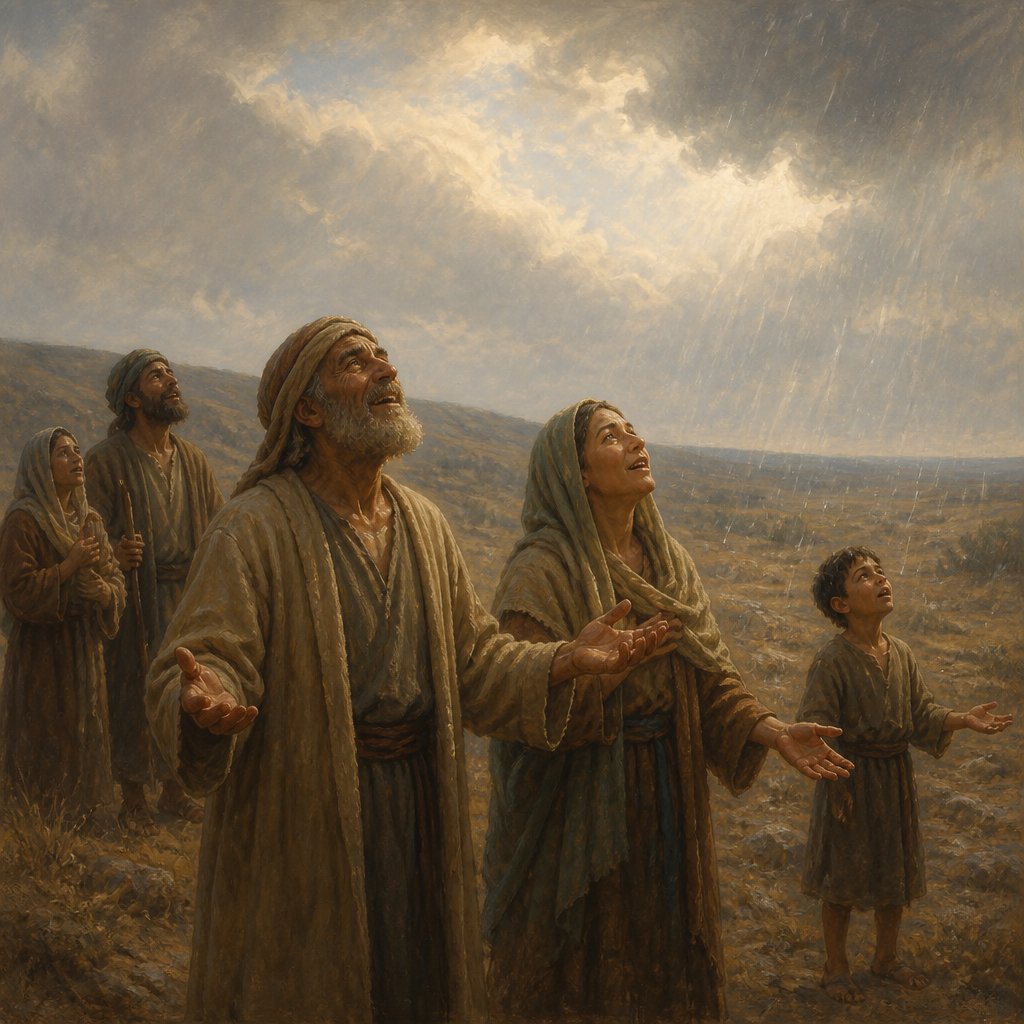
Job 29:23 in the King James Version of the Bible says, "And they waited for me as for the rain; and they opened their mouth wide as for the latter rain." This verse is found in the Book of Job, which is a poetic exploration of human suffering and the nature of faith.
In Job 29, the titular character reflects on his former wealth, power, and influence. He describes his former days of prosperity and success, remembering a time when he was esteemed and respected by others. In verse 23, Job describes how people would eagerly await his arrival and open their mouths wide in anticipation, just as they would for the rain, particularly the latter rain.
The imagery of rain and the anticipation of its arrival is significant in this verse. In an agrarian society like ancient Israel, rain was essential for the success of crops and the well-being of the community. The latter rain, in particular, refers to the final rains that come in the late spring, just before the harvest. These rains were crucial for ensuring a bountiful harvest, and their arrival was eagerly anticipated by farmers.
When Job compares the eager anticipation of his presence to the waiting for rain, it illustrates the high regard in which he was held by others in his community. People looked to him for guidance, wisdom, and leadership, just as they relied on the rain for the sustenance of their crops. The imagery of opening their mouths wide conveys the intensity of their longing and their dependence on Job's wisdom and counsel.
The theme of respect and honor is central to this verse. Job is recalling a time when he was held in high esteem, and his words carried weight and authority. This stands in stark contrast to his current situation, where he has suffered tremendous loss and is now being questioned and condemned by his friends. The verse serves as a poignant reminder of Job's former glory and the stark contrast with his current suffering.
Symbolically, the rain and its arrival can also be seen as a metaphor for God's blessings and grace. In the Bible, rain is often used as a symbol of God's provision and abundance. The latter rain, in particular, can symbolize the outpouring of God's blessings and the fulfillment of His promises. By comparing the anticipation of his presence to the waiting for rain, Job may be expressing the idea that his words and actions were seen as sources of wisdom and blessing, much like the rain that brings life and sustenance.
The verse also speaks to the universal human desire for recognition and influence. Job's reflection on his former status resonates with anyone who has experienced a decline in their standing or influence. It captures the longing for respect, honor, and the feeling of being valued and appreciated by others. This longing for significance is a deeply human experience, and Job's words reflect the universal desire for recognition and validation.
In conclusion, Job 29:23 is a poignant verse that captures the longing for respect and influence, as well as the symbolism of rain as a source of blessing and provision. It speaks to the universal human desire for recognition and authority, as well as the contrast between former glory and present suffering. The verse also points to the broader theme of God's provision and grace, using the imagery of rain to symbolize His abundant blessings. In its rich symbolism and evocative imagery, Job 29:23 offers a powerful reflection on the nature of honor, influence, and the longing for God's provision.
Have questions about Job 29:23?
Dive deeper into this scripture with Bible Chat — an AI-powered tool for exploring God's Word through conversation. Ask questions, get context, and grow in your understanding of the Bible.
Get Our Apps


Job 29:23 Artwork

Job 29:23 - "And they waited for me as for the rain; and they opened their mouth wide as for the latter rain."
"And they waited for me as for the rain; and they opened their mouth wide as for the latter rain." - Job 29:23

Job 29:1 - "Moreover Job continued his parable, and said,"

Job 23:1 - "Then Job answered and said,"

"Then Job answered and said," - Job 23:1

"Moreover Job continued his parable, and said," - Job 29:1

Job 9:29 - "If I be wicked, why then labour I in vain?"

John 14:23-29

Job 29:15 - "I was eyes to the blind, and feet was I to the lame."

Job 30:29 - "I am a brother to dragons, and a companion to owls."

Job 29:9 - "The princes refrained talking, and laid their hand on their mouth."

John 14:23-29

Job 41:29 - "Darts are counted as stubble: he laugheth at the shaking of a spear."

John 14:23-29

Exodus 23:28-29

Job 29:10 - "The nobles held their peace, and their tongue cleaved to the roof of their mouth."

Job 33:29 - "Lo, all these things worketh God oftentimes with man,"

Job 29:14 - "I put on righteousness, and it clothed me: my judgment was as a robe and a diadem."

Job 36:29 - "Also can any understand the spreadings of the clouds, or the noise of his tabernacle?"

Job 29:20 - "My glory was fresh in me, and my bow was renewed in my hand."

Job 29:24 - "If I laughed on them, they believed it not; and the light of my countenance they cast not down."

Job 29:17 - "And I brake the jaws of the wicked, and plucked the spoil out of his teeth."

Job 29:4 - "As I was in the days of my youth, when the secret of God was upon my tabernacle;"

Job 29:5 - "When the Almighty was yet with me, when my children were about me;"

Job 21:29 - "Have ye not asked them that go by the way? and do ye not know their tokens,"

Job 29:8 - "The young men saw me, and hid themselves: and the aged arose, and stood up."

Job 20:29 - "This is the portion of a wicked man from God, and the heritage appointed unto him by God."

Job 29:16 - "I was a father to the poor: and the cause which I knew not I searched out."

Job 39:29 - "From thence she seeketh the prey, and her eyes behold afar off."

Job 29:2 - "Oh that I were as in months past, as in the days when God preserved me;"