What does Job 29:10 mean?
"The nobles held their peace, and their tongue cleaved to the roof of their mouth." - Job 29:10
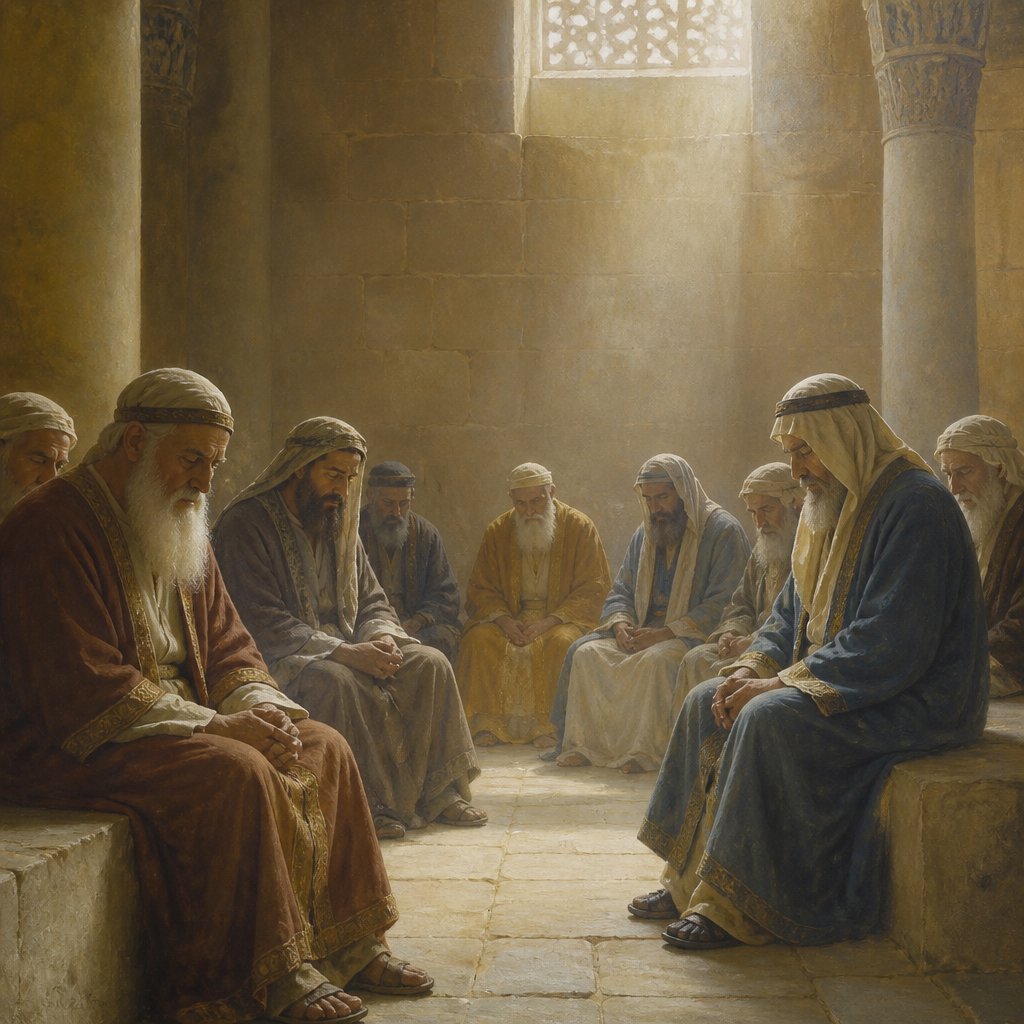
Job 29:10 (KJV) states, "The nobles held their peace, and their tongue cleaved to the roof of their mouth." This verse is part of a chapter in the book of Job, which is in the Old Testament. Job is a righteous man who faces severe trials and suffering. This particular verse is found in a section where Job reflects on his former life of prosperity and honor.
The verse paints a picture of a time when Job, as a noble and respected member of society, was able to command silence and respect from those around him. The phrase "their tongue cleaved to the roof of their mouth" indicates that the nobles were struck with awe or fear, rendering them speechless in the presence of Job.
In understanding the deeper meaning and context of this verse, it is important to consider the broader themes and symbolism within the book of Job.
First and foremost, Job is a story of human suffering and the search for meaning in the face of adversity. Job's experiences of loss, pain, and questioning are deeply relatable to many people, making the book a source of comfort and reflection for readers throughout history.
Additionally, the book of Job touches on the themes of justice, faith, and the nature of God. It grapples with the complexities of the human experience and the often-unexplainable ways of the divine.
In the specific context of Job 29:10, the verse serves to highlight the reversal of Job's fortunes. He once held a position of great honor and authority, where even the nobles respected and honored him. However, as the story progresses, Job's circumstances change drastically, and he finds himself in a state of suffering and despair.
The imagery of the nobles holding their peace and being struck silent also symbolizes the loss of Job's former status and influence. It emphasizes the contrast between Job's previous position of power and the isolation and loneliness he experiences in his current state. It serves to illustrate the fleeting nature of worldly success and the unpredictable turns of life.
Furthermore, the verse can be interpreted as a commentary on the theme of the fragility of human pride and the limitations of human understanding. As Job reflects on his past, he comes to realize the ephemeral nature of human glory, as well as the transient nature of human relationships and honor.
In a broader theological sense, Job 29:10 can also be seen as a reminder of the sovereignty of God. Despite Job's suffering and the uncertainty of his circumstances, the verse underscores the power and authority of God over all aspects of life, including the rise and fall of human fortunes.
Overall, Job 29:10 conveys a profound message about the impermanence of worldly success and the limitations of human understanding. It serves as a reminder of the complexities of human experience and the need for humility and reliance on God in the face of life's adversities. As a part of the book of Job, it contributes to the rich tapestry of themes and symbolism that make this biblical text a timeless source of wisdom and reflection.
Have questions about Job 29:10?
Dive deeper into this scripture with Bible Chat — an AI-powered tool for exploring God's Word through conversation. Ask questions, get context, and grow in your understanding of the Bible.
Get Our Apps


Job 29:10 Artwork

Job 29:10 - "The nobles held their peace, and their tongue cleaved to the roof of their mouth."
"The nobles held their peace, and their tongue cleaved to the roof of their mouth." - Job 29:10

Job 29:1 - "Moreover Job continued his parable, and said,"

"Moreover Job continued his parable, and said," - Job 29:1

Job 9:29 - "If I be wicked, why then labour I in vain?"

Job 29:15 - "I was eyes to the blind, and feet was I to the lame."

Job 30:29 - "I am a brother to dragons, and a companion to owls."

Job 29:9 - "The princes refrained talking, and laid their hand on their mouth."

Job 41:29 - "Darts are counted as stubble: he laugheth at the shaking of a spear."

Job 33:29 - "Lo, all these things worketh God oftentimes with man,"

Job 29:23 - "And they waited for me as for the rain; and they opened their mouth wide as for the latter rain."

Job 29:14 - "I put on righteousness, and it clothed me: my judgment was as a robe and a diadem."

Job 36:29 - "Also can any understand the spreadings of the clouds, or the noise of his tabernacle?"

Job 29:20 - "My glory was fresh in me, and my bow was renewed in my hand."

Job 29:24 - "If I laughed on them, they believed it not; and the light of my countenance they cast not down."

Job 29:17 - "And I brake the jaws of the wicked, and plucked the spoil out of his teeth."

Job 29:4 - "As I was in the days of my youth, when the secret of God was upon my tabernacle;"

Job 29:5 - "When the Almighty was yet with me, when my children were about me;"

Job 21:29 - "Have ye not asked them that go by the way? and do ye not know their tokens,"

Job 29:8 - "The young men saw me, and hid themselves: and the aged arose, and stood up."

Job 20:29 - "This is the portion of a wicked man from God, and the heritage appointed unto him by God."

Job 29:16 - "I was a father to the poor: and the cause which I knew not I searched out."

Job 39:29 - "From thence she seeketh the prey, and her eyes behold afar off."

Job 29:2 - "Oh that I were as in months past, as in the days when God preserved me;"

Job 29:21 - "Unto me men gave ear, and waited, and kept silence at my counsel."

Job 29:22 - "After my words they spake not again; and my speech dropped upon them."

Job 29:13 - "The blessing of him that was ready to perish came upon me: and I caused the widow's heart to sing for joy."

Job 38:29 - "Out of whose womb came the ice? and the hoary frost of heaven, who hath gendered it?"

Job 29:12 - "Because I delivered the poor that cried, and the fatherless, and him that had none to help him."

Job 6:29 - "Return, I pray you, let it not be iniquity; yea, return again, my righteousness is in it."