What does Job 25:6 mean?
"How much less man, that is a worm? and the son of man, which is a worm?" - Job 25:6
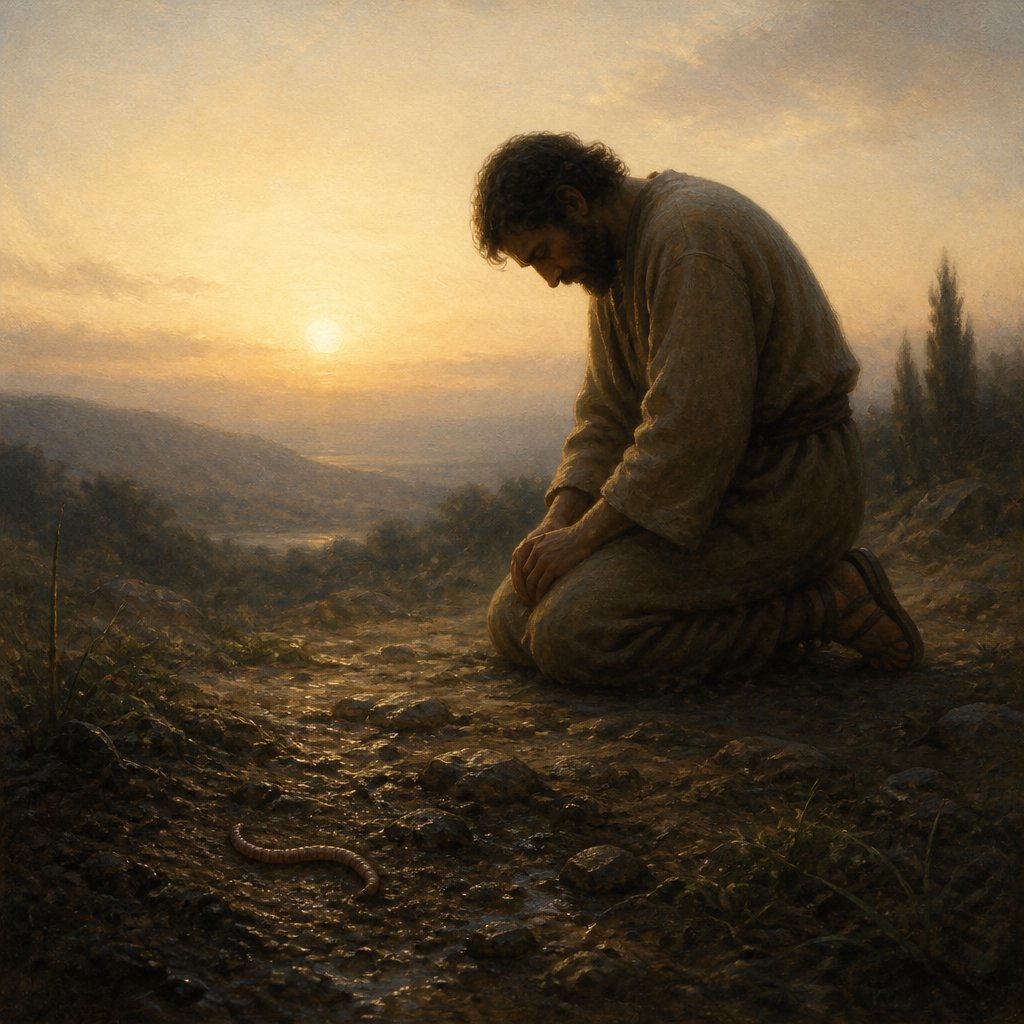
Job 25:6 in the King James Version (KJV) of the Bible states, "How much less man, that is a worm? and the son of man, which is a worm?" This verse is part of a larger discourse in the book of Job, which is a conversation between Job and his friends about the nature of suffering and the ways of God. In this verse, Bildad, one of Job's friends, is speaking, and he is asserting the innate unworthiness of mankind in comparison to God.
The theme of human insignificance and God's majesty is central to this verse. Bildad is emphasizing the vast difference between God, who is perfect and all-powerful, and humanity, who is flawed and weak. The use of the term "worm" here is meant to evoke a sense of lowliness and insignificance. In the ancient Near East, the term "worm" was often used as a metaphor for something low, despised, and weak. By comparing man to a worm, Bildad is emphasizing the fact that humans are small, temporary, and insignificant in comparison to God.
The context of this verse is important for understanding its full meaning. Job is a book that deals with the problem of suffering and the question of why bad things happen to good people. Job, a righteous man, undergoes immense suffering, and his friends come to offer him their own perspectives on why this is happening to him. Bildad's statement is a part of his attempt to explain the greatness of God and the lowliness of humanity in order to justify why Job is suffering. This verse is ultimately a reminder to Job (and to the reader) that humans are finite, imperfect creatures, and that God's ways are beyond our understanding.
The symbolism in this verse is profound and serves to underscore the larger themes of the book of Job. The use of the term "worm" to describe humanity is a powerful symbol of our weaknesses, limitations, and mortality. In the biblical tradition, the worm is often associated with decay and death, as well as a small, insignificant creature. By using this symbol, Bildad is emphasizing the frailty and transience of human life.
In addition to symbolizing human weakness, the term "worm" also carries connotations of humility and submission. By comparing humanity to a worm, Bildad is likely also trying to convey the idea that humans should recognize their lowliness and submit themselves to God's will. This theme of humility and submission before God is a recurring motif in the book of Job, as Job and his friends grapple with the question of how to understand and accept suffering.
Ultimately, Job 25:6 is a poignant reminder of the vast gulf between human beings and God. The verse serves as a humbling and sobering reflection on the nature of humanity and our place in the cosmos. It also underscores the larger themes of the book of Job, which grapples with the problem of suffering and the mystery of God's ways. The use of the term "worm" as a symbol for humanity is a powerful and evocative way of emphasizing our limitations and our need for humility before God. This verse, like the book of Job as a whole, challenges us to wrestle with the big questions of life and to seek understanding and meaning in the midst of suffering.
Have questions about Job 25:6?
Dive deeper into this scripture with Bible Chat — an AI-powered tool for exploring God's Word through conversation. Ask questions, get context, and grow in your understanding of the Bible.
Get Our Apps


Job 25:6 Artwork

Job 25:6 - "How much less man, that is a worm? and the son of man, which is a worm?"
"How much less man, that is a worm? and the son of man, which is a worm?" - Job 25:6

Job 6:25 - "How forcible are right words! but what doth your arguing reprove?"
"How forcible are right words! but what doth your arguing reprove?" - Job 6:25

Job 39:13-25

Job 6:1 - "But Job answered and said,"

Job 25:1 - "Then answered Bildad the Shuhite, and said,"

Job 40:6 - "¶ Then answered the LORD unto Job out of the whirlwind, and said,"

Job 28:25 - "To make the weight for the winds; and he weigheth the waters by measure."

"But Job answered and said," - Job 6:1

Job 21:25 - "And another dieth in the bitterness of his soul, and never eateth with pleasure."

Job 30:25 - "Did not I weep for him that was in trouble? was not my soul grieved for the poor?"

Job 25:5 - "Behold even to the moon, and it shineth not; yea, the stars are not pure in his sight."

Job 36:25 - "Every man may see it; man may behold it afar off."

Job 25:2 - "Dominion and fear are with him, he maketh peace in his high places."

Job 38:25 - "Who hath divided a watercourse for the overflowing of waters, or a way for the lightning of thunder;"
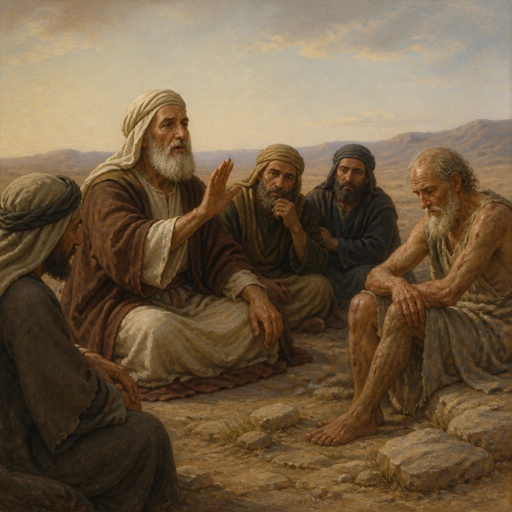
"Then answered Bildad the Shuhite, and said," - Job 25:1

Job 25:3 - "Is there any number of his armies? and upon whom doth not his light arise?"

Job 34:25 - "Therefore he knoweth their works, and he overturneth them in the night, so that they are destroyed."

Job 27:6

Job 9:25 - "Now my days are swifter than a post: they flee away, they see no good."

Job 22:25 - "Yea, the Almighty shall be thy defence, and thou shalt have plenty of silver."

Job 15:25 - "For he stretcheth out his hand against God, and strengtheneth himself against the Almighty."

Job 25:4 - "How then can man be justified with God? or how can he be clean that is born of a woman?"

Job 13:25 - "Wilt thou break a leaf driven to and fro? and wilt thou pursue the dry stubble?"

Job 41:25 - "When he raiseth up himself, the mighty are afraid: by reason of breakings they purify themselves."

Job 39:19-25 – "Do you give the horse its strength or clothe its neck with a flowing mane?"

Job 24:25 - "And if it be not so now, who will make me a liar, and make my speech nothing worth?"

Job 12:25 - "They grope in the dark without light, and he maketh them to stagger like a drunken man."

Job 6:6 - "Can that which is unsavoury be eaten without salt? or is there any taste in the white of an egg?"