What does Job 20:28 mean?
"The increase of his house shall depart, and his goods shall flow away in the day of his wrath." - Job 20:28
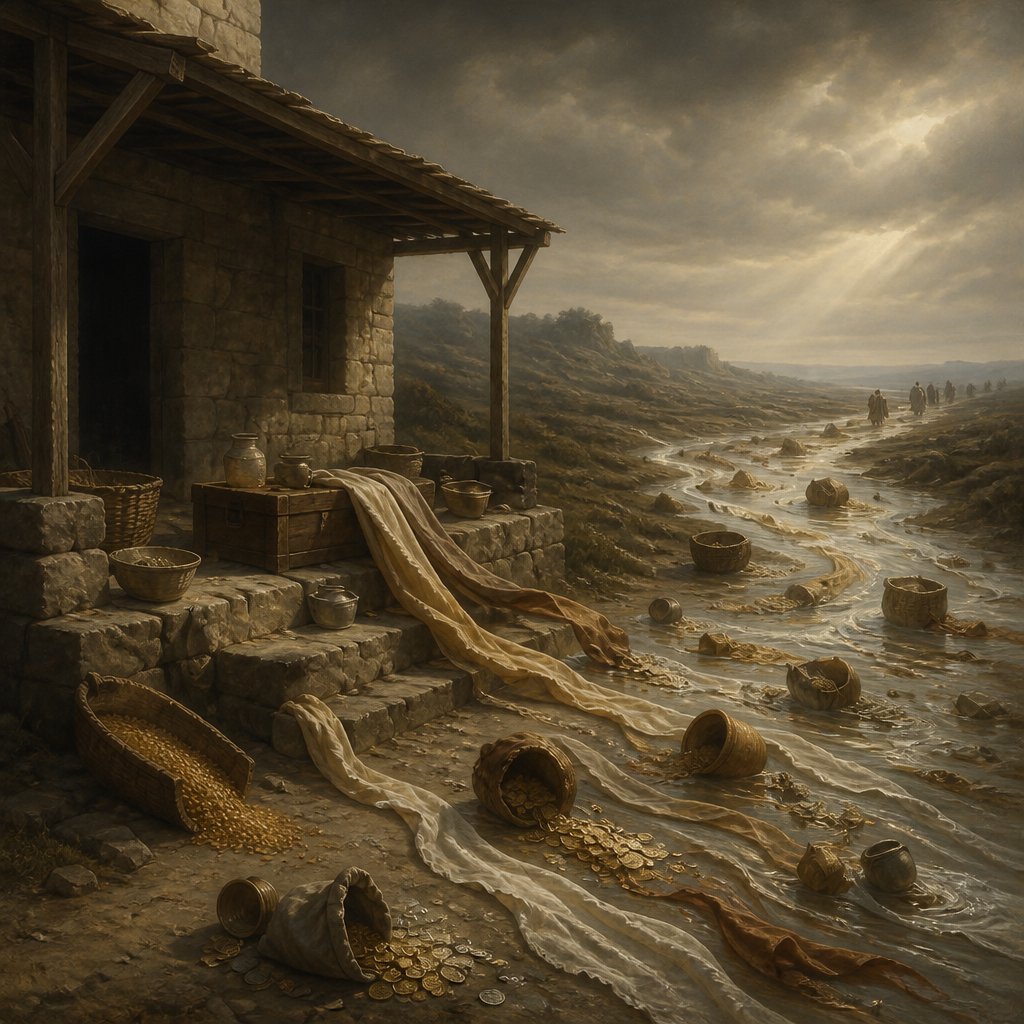
Job 20:28 in the King James Version of the Bible reads, "The increase of his house shall depart, and his goods shall flow away in the day of his wrath." This verse comes from the book of Job, which tells the story of a righteous man who experiences extreme suffering and loss. In this particular verse, Job's friend Zophar is speaking and warning Job about the consequences of sin. Zophar uses vivid imagery to describe the downfall of the wicked, emphasizing the swift and devastating nature of their punishment.
The book of Job is part of the Wisdom Literature in the Old Testament, and it offers profound insights into the nature of suffering, the justice of God, and the limitations of human understanding. In this verse, Zophar is delivering a harsh message to Job, implying that his suffering is a result of his sin or the sin of his household. Zophar suggests that the wicked will experience a sudden and dramatic loss of prosperity and security when God's wrath is unleashed upon them.
One of the key themes in this verse is the concept of divine judgment and retribution. Zophar is conveying the belief that God's righteous anger will ultimately bring about the downfall of the wicked. The imagery of the "increase of his house" departing and his "goods flowing away" vividly conveys the idea of a rapid and irreversible loss of wealth and material possessions as a result of God's wrath. This serves as a cautionary tale, warning against the consequences of living a sinful and unrighteous life.
Another important theme in this verse is the fleeting nature of earthly wealth and prosperity. Zophar's words remind the reader that material possessions are ultimately temporary and can be easily taken away. This serves as a reminder of the importance of prioritizing spiritual values over material wealth, as the latter is vulnerable to loss and destruction. Zophar's warning reinforces the idea that true security and fulfillment can only be found through a relationship with God, rather than through the accumulation of material possessions.
The symbolic imagery in this verse also adds depth to its meaning. The departure of the "increase of his house" and the flowing away of his goods can be seen as symbolic of the collapse of a person's entire livelihood and security. This serves as a powerful analogy for the sudden and catastrophic nature of divine judgment, in which everything that the wicked person has worked for is taken away in an instant. This imagery reinforces the idea of the fragility of human achievements and the ultimate futility of pursuing material wealth at the expense of spiritual well-being.
In the broader context of the book of Job, this verse is part of the ongoing dialogue between Job and his friends as they try to make sense of his suffering. Zophar and the other friends provide various explanations for Job's afflictions, including the idea that he must have sinned and brought this suffering upon himself. However, as the book progresses, it becomes clear that the situation is far more complex, and God's ways are beyond human understanding.
In conclusion, Job 20:28 in the King James Version of the Bible contains deep and profound themes related to divine judgment, the fleeting nature of earthly wealth, and the limitations of human understanding. The vivid imagery and symbolic language used in this verse serve to convey a powerful message about the consequences of living a sinful and unrighteous life. Ultimately, this verse prompts the reader to reflect on the importance of prioritizing spiritual values and seeking true security and fulfillment through a relationship with God.
Have questions about Job 20:28?
Dive deeper into this scripture with Bible Chat — an AI-powered tool for exploring God's Word through conversation. Ask questions, get context, and grow in your understanding of the Bible.
Get Our Apps


Job 20:28 Artwork
Job 20:28 - "The increase of his house shall depart, and his goods shall flow away in the day of his wrath."
"The increase of his house shall depart, and his goods shall flow away in the day of his wrath." - Job 20:28

Job 28:20 - "Whence then cometh wisdom? and where is the place of understanding?"
"Whence then cometh wisdom? and where is the place of understanding?" - Job 28:20

Job 28:3

Job 30:28

Job 30:28

Job 30:28

Job 30:28

Job 28:3

Job 28:3

Job 30:28

Job 28:28 - "And unto man he said, Behold, the fear of the Lord, that is wisdom; and to depart from evil is understanding."

Genesis 28-20

Luke 20:28

Job 1:20

Job 1:20

Job 28:14 - "The depth saith, It is not in me: and the sea saith, It is not with me."

Job 28:6 - "The stones of it are the place of sapphires: and it hath dust of gold."

Job 28:1 - "Surely there is a vein for the silver, and a place for gold where they fine it."

Job 28:16 - "It cannot be valued with the gold of Ophir, with the precious onyx, or the sapphire."

Job 28:12 - "But where shall wisdom be found? and where is the place of understanding?"

Job 3:20-21 - "Job 3:20-21: Why is light given to those in misery, and life to the bitter of soul, to those who long for death that does not come, who search for it more than for hidden treasure?"

Job 28:25 - "To make the weight for the winds; and he weigheth the waters by measure."

Job 13:28 - "And he, as a rotten thing, consumeth, as a garment that is moth eaten."

Job 28:8 - "The lion's whelps have not trodden it, nor the fierce lion passed by it."

Job 28:2 - "Iron is taken out of the earth, and brass is molten out of the stone."

Job 38:28 - "Hath the rain a father? or who hath begotten the drops of dew?"

Job 28:7 draw a hidden path

2 Chronicles 20:28