What does Job 1:4 mean?
"And his sons went and feasted in their houses, every one his day; and sent and called for their three sisters to eat and to drink with them." - Job 1:4
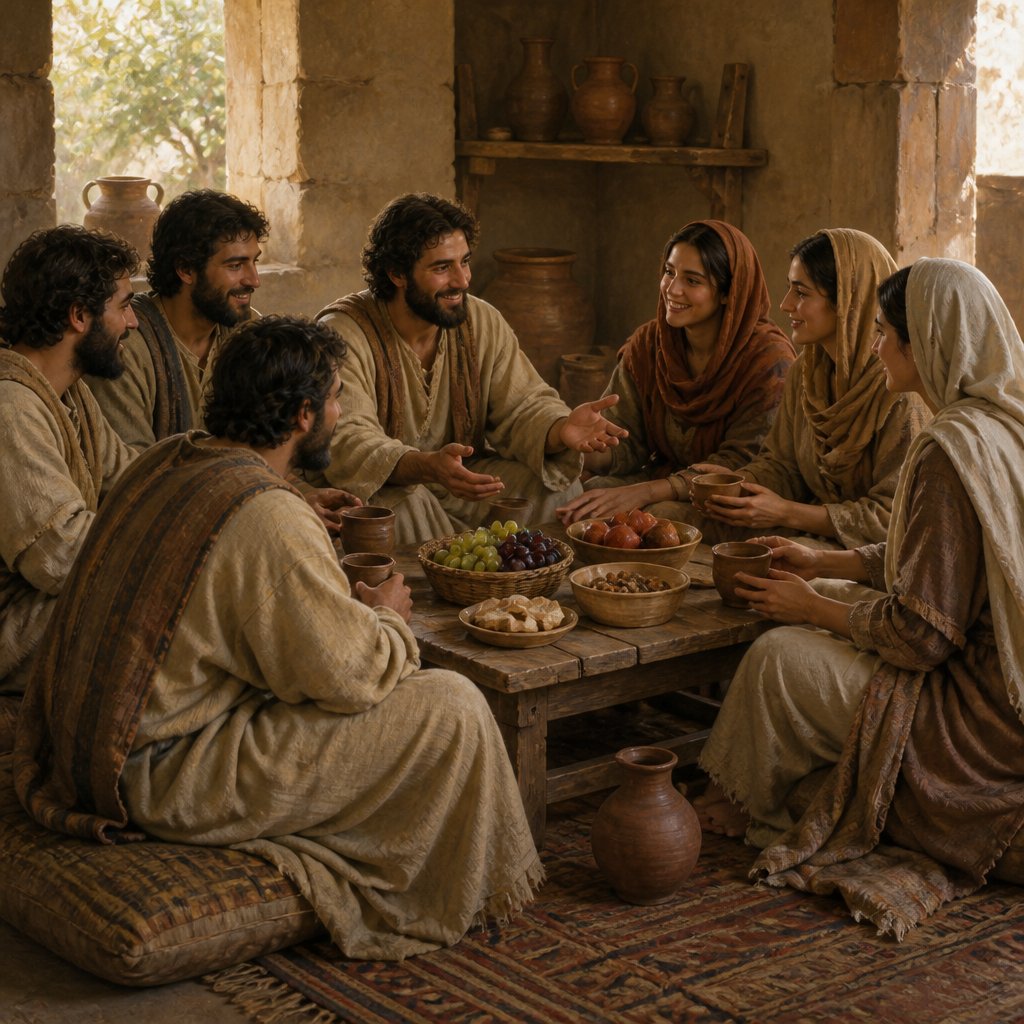
The Bible verse Job 1:4 in the King James Version (KJV) reads:
"And his sons went and feasted in their houses, every one his day; and sent and called for their three sisters to eat and to drink with them."
This verse is a part of the book of Job, which is found in the Old Testament and is known for its exploration of suffering, faith, and the character of God. The verse comes at the beginning of the book and sets the stage for the narrative that follows.
In this verse, we are given a glimpse into the lives of Job's children. They are portrayed as living a life of luxury and privilege as they go to each other's houses to feast and enjoy themselves. This provides a backdrop for the suffering that will soon come upon them and their father, Job.
One of the major themes in the book of Job is the question of why the righteous suffer. Job himself is a man of great faith and integrity, yet he experiences immense hardship and loss. This verse serves to highlight the contrast between the abundance and prosperity of Job's children and the trials and tribulations that they will soon face. It raises the question of whether their feasting and self-indulgence have led them to a place of spiritual complacency, and whether this is linked to the suffering they will eventually endure.
The context of this verse is important for understanding its significance. Job is described as a blameless and upright man who fears God and shuns evil (Job 1:1). He is also said to be the greatest of all the people in the East, possessing great wealth and influence (Job 1:3). The feasting and revelry of his children can be seen as a reflection of their privileged status and may suggest a lack of concern for spiritual matters or moral responsibility.
The verse also introduces the motif of sibling relationships, as Job's sons and daughters gather together for their feasts. This sets the stage for the later events in the book, where Job's children will play a central role in the unfolding drama of his suffering. The unity of the siblings in this verse foreshadows the way in which they will later come together to support each other in the face of adversity.
Symbolism can also be found in this verse. The feasts of Job's children symbolize their indulgence and self-centeredness, which may be seen as a contrast to the values of humility and faithfulness that Job exemplifies. The act of calling for their sisters to join them may symbolize their desire for companionship and pleasure, but it may also indicate a deeper longing for connection and support in the face of the challenges they will soon face.
In conclusion, Job 1:4 offers a rich and layered exploration of themes such as privilege, spiritual complacency, the nature of suffering, and the complexities of family relationships. It sets the stage for the unfolding drama of the book of Job, where these themes will be further explored and ultimately resolved in a profound and unexpected way. This verse serves as a powerful introduction to the story of Job and the timeless questions it raises about the nature of faith, suffering, and the character of God.
Have questions about Job 1:4?
Dive deeper into this scripture with Bible Chat — an AI-powered tool for exploring God's Word through conversation. Ask questions, get context, and grow in your understanding of the Bible.
Get Our Apps


Job 1:4 Artwork

Job 1:4 - "And his sons went and feasted in their houses, every one his day; and sent and called for their three sisters to eat and to drink with them."
"And his sons went and feasted in their houses, every one his day; and sent and called for their three sisters to eat and to drink with them." - Job 1:4

Job 4:1 - "Then Eliphaz the Temanite answered and said,"

"Then Eliphaz the Temanite answered and said," - Job 4:1

Eliphaz speaks to Job in Job 4.

Job 32:4 - "Now Elihu had waited till Job had spoken, because they were elder than he."

Job 4:4 - "Thy words have upholden him that was falling, and thou hast strengthened the feeble knees."

Job 12:1 - "And Job answered and said,"

Job 23:1 - "Then Job answered and said,"

Job 38:4-7

Job 42:1 - "Then Job answered the LORD, and said,"

Job 9:1 - "Then Job answered and said,"

Job 19:1 - "Then Job answered and said,"

Job 21:1 - "But Job answered and said,"

Job 26:1 - "But Job answered and said,"

Job 6:1 - "But Job answered and said,"

Job 16:1 - "Then Job answered and said,"

Job 38:1 - "Then the LORD answered Job out of the whirlwind, and said,"

Job 40:1 - "Moreover the LORD answered Job, and said,"

Job 35:4 - "I will answer thee, and thy companions with thee."

Job 1:22 - "In all this Job sinned not, nor charged God foolishly."

Job 27:1 - "Moreover Job continued his parable, and said,"

Job 29:1 - "Moreover Job continued his parable, and said,"

Job 4:9 - "By the blast of God they perish, and by the breath of his nostrils are they consumed."

Job 13:4 - "But ye are forgers of lies, ye are all physicians of no value."

Job 1:1 - "There was a man in the land of Uz, whose name was Job; and that man was perfect and upright, and one that feared God, and eschewed evil."

"Then Job answered and said," - Job 19:1

"Then Job answered and said," - Job 9:1

Job 3:1 - "After this opened Job his mouth, and cursed his day."

Job 1:1