What does Job 17:2 mean?
"Are there not mockers with me? and doth not mine eye continue in their provocation?" - Job 17:2

Job 17:2, according to the King James Version of the Bible, reads, "Are there not mockers with me? and doth not mine eye continue in their provocation?" This verse is part of the book of Job, which is found in the Old Testament. The book of Job is a complex and profound exploration of the nature of suffering and the ultimate justice of God. Job, the central character, is a righteous man who faces immense suffering and hardship, leading him to question the goodness and justice of God. This verse occurs in the midst of Job's lamentations, as he grapples with the abandonment he feels from his friends, the unbearable suffering he endures, and the seeming silence of God in the face of his petitions for relief.
The verse contains several elements that are crucial to understanding its meaning and significance. The first part of the verse, "Are there not mockers with me?" reflects Job's sense of betrayal and abandonment by those around him. Job's friends, who should be offering him comfort and support in his time of need, have turned against him, questioning his righteousness and suggesting that his suffering must be the result of some hidden sin. This betrayal only serves to compound Job's sense of isolation and despair, as he feels mocked and scorned by those who should be standing with him.
The second part of the verse, "and doth not mine eye continue in their provocation?" further emphasizes Job's agony as he is forced to endure the taunts and provocation of those around him. The phrase "mine eye continue" highlights the relentlessness of this harassment, as Job is unable to escape the scrutiny and condemnation of his supposed friends. This relentless provocation adds to Job's sense of hopelessness, as he feels trapped in a situation where there is no relief from his suffering.
Job's experience of isolation, betrayal, and relentless provocation is a powerful expression of the human experience of suffering. This verse encapsulates the anguish of feeling abandoned by those we trust, misunderstood and misrepresented by those around us, and subjected to unrelenting hostility. It speaks to the profound sense of injustice and despair that can accompany suffering, as we struggle to make sense of our pain and find solace in the midst of adversity.
The verse also raises profound theological and philosophical questions about the nature of suffering and the justice of God. Job's lamentations throughout the book wrestle with the apparent contradiction between his own righteousness and the terrible suffering he experiences. The presence of mockers and the relentless provocation that Job faces lead him to question the justice of God and the purpose of his suffering. This existential and theological struggle lies at the heart of the book of Job, as Job grapples with the mystery of divine providence and the ultimate meaning of human suffering.
In addition to its immediate context within the book of Job, this verse also carries broader thematic significance within the biblical narrative. It echoes the experiences of other figures in the Bible, such as the psalmists who cry out in anguish and the prophets who endure persecution for their faithful witness. The sense of isolation and betrayal that Job experiences also reflects the experience of Jesus Christ, who was abandoned by his disciples and scorned by those around him as he faced his crucifixion. This verse thus resonates with the larger biblical themes of suffering, faith, and the ultimate vindication of the righteous.
Symbolically, this verse can be seen as a poignant expression of the human condition, marked by vulnerability, pain, and the struggle to find meaning and hope in the face of adversity. It speaks to the universal experience of feeling abandoned and misunderstood, as well as the longing for justice and vindication in the midst of suffering. At the same time, it points towards the possibility of finding consolation and ultimate redemption, even in the midst of the most profound despair. Ultimately, Job's lamentations and the questions he raises lead to a deeper understanding of the nature of God and the paradox of human suffering, offering profound insights into the human experience and the divine mystery.
Have questions about Job 17:2?
Dive deeper into this scripture with Bible Chat — an AI-powered tool for exploring God's Word through conversation. Ask questions, get context, and grow in your understanding of the Bible.
Get Our Apps


Job 17:2 Artwork

Job 17:2 - "Are there not mockers with me? and doth not mine eye continue in their provocation?"
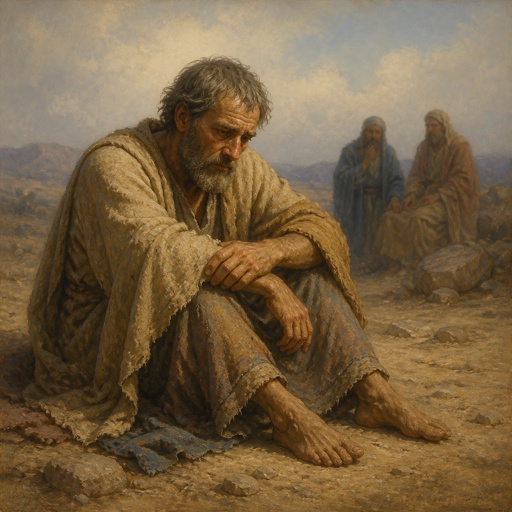
"Are there not mockers with me? and doth not mine eye continue in their provocation?" - Job 17:2

Job 42:17 - "So Job died, being old and full of days."

"So Job died, being old and full of days." - Job 42:17

Job 3:17 - "There the wicked cease from troubling; and there the weary be at rest."

Job 17:12 - "They change the night into day: the light is short because of darkness."

Job 41:17 - "They are joined one to another, they stick together, that they cannot be sundered."

Job 3:2 - "And Job spake, and said,"

Job 8:17 - "His roots are wrapped about the heap, and seeth the place of stones."

Job 12:17 - "He leadeth counsellors away spoiled, and maketh the judges fools."

Job 20:17 - "He shall not see the rivers, the floods, the brooks of honey and butter."

Job 16:17 - "Not for any injustice in mine hands: also my prayer is pure."

Job 13:17 - "Hear diligently my speech, and my declaration with your ears."

Job 17:15 - "And where is now my hope? as for my hope, who shall see it?"

Job 9:17 - "For he breaketh me with a tempest, and multiplieth my wounds without cause."

Job 17:1 - "My breath is corrupt, my days are extinct, the graves are ready for me."

Job 29:17 - "And I brake the jaws of the wicked, and plucked the spoil out of his teeth."

Job 28:17 - "The gold and the crystal cannot equal it: and the exchange of it shall not be for jewels of fine gold."

Job 6:17 - "What time they wax warm, they vanish: when it is hot, they are consumed out of their place."

Job 31:17 - "Or have eaten my morsel myself alone, and the fatherless hath not eaten thereof;"

Job 17:6 - "He hath made me also a byword of the people; and aforetime I was as a tabret."

Job 17:7 - "Mine eye also is dim by reason of sorrow, and all my members are as a shadow."

Job 30:17 - "My bones are pierced in me in the night season: and my sinews take no rest."

Job 36:17 - "But thou hast fulfilled the judgment of the wicked: judgment and justice take hold on thee."

Job 17:16 - "They shall go down to the bars of the pit, when our rest together is in the dust."

Job 37:17 - "How thy garments are warm, when he quieteth the earth by the south wind?"

Job 14:17 - "My transgression is sealed up in a bag, and thou sewest up mine iniquity."

Job 27:17 - "He may prepare it, but the just shall put it on, and the innocent shall divide the silver."

Job 17:5 - "He that speaketh flattery to his friends, even the eyes of his children shall fail."

Job 24:17 - "For the morning is to them even as the shadow of death: if one know them, they are in the terrors of the shadow of death."