What does Jeremiah 7:6 mean?
"If ye oppress not the stranger, the fatherless, and the widow, and shed not innocent blood in this place, neither walk after other gods to your hurt:" - Jeremiah 7:6
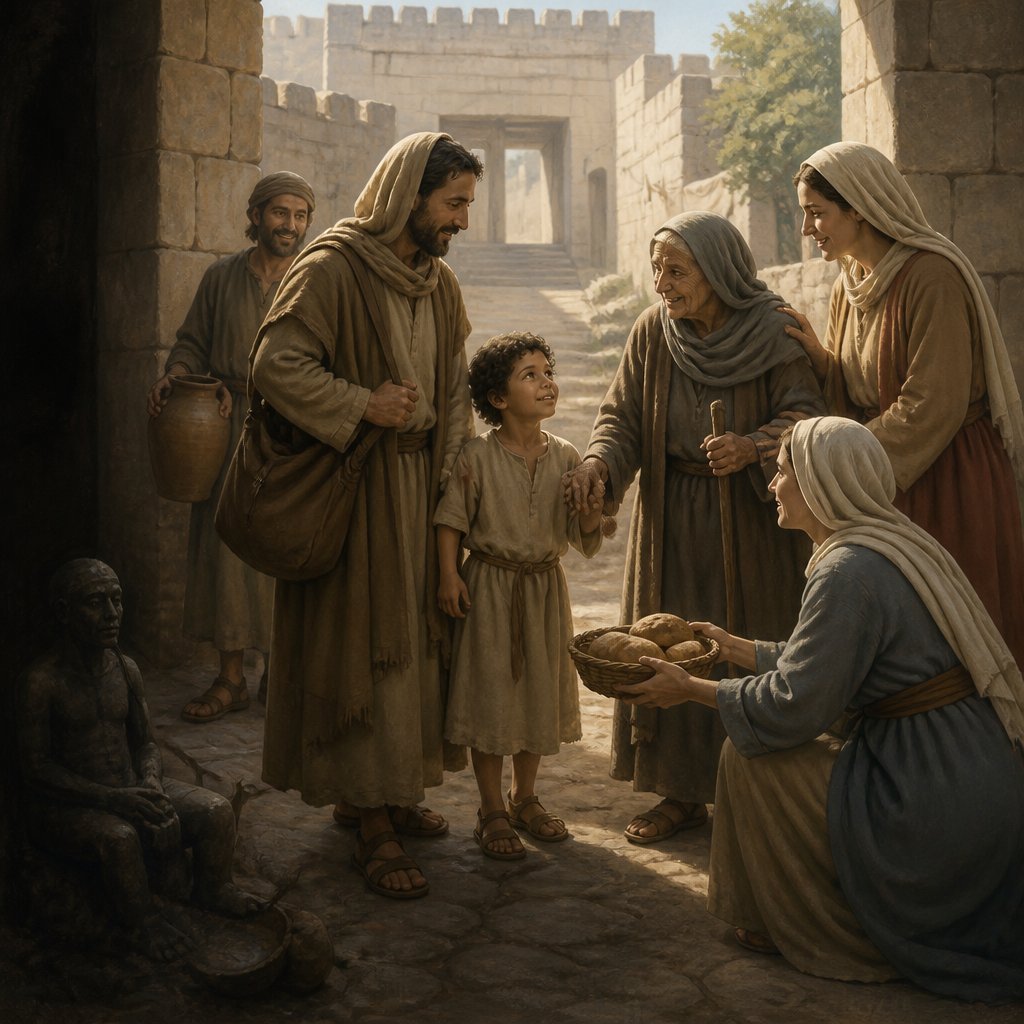
Jeremiah 7:6 (KJV) reads, "If ye oppress not the stranger, the fatherless, and the widow, and shed not innocent blood in this place, neither walk after other gods to your hurt." This verse is found in the book of Jeremiah in the Old Testament. It is part of a larger passage in which the prophet Jeremiah delivers a message from God to the people of Judah, warning them about their wrongdoing and calling them to repentance.
The verse begins with a command to the people of Judah: "If ye oppress not the stranger, the fatherless, and the widow." This is a call to social justice and care for the vulnerable members of society. In the ancient Near Eastern culture, strangers, orphans, and widows were considered the most vulnerable and marginalized members of society. They did not have the protection of a male head of household and were often at the mercy of others for their survival. Throughout the Old Testament, God is portrayed as a defender of these vulnerable groups, and He commands His people to care for them and ensure their wellbeing. Here, the verse emphasizes the importance of treating these vulnerable groups with kindness and compassion, rather than oppressing them or taking advantage of them.
The verse then continues with a prohibition: "and shed not innocent blood in this place." This is a command against violence and murder. The shedding of innocent blood refers to the unjust killing of individuals who have done no wrong. God's people are called to uphold the sanctity of human life and to refrain from acts of violence and bloodshed. This command reflects God's concern for justice and righteousness, as well as His desire for His people to live in harmony and peace with one another.
Finally, the verse warns against idolatry: "neither walk after other gods to your hurt." Idolatry is the worship of false gods and the placing of anything or anyone above the one true God. Throughout the Old Testament, God's people are repeatedly warned against turning away from Him and worshiping idols. Here, the verse serves as a reminder of the importance of remaining faithful to God and not falling into the trap of idolatry, which ultimately leads to spiritual and moral harm.
This verse carries several important themes and messages that are relevant not only to the original audience of Jeremiah's time but also to readers today. The themes of social justice, compassion for the vulnerable, and the sanctity of human life are timeless and have continued to be emphasized throughout the biblical tradition. The verse calls for a society that cares for those in need, upholds the value of every human life, and remains faithful to God.
The context of this verse is crucial for understanding its significance. At the time of Jeremiah's prophetic ministry, the people of Judah had fallen into a pattern of disobedience and idolatry. They were engaging in practices that violated God's commands and were leading to their own spiritual and moral decay. Jeremiah's message was a call to repentance and a warning of the consequences of continuing down this path. The verse in question is part of this larger message, emphasizing the specific ways in which the people were failing to live in accordance with God's will.
In addition to its literal meaning, the verse also holds symbolic significance. The call to care for the vulnerable and to refrain from shedding innocent blood can be seen as a metaphor for the broader call to justice and righteousness. The warning against idolatry can also be interpreted in a symbolic sense, representing the danger of allowing anything to take God's rightful place in our lives.
In conclusion, Jeremiah 7:6 (KJV) is a powerful and multifaceted verse that addresses themes of social justice, compassion, and faithfulness to God. Its message is as relevant today as it was in the time of Jeremiah, and it continues to challenge readers to uphold these values in their own lives and communities.
Have questions about Jeremiah 7:6?
Dive deeper into this scripture with Bible Chat — an AI-powered tool for exploring God's Word through conversation. Ask questions, get context, and grow in your understanding of the Bible.
Get Our Apps


Jeremiah 7:6 Artwork

Jeremiah 7:6 - "If ye oppress not the stranger, the fatherless, and the widow, and shed not innocent blood in this place, neither walk after other gods to your hurt:"
"If ye oppress not the stranger, the fatherless, and the widow, and shed not innocent blood in this place, neither walk after other gods to your hurt:" - Jeremiah 7:6
Jeremiah 6:7 - "As a fountain casteth out her waters, so she casteth out her wickedness: violence and spoil is heard in her; before me continually is grief and wounds."

Jeremiah 38:6 (KJVA) 6 Then took they Jeremiah, and cast him into the dungeon of Malchiah the son of Hammelech, that was in the court of the prison: and they let down Jeremiah with cords. And in the dungeon there was no water, but mire: so Jeremiah sunk in the mire.

Jeremiah 7:1 - "The word that came to Jeremiah from the LORD, saying,"

Jeremiah 37:6 - "¶ Then came the word of the LORD unto the prophet Jeremiah, saying,"

Jeremiah 32:6 - "¶ And Jeremiah said, The word of the LORD came unto me, saying,"

Jeremiah 38:6 - "Then took they Jeremiah, and cast him into the dungeon of Malchiah the son of Hammelech, that was in the court of the prison: and they let down Jeremiah with cords. And in the dungeon there was no water, but mire: so Jeremiah sunk in the mire."

Jeremiah 34:6 - "Then Jeremiah the prophet spake all these words unto Zedekiah king of Judah in Jerusalem,"

Jeremiah 42:7 - "¶ And it came to pass after ten days, that the word of the LORD came unto Jeremiah."

Jeremiah 26:7 - "So the priests and the prophets and all the people heard Jeremiah speaking these words in the house of the LORD."

Jeremiah 7:5-6 - "For if you truly amend your ways and your deeds, if you truly execute justice one with another, if you do not oppress the stranger, the orphan, or the widow, or shed innocent blood in this place, and if you do not go after other gods to your own harm."

Jeremiah 17:7-8

Jeremiah 17:7-8

Jeremiah 17:7-8

Jeremiah 17:7-8

Jeremiah 40:6 - "Then went Jeremiah unto Gedaliah the son of Ahikam to Mizpah; and dwelt with him among the people that were left in the land."

"The word that came to Jeremiah from the LORD, saying," - Jeremiah 7:1

Jeremiah 7:7 - "Then will I cause you to dwell in this place, in the land that I gave to your fathers, for ever and ever."

"¶ Then came the word of the LORD unto the prophet Jeremiah, saying," - Jeremiah 37:6

Jeremiah 42:7 And it happened after ten days that the word of the Lord came to Jeremiah.

Jeremiah 42:7 And it happened after ten days that the word of the Lord came to Jeremiah.

Jeremiah 48:6 - "Flee, save your lives, and be like the heath in the wilderness."

"¶ And Jeremiah said, The word of the LORD came unto me, saying," - Jeremiah 32:6

Jeremiah 17:7 - "Blessed is the man that trusteth in the LORD, and whose hope the LORD is."

Jeremiah 7:8 - "¶ Behold, ye trust in lying words, that cannot profit."

Jeremiah 38:7 - "¶ Now when Ebed-melech the Ethiopian, one of the eunuchs which was in the king's house, heard that they had put Jeremiah in the dungeon; the king then sitting in the gate of Benjamin;"

Jeremiah 6:2 - "I have likened the daughter of Zion to a comely and delicate woman."

Jeremiah 7:17 - "¶ Seest thou not what they do in the cities of Judah and in the streets of Jerusalem?"

Acts 3:6-7