What does Jeremiah 4:3 mean?
"¶ For thus saith the LORD to the men of Judah and Jerusalem, Break up your fallow ground, and sow not among thorns." - Jeremiah 4:3

Jeremiah 4:3 in the King James Version of the Bible reads, "For thus saith the Lord to the men of Judah and Jerusalem, Break up your fallow ground, and sow not among thorns." This verse comes from the book of Jeremiah, which is a prophetic book in the Old Testament. In this verse, the prophet Jeremiah is conveying a message from the Lord to the people of Judah and Jerusalem.
The theme of this verse centers around the idea of repentance and spiritual renewal. The Lord is instructing the people to break up their fallow ground, which refers to the hardened and uncultivated soil. This can be symbolic of the hardened hearts of the people, who have turned away from God and His commandments. By breaking up the fallow ground, the people are being called to repent of their sins and turn back to God.
The second part of the verse, "sow not among thorns," emphasizes the need for the people to be discerning about where they direct their efforts. Sowing among thorns would be ineffective and would not yield a fruitful harvest. This can be seen as a metaphor for the distractions and temptations that pull people away from God. The Lord is warning the people to avoid sowing their efforts into worldly pursuits and instead focus on cultivating their relationship with Him.
The historical context of this verse is important for understanding its significance. At the time of Jeremiah, the kingdom of Judah was facing a period of moral decay and idolatry. The people had turned away from God and were engaging in sinful practices. Jeremiah's prophetic message was a call for the people to repent and turn back to God before the impending judgment and exile.
The symbolism in this verse is rich and powerful. The image of fallow ground represents the hardened hearts of the people, while sowing among thorns represents the distractions and temptations of the world. The dual imagery emphasizes the need for spiritual renewal and discernment in the lives of the people.
In a broader sense, this verse can also be applied to the individual believer's spiritual life. It serves as a reminder to constantly evaluate the condition of our hearts and to be vigilant against the distractions and temptations that can hinder our relationship with God.
Overall, Jeremiah 4:3 is a message of hope and restoration. It demonstrates God's desire for His people to turn away from sin and turn back to Him. The imagery of breaking up fallow ground and sowing among thorns serves as a powerful metaphor for the need for spiritual renewal and discernment in our lives. It is a timeless message that continues to resonate with believers today, reminding us of the importance of repentance and staying focused on our relationship with God.
Have questions about Jeremiah 4:3?
Dive deeper into this scripture with Bible Chat — an AI-powered tool for exploring God's Word through conversation. Ask questions, get context, and grow in your understanding of the Bible.
Get Our Apps


Jeremiah 4:3 Artwork

Jeremiah 4:3 - "¶ For thus saith the LORD to the men of Judah and Jerusalem, Break up your fallow ground, and sow not among thorns."
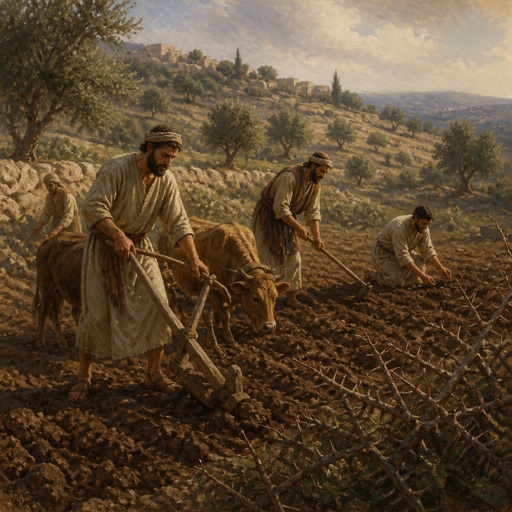
"¶ For thus saith the LORD to the men of Judah and Jerusalem, Break up your fallow ground, and sow not among thorns." - Jeremiah 4:3

Jeremiah 3:4 - "Wilt thou not from this time cry unto me, My father, thou art the guide of my youth?"

Jeremiah 18:3-4 – "So I went down to the potter's house, and there he was working at the wheel."

Jeremiah 21:3 - "¶ Then said Jeremiah unto them, Thus shall ye say to Zedekiah:"

Jeremiah 3:2

Jeremiah 33:3

Jeremiah 20:4

Jeremiah 37:4 - "Now Jeremiah came in and went out among the people: for they had not put him into prison."

Jeremiah 33:3

Jeremiah 3:1

Jeremiah 3:49
"Wilt thou not from this time cry unto me, My father, thou art the guide of my youth?" - Jeremiah 3:4

Jeremiah 20:3 - "And it came to pass on the morrow, that Pashur brought forth Jeremiah out of the stocks. Then said Jeremiah unto him, The LORD hath not called thy name Pashur, but Magor-missabib."

Jeremiah 29: 4-14

Jeremiah 29: 4-14

Jeremiah 29: 4-14

Jeremiah 29: 4-14

Jeremiah 29: 4-14

Jeremiah 36:4 - "Then Jeremiah called Baruch the son of Neriah: and Baruch wrote from the mouth of Jeremiah all the words of the LORD, which he had spoken unto him, upon a roll of a book."

Jeremiah 35:3 - "Then I took Jaazaniah the son of Jeremiah, the son of Habaziniah, and his brethren, and all his sons, and the whole house of the Rechabites;"

Jeremiah 1:4 - "Then the word of the LORD came unto me, saying,"

Jeremiah 3:3 - "Therefore the showers have been withholden, and there hath been no latter rain; and thou hadst a whore's forehead, thou refusedst to be ashamed."

Jeremiah 30:4 - "¶ And these are the words that the LORD spake concerning Israel and concerning Judah."

Jeremiah 10:4 - "They deck it with silver and with gold; they fasten it with nails and with hammers, that it move not."

Jeremiah 24:4 - "¶ Again the word of the LORD came unto me, saying,"

Jeremiah 46:3 - "Order ye the buckler and shield, and draw near to battle."

Jeremiah 37:3 - "And Zedekiah the king sent Jehucal the son of Shelemiah and Zephaniah the son of Maaseiah the priest to the prophet Jeremiah, saying, Pray now unto the LORD our God for us."

Jeremiah 48:3 - "A voice of crying shall be from Horonaim, spoiling and great destruction."

"¶ Then said Jeremiah unto them, Thus shall ye say to Zedekiah:" - Jeremiah 21:3