What does Jeremiah 48:35 mean?
"Moreover I will cause to cease in Moab, saith the LORD, him that offereth in the high places, and him that burneth incense to his gods." - Jeremiah 48:35

The Bible verse Jeremiah 48:35 from the King James Version (KJV) states, "Moreover I will cause to cease in Moab, saith the Lord, him that offereth in the high places, and him that burneth incense to his gods." This verse is found in the book of Jeremiah, which is a prophetic book in the Old Testament, and it is part of a longer passage in which the prophet Jeremiah delivers a message of judgment against the nation of Moab.
To understand the full meaning and context of this verse, it is important to examine the historical and cultural background of Moab during the time of Jeremiah. The Moabites were a neighboring nation to ancient Israel and they often engaged in idolatrous practices, including offering sacrifices in high places and burning incense to pagan gods. These actions were in direct defiance of the commandments of the Lord, and they were a source of great displeasure and judgment from God.
In this verse, Jeremiah is conveying the message of the Lord, declaring that the idolatrous practices of the Moabites will be brought to an end. The phrase "I will cause to cease" indicates the divine intervention and judgment of God, who will put an end to the idolatrous worship in Moab. This is a reflection of God's justice and righteousness, as he cannot tolerate the worship of false gods and the disobedience of his commandments.
The use of the term "high places" in this verse is significant, as it was a common practice in ancient times for pagan worship to take place on elevated areas such as hills or mountains. These high places were seen as sacred and were often used for offering sacrifices and performing rituals to pagan deities. The Lord's declaration that he will cause these practices to cease signifies his authority and power over all the false gods and religious systems of the world.
Furthermore, the burning of incense to pagan gods was a symbolic act of worship and devotion in many ancient cultures. Incense was believed to carry prayers and offerings to the gods, and it was often used in religious ceremonies and rituals. By stating that he will bring an end to the burning of incense to false gods, the Lord is asserting his supremacy and sovereignty over all spiritual forces and entities.
From a thematic perspective, this verse emphasizes the exclusive worship and devotion that God requires from his people. The commandments of the Lord are clear in their prohibition of idolatry and the worship of false gods, and the consequences of disobedience are severe. This theme is echoed throughout the Bible, as God consistently calls his people to wholehearted devotion and allegiance to him alone.
In addition, the verse carries a message of judgment and accountability. The idolatrous practices of the Moabites have not gone unnoticed by God, and he will hold them accountable for their actions. This serves as a reminder that God is just and righteous, and that all people will ultimately be answerable to him for their choices and behaviors.
Symbolically, the cessation of idolatrous practices in Moab can be seen as a foreshadowing of the coming of God's kingdom on earth. The elimination of false worship and the establishment of the true worship of God reflects the ultimate victory of truth and righteousness over evil and deception. This is a recurring theme in the Bible, as it points to the final triumph of God's kingdom and the restoration of all things in accordance with his perfect will.
In conclusion, Jeremiah 48:35 from the King James Version of the Bible carries a powerful message of divine judgment, righteousness, and the exclusive worship of the Lord. It serves as a reminder of God's intolerance of idolatry and the requirement for wholehearted devotion to him alone. This verse also underscores the themes of accountability and the ultimate triumph of God's kingdom over all false worship and spiritual darkness.
Have questions about Jeremiah 48:35?
Dive deeper into this scripture with Bible Chat — an AI-powered tool for exploring God's Word through conversation. Ask questions, get context, and grow in your understanding of the Bible.
Get Our Apps


Jeremiah 48:35 Artwork

Jeremiah 48:35 - "Moreover I will cause to cease in Moab, saith the LORD, him that offereth in the high places, and him that burneth incense to his gods."

"Moreover I will cause to cease in Moab, saith the LORD, him that offereth in the high places, and him that burneth incense to his gods." - Jeremiah 48:35

Ezekiel 48:35 - "It was round about eighteen thousand measures: and the name of the city from that day shall be, The LORD is there."

Jeremiah 35:12 - "¶ Then came the word of the LORD unto Jeremiah, saying,"

Jeremiah 48:22 - "And upon Dibon, and upon Nebo, and upon Beth-diblathaim,"

Jeremiah 48:6 - "Flee, save your lives, and be like the heath in the wilderness."

Jeremiah 48:16 - "The calamity of Moab is near to come, and his affliction hasteth fast."

Jeremiah 48:23 - "And upon Kiriathaim, and upon Beth-gamul, and upon Beth-meon,"

Jeremiah 48:14 - "¶ How say ye, We are mighty and strong men for the war?"

Jeremiah 48:3 - "A voice of crying shall be from Horonaim, spoiling and great destruction."

Jeremiah 48:25 - "The horn of Moab is cut off, and his arm is broken, saith the LORD."

Jeremiah 48:4 - "Moab is destroyed; her little ones have caused a cry to be heard."

Jeremiah 48:13 - "And Moab shall be ashamed of Chemosh, as the house of Israel was ashamed of Beth-el their confidence."

Jeremiah 48:20 - "Moab is confounded; for it is broken down: howl and cry; tell ye it in Arnon, that Moab is spoiled,"

Jeremiah 48:21 - "And judgment is come upon the plain country; upon Holon, and upon Jahazah, and upon Mephaath,"

Jeremiah 48:43 - "Fear, and the pit, and the snare, shall be upon thee, O inhabitant of Moab, saith the LORD."

Jeremiah 48:24 - "And upon Kerioth, and upon Bozrah, and upon all the cities of the land of Moab, far or near."

"¶ Then came the word of the LORD unto Jeremiah, saying," - Jeremiah 35:12

Jeremiah 35:1 - "The word which came unto Jeremiah from the LORD in the days of Jehoiakim the son of Josiah king of Judah, saying,"
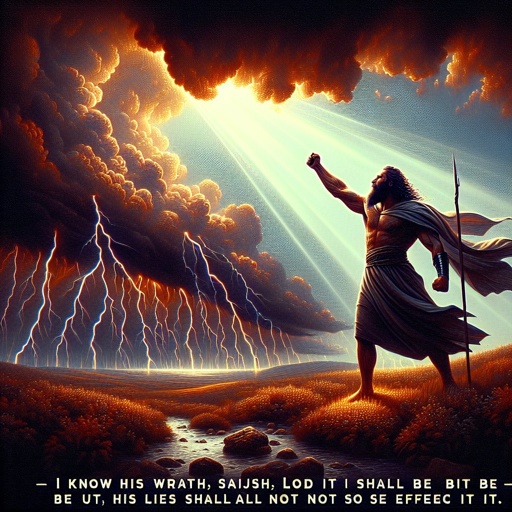
Jeremiah 48:30 - "I know his wrath, saith the LORD; but it shall not be so; his lies shall not so effect it."

Jeremiah 48:42 - "And Moab shall be destroyed from being a people, because he hath magnified himself against the LORD."

Jeremiah 35:3 - "Then I took Jaazaniah the son of Jeremiah, the son of Habaziniah, and his brethren, and all his sons, and the whole house of the Rechabites;"

Jeremiah 48:19 - "O inhabitant of Aroer, stand by the way, and espy; ask him that fleeth, and her that escapeth, and say, What is done?"

Jeremiah 48:47 - "¶ Yet will I bring again the captivity of Moab in the latter days, saith the LORD. Thus far is the judgment of Moab."

Jeremiah 48:40 - "For thus saith the LORD; Behold, he shall fly as an eagle, and shall spread his wings over Moab."

Jeremiah 48:10 - "Cursed be he that doeth the work of the LORD deceitfully, and cursed be he that keepeth back his sword from blood."

"It was round about eighteen thousand measures: and the name of the city from that day shall be, The LORD is there." - Ezekiel 48:35

Jeremiah 48:41 - "Kerioth is taken, and the strong holds are surprised, and the mighty men's hearts in Moab at that day shall be as the heart of a woman in her pangs."

Jeremiah 48:37 - "For every head shall be bald, and every beard clipped: upon all the hands shall be cuttings, and upon the loins sackcloth."

Jeremiah 48:27 - "For was not Israel a derision unto thee? was he found among thieves? for since thou spakest of him, thou skippedst for joy."