What does Jeremiah 3:1 mean?
"They say, If a man put away his wife, and she go from him, and become another man's, shall he return unto her again? shall not that land be greatly polluted? but thou hast played the harlot with many lovers; yet return again to me, saith the LORD." - Jeremiah 3:1
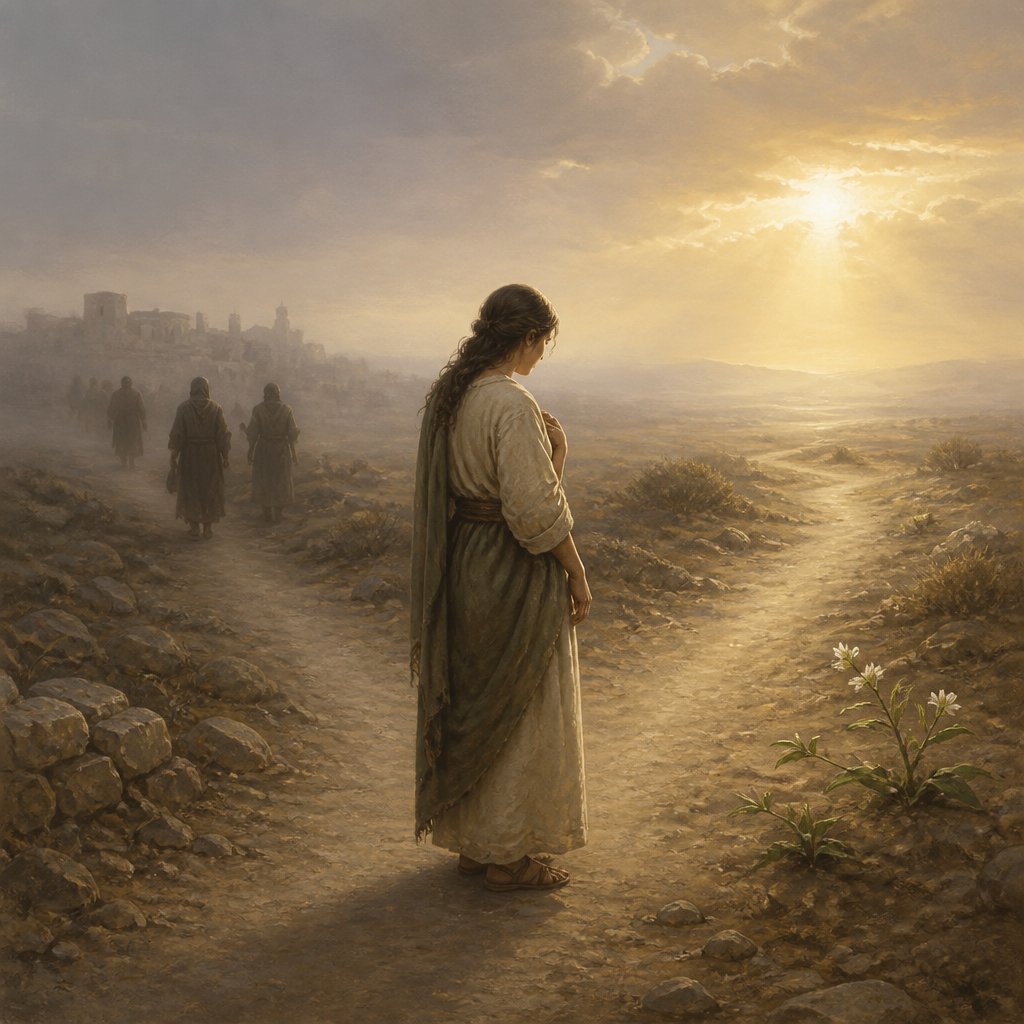
The Bible verse Jeremiah 3:1 in the King James Version (KJV) states, "They say, If a man put away his wife, and she go from him, and become another man's, shall he return unto her again? shall not that land be greatly polluted? but thou hast played the harlot with many lovers; yet return again to me, saith the Lord."
This verse is part of a larger passage in the book of Jeremiah, which addresses the unfaithfulness of the people of Judah and the consequences of their actions. In this particular verse, God is using the metaphor of marriage to illustrate the spiritual unfaithfulness of the people.
The context of this verse is crucial to understanding its true meaning. In the preceding chapters of Jeremiah, God accuses the people of Judah of turning away from Him and worshipping false gods. This spiritual adultery is likened to a wife leaving her husband for another man. The people have forsaken their covenant with God and have become polluted by their idolatry.
The verse begins with a question posed by the people: "If a man put away his wife, and she go from him, and become another man's, shall he return unto her again?" This question reflects the people's skepticism about the possibility of reconciliation after such betrayal and unfaithfulness. In the cultural context of the time, divorce was a serious matter, and the idea of a woman returning to her first husband after being with another man was considered shameful and unclean. The people are using this question to justify their own unfaithfulness to God, believing that they are beyond redemption.
However, God's response to this question is profound and merciful. He contrasts the people's unfaithfulness with His own faithfulness, declaring, "but thou hast played the harlot with many lovers; yet return again to me, saith the Lord." Despite their spiritual adultery, God still offers the people the opportunity to repent and return to Him. This demonstrates God's unfailing love, compassion, and willingness to forgive, no matter how far His people have strayed.
The themes of faithfulness, forgiveness, and redemption are central to this verse. The metaphor of marriage and infidelity serves as a powerful portrayal of the relationship between God and His people. It emphasizes the betrayal and unfaithfulness of the people, as well as God's longing for reconciliation and restoration. The verse also underscores the idea that no sin is too great for God's forgiveness, and His mercy is always available to those who sincerely repent.
The symbolism in this verse is significant as well. The image of a wife leaving her husband for another man symbolizes the act of turning away from God and chasing after false gods. This spiritual unfaithfulness is depicted as "playing the harlot with many lovers," highlighting the severity of the people's betrayal. Yet, God's call for the people to return to Him symbolizes His enduring love and desire for reconciliation.
Overall, Jeremiah 3:1 in the King James Version offers a powerful message about the unbreakable bond between God and His people, despite their unfaithfulness. It serves as a reminder of God's unwavering love and His willingness to forgive and restore those who turn back to Him. This verse challenges us to examine our own faithfulness to God and encourages us to seek His forgiveness and grace.
Have questions about Jeremiah 3:1?
Dive deeper into this scripture with Bible Chat — an AI-powered tool for exploring God's Word through conversation. Ask questions, get context, and grow in your understanding of the Bible.
Get Our Apps


Jeremiah 3:1 Artwork

Jeremiah 3:1
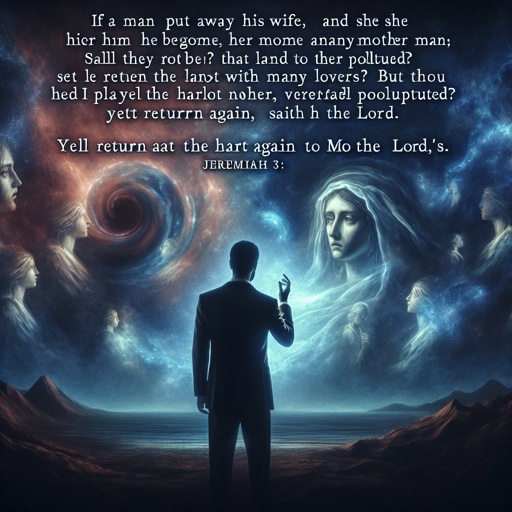
Jeremiah 3:1 - "They say, If a man put away his wife, and she go from him, and become another man's, shall he return unto her again? shall not that land be greatly polluted? but thou hast played the harlot with many lovers; yet return again to me, saith the LORD."
"They say, If a man put away his wife, and she go from him, and become another man's, shall he return unto her again? shall not that land be greatly polluted? but thou hast played the harlot with many lovers; yet return again to me, saith the LORD." - Jeremiah 3:1

Jeremiah 3:49

Jeremiah 21:3 - "¶ Then said Jeremiah unto them, Thus shall ye say to Zedekiah:"

Jeremiah 3:2

Jeremiah 33:3

Jeremiah 33:3

Jeremiah 20:3 - "And it came to pass on the morrow, that Pashur brought forth Jeremiah out of the stocks. Then said Jeremiah unto him, The LORD hath not called thy name Pashur, but Magor-missabib."

Jeremiah 1:3 - "It came also in the days of Jehoiakim the son of Josiah king of Judah, unto the end of the eleventh year of Zedekiah the son of Josiah king of Judah, unto the carrying away of Jerusalem captive in the fifth month."

Jeremiah 1:1 - "The words of Jeremiah the son of Hilkiah, of the priests that were in Anathoth in the land of Benjamin:"

Jeremiah 35:3 - "Then I took Jaazaniah the son of Jeremiah, the son of Habaziniah, and his brethren, and all his sons, and the whole house of the Rechabites;"

Jeremiah 30:1 - "The word that came to Jeremiah from the LORD, saying,"

Jeremiah 14:1 - "The word of the LORD that came to Jeremiah concerning the dearth."

Jeremiah 3:3 - "Therefore the showers have been withholden, and there hath been no latter rain; and thou hadst a whore's forehead, thou refusedst to be ashamed."

Jeremiah 7:1 - "The word that came to Jeremiah from the LORD, saying,"

Jeremiah 11:1 - "The word that came to Jeremiah from the LORD, saying,"

Jeremiah 46:3 - "Order ye the buckler and shield, and draw near to battle."

Jeremiah 37:3 - "And Zedekiah the king sent Jehucal the son of Shelemiah and Zephaniah the son of Maaseiah the priest to the prophet Jeremiah, saying, Pray now unto the LORD our God for us."

Jeremiah 48:3 - "A voice of crying shall be from Horonaim, spoiling and great destruction."

Jeremiah 18:1 - "The word which came to Jeremiah from the LORD, saying,"

Jeremiah 46:1 - "The word of the LORD which came to Jeremiah the prophet against the Gentiles;"

"¶ Then said Jeremiah unto them, Thus shall ye say to Zedekiah:" - Jeremiah 21:3

Jeremiah 13:3 - "And the word of the LORD came unto me the second time, saying,"

Jeremiah 24:3 - "Then said the LORD unto me, What seest thou, Jeremiah? And I said, Figs; the good figs, very good; and the evil, very evil, that cannot be eaten, they are so evil."

Jeremiah 1: 1-10

Jeremiah 50:1 - "The word that the LORD spake against Babylon and against the land of the Chaldeans by Jeremiah the prophet."

Jeremiah 18:3 - "Then I went down to the potter's house, and, behold, he wrought a work on the wheels."

Jeremiah 47:1 - "The word of the LORD that came to Jeremiah the prophet against the Philistines, before that Pharaoh smote Gaza."

Jeremiah 40