What does Jeremiah 37:13 mean?
"And when he was in the gate of Benjamin, a captain of the ward was there, whose name was Irijah, the son of Shelemiah, the son of Hananiah; and he took Jeremiah the prophet, saying, Thou fallest away to the Chaldeans." - Jeremiah 37:13

Jeremiah 37:13 (KJV) says, "And when he was in the gate of Benjamin, a captain of the ward was there, whose name was Irijah, the son of Shelemiah, the son of Hananiah; and he took Jeremiah the prophet, saying, Thou fallest away to the Chaldeans."
In order to fully understand the meaning and significance of this verse, it is important to consider the broader context in which it is situated. Jeremiah was a prophet who lived during a tumultuous time in the history of Israel. The nation was divided, with the northern kingdom of Israel already having fallen to the Assyrians, and the southern kingdom of Judah facing imminent invasion by the Babylonians.
The prophet Jeremiah was tasked with delivering a message of warning and judgment to the people of Judah, urging them to repent of their sins and turn back to God. However, Jeremiah's message was often met with opposition and hostility from the people and the ruling authorities. This verse captures one such moment of conflict and persecution that Jeremiah faced during his ministry.
The setting of the verse is at the gate of Benjamin, which was one of the gates of the city of Jerusalem. This gate was located in the northern part of the city and was likely a major thoroughfare for entering and exiting the city. As Jeremiah was at this gate, he encountered a captain of the ward, named Irijah, who accused him of defection to the Chaldeans, who were the Babylonians.
The significance of this encounter lies in the fact that Jeremiah was being falsely accused of treachery and betrayal. The captain of the ward, a person of authority and influence, was spreading malicious rumors about Jeremiah in an attempt to discredit and undermine his prophetic ministry. This was a common tactic used by Jeremiah's opponents, who sought to silence his message and prevent him from speaking out against the prevalent corruption and idolatry in Judah.
The name Irijah means "fearful" or "Jehovah sees," and the fact that he was the son of Shelemiah, which means "whom Jehovah repays," and the grandchild of Hananiah, meaning "Jehovah is gracious," adds a layer of symbolism to this encounter. It suggests that even those who bear names reflecting a connection to God and His attributes can be used to perpetrate injustice and oppose the true servants of God. This serves as a reminder that outward appearances and titles do not always reflect the inner character or motives of individuals.
Furthermore, the false accusation brought against Jeremiah is an example of the persecution and rejection experienced by the prophets throughout the Bible. Jesus Himself spoke about this when he said in Matthew 5:11-12 (KJV), "Blessed are ye, when men shall revile you, and persecute you, and shall say all manner of evil against you falsely, for my sake. Rejoice, and be exceeding glad: for great is your reward in heaven: for so persecuted they the prophets which were before you."
In the larger context of the book of Jeremiah, this verse also reflects the ongoing conflict between true prophecy and false prophecy. Jeremiah was constantly confronted by false prophets who spoke messages of peace and prosperity, contradicting his warnings of judgment and exile. The encounter at the gate of Benjamin illustrates the clash between the true word of God and the deceptive words of those who claimed to speak on behalf of God.
In summary, Jeremiah 37:13 (KJV) captures a moment of conflict and persecution that the prophet Jeremiah faced during his ministry. It serves as a reminder of the opposition and rejection that often accompanies the prophetic call, and the ongoing battle between truth and deception. The encounter at the gate of Benjamin also highlights the theme of false accusation and betrayal, as well as the perseverance and faithfulness of those who remain true to God's word despite opposition.
Have questions about Jeremiah 37:13?
Dive deeper into this scripture with Bible Chat — an AI-powered tool for exploring God's Word through conversation. Ask questions, get context, and grow in your understanding of the Bible.
Get Our Apps


Jeremiah 37:13 Artwork

Jeremiah 37:13 - "And when he was in the gate of Benjamin, a captain of the ward was there, whose name was Irijah, the son of Shelemiah, the son of Hananiah; and he took Jeremiah the prophet, saying, Thou fallest away to the Chaldeans."

"And when he was in the gate of Benjamin, a captain of the ward was there, whose name was Irijah, the son of Shelemiah, the son of Hananiah; and he took Jeremiah the prophet, saying, Thou fallest away to the Chaldeans." - Jeremiah 37:13

Jeremiah 37:16 - "¶ When Jeremiah was entered into the dungeon, and into the cabins, and Jeremiah had remained there many days;"

Jeremiah 37:6 - "¶ Then came the word of the LORD unto the prophet Jeremiah, saying,"

Jeremiah 37:4 - "Now Jeremiah came in and went out among the people: for they had not put him into prison."

Jeremiah 37:14 - "Then said Jeremiah, It is false; I fall not away to the Chaldeans. But he hearkened not to him: so Irijah took Jeremiah, and brought him to the princes."

Jeremiah 37:12 - "Then Jeremiah went forth out of Jerusalem to go into the land of Benjamin, to separate himself thence in the midst of the people."

Jeremiah 37:15 - "Wherefore the princes were wroth with Jeremiah, and smote him, and put him in prison in the house of Jonathan the scribe: for they had made that the prison."

"¶ Then came the word of the LORD unto the prophet Jeremiah, saying," - Jeremiah 37:6

Mark 13:28-37

Mark 13:28-37

"¶ When Jeremiah was entered into the dungeon, and into the cabins, and Jeremiah had remained there many days;" - Jeremiah 37:16

Mark 13:28-37

luke 13:28-37

Mark 13:28-37

luke 13:28-37

Jeremiah 25:37 - "And the peaceable habitations are cut down because of the fierce anger of the LORD."

Jeremiah 37:2 - "But neither he, nor his servants, nor the people of the land, did hearken unto the words of the LORD, which he spake by the prophet Jeremiah."

Jeremiah 37:8 - "And the Chaldeans shall come again, and fight against this city, and take it, and burn it with fire."
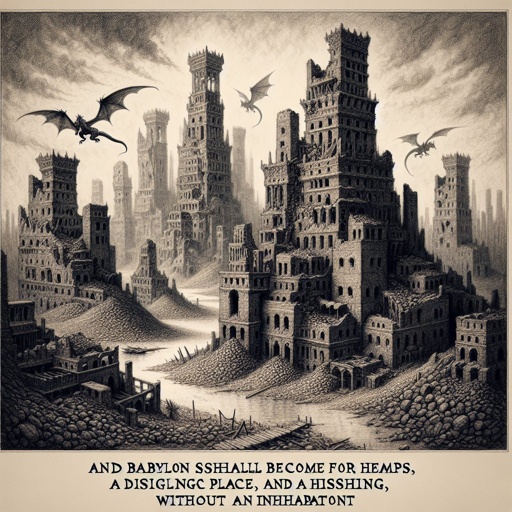
Jeremiah 51:37 - "And Babylon shall become heaps, a dwellingplace for dragons, an astonishment, and an hissing, without an inhabitant."

Jeremiah 37:3 - "And Zedekiah the king sent Jehucal the son of Shelemiah and Zephaniah the son of Maaseiah the priest to the prophet Jeremiah, saying, Pray now unto the LORD our God for us."

Jeremiah 37:21 - "Then Zedekiah the king commanded that they should commit Jeremiah into the court of the prison, and that they should give him daily a piece of bread out of the bakers' street, until all the bread in the city were spent. Thus Jeremiah remained in the court of the prison."

Jeremiah 37:18 - "Moreover Jeremiah said unto king Zedekiah, What have I offended against thee, or against thy servants, or against this people, that ye have put me in prison?"

Acts 13:37 - "But he, whom God raised again, saw no corruption."

Jeremiah 37:11 - "¶ And it came to pass, that when the army of the Chaldeans was broken up from Jerusalem for fear of Pharaoh's army,"

Job 37:13 - "He causeth it to come, whether for correction, or for his land, or for mercy."

"Now Jeremiah came in and went out among the people: for they had not put him into prison." - Jeremiah 37:4

Psalms 37:13 - "The Lord shall laugh at him: for he seeth that his day is coming."

Jeremiah 23:37 - "Thus shalt thou say to the prophet, What hath the LORD answered thee? and, What hath the LORD spoken?"

Jeremiah 37:9 - "Thus saith the LORD; Deceive not yourselves, saying, The Chaldeans shall surely depart from us: for they shall not depart."