What does Jeremiah 32:27 mean?
"Behold, I am the LORD, the God of all flesh: is there any thing too hard for me?" - Jeremiah 32:27
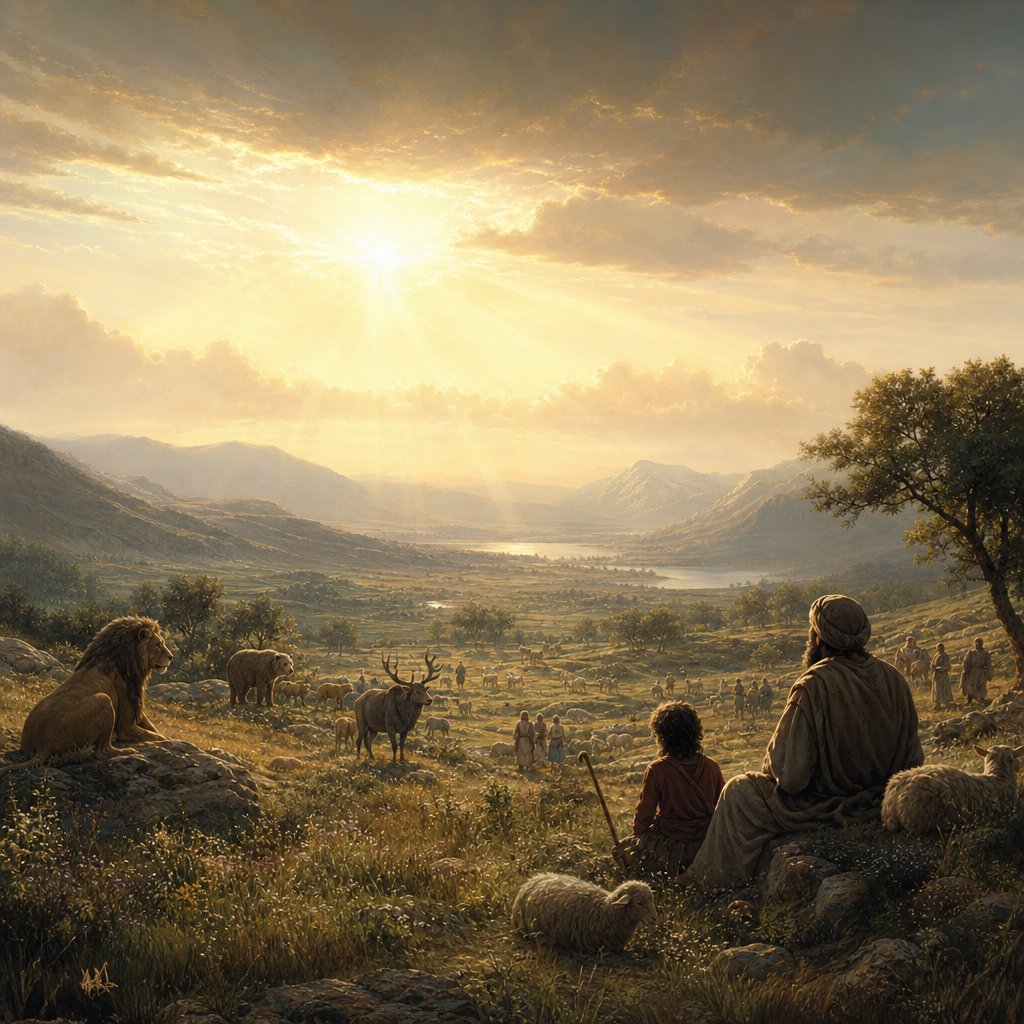
Jeremiah 32:27 in the KJV reads, “Behold, I am the LORD, the God of all flesh: is there any thing too hard for me?” Its meaning is carried first by the force of that opening word, “Behold.” God is not offering a casual reminder but calling Jeremiah to look steadily at who is speaking and what that identity implies. The verse is a divine self-revelation: the LORD declares Himself to be “the God of all flesh,” the One whose rule is not confined to Judah, not limited by armies, politics, time, or human weakness, but extending over every living person and every embodied circumstance. The rhetorical question that follows, “is there any thing too hard for me?” is meant to overturn despair and to expose the smallness of human calculations when they are treated as ultimate. It does not deny that events can be impossible for men; it insists that no event, no promise, and no judgment is impossible for God.
The immediate context in Jeremiah 32 gives the verse its sharpness. Jeremiah is shut up in “the court of the prison” while Jerusalem is under siege, and the fall of the city to the king of Babylon is impending. In that setting God commands Jeremiah to do something that looks irrational: to buy a field in Anathoth, to weigh out the silver, to sign and seal the evidence, to take witnesses, and to preserve the deeds “in an earthen vessel, that they may continue many days.” Jeremiah obeys, but then prays with a mind caught between what he knows God has said about judgment and what God has just made him do as a sign of future hope. His prayer includes the recognition, “there is nothing too hard for thee,” yet he also asks, in effect, how the purchase makes sense when the city is being given into the hand of the Chaldeans. Jeremiah 32:27 is God’s answer that reaches beneath the practical question to the root issue: Jeremiah must not interpret God’s promise through the apparent finality of the siege. God anchors Jeremiah’s understanding not in circumstances but in the nature of God Himself.
This verse therefore holds together two themes that run through the chapter and through Jeremiah: righteous judgment and faithful restoration. The siege, the captivity, and the coming desolation are not accidents; they are the outworking of covenant-breaking, violence, idolatry, and stubborn refusal to hear the prophets. Yet the field purchase, the careful legal procedure, and the preservation of the deeds symbolize that judgment is not God’s last word to His people. The land will again have buyers and sellers; houses and fields and vineyards will again be possessed. Jeremiah 32:27 sits at the hinge between the reality of devastation and the certainty of renewal. God’s question, “is there any thing too hard for me?” applies as much to executing judgment as to performing mercy. He is able to bring down what seems unshakeable, and He is able to rebuild what seems beyond recovery.
The phrase “the God of all flesh” also widens the horizon beyond Jeremiah’s personal distress and Judah’s national crisis. “Flesh” in Scripture often emphasizes creatureliness, frailty, and limits. Men are subject to hunger, fear, exhaustion, mortality; kingdoms rise and fall; strategies fail; strength decays. By declaring Himself God “of all flesh,” the LORD asserts mastery over the very realm where impossibility is felt most acutely: human limitation. The Babylonian army, the political decisions of kings, the strength of walls, and the weakness of prisoners are all within His rule. This is why the verse does not function merely as comfort but as theology: it teaches that God’s promises and threats are grounded in omnipotence. The same God who formed life governs life; therefore no circumstance can veto His word.
Symbolically, Jeremiah’s purchase of the field becomes a living parable. In human terms it is a foolish investment; in God’s terms it is a seed of testimony planted in the soil of catastrophe. The sealed deed kept in an earthen vessel speaks of preservation through long waiting. Earthenware is ordinary, fragile, and yet suited to endure when stored; it mirrors the way God often hides enduring hope in humble forms. The field itself stands for the future that God intends to give after the exile, when what seems lost will be restored. Jeremiah 32:27 underwrites that symbolism by declaring the divine capacity to do what the sign signifies. Without this verse, the sign could be mistaken for mere optimism; with it, the act is grounded in the LORD’s unlimited power.
The significance of Jeremiah 32:27, then, is that it confronts the moment when faith is tempted to collapse into fatalism. Jerusalem’s fall is near; Jeremiah is confined; the evidence of defeat is visible; hope seems naïve. God does not answer by minimizing the coming ruin; He answers by magnifying Himself. He identifies Himself as LORD, sovereign in covenant and authority, and as God of all flesh, sovereign over the whole human condition. The question “is there any thing too hard for me?” is meant to draw Jeremiah—and any reader—into a posture where God’s word rules interpretation. It teaches that when God announces judgment, it will certainly come, even if men think it cannot; and when God promises restoration, it will certainly come, even if men think it cannot. In the darkest circumstances, Jeremiah 32:27 insists that the final measure of possibility is not what the eyes see but who the LORD is.
Have questions about Jeremiah 32:27?
Dive deeper into this scripture with Bible Chat — an AI-powered tool for exploring God's Word through conversation. Ask questions, get context, and grow in your understanding of the Bible.
Get Our Apps


Jeremiah 32:27 Artwork

Jeremiah 32:27 - "Behold, I am the LORD, the God of all flesh: is there any thing too hard for me?"

"Behold, I am the LORD, the God of all flesh: is there any thing too hard for me?" - Jeremiah 32:27
"Behold, I am the LORD, the God of all flesh: is there any thing too hard for me?" - Jeremiah 32:27

"Behold, I am the LORD, the God of all flesh: is there any thing too hard for me?" - Jeremiah 32:27

Genesis 27:32

Jeremiah 32:26 - "¶ Then came the word of the LORD unto Jeremiah, saying,"

Jeremiah 32:6 - "¶ And Jeremiah said, The word of the LORD came unto me, saying,"

Jeremiah 32:18

Jeremiah 32:38 - "And they shall be my people, and I will be their God:"

Jeremiah 32:1 - "The word that came to Jeremiah from the LORD in the tenth year of Zedekiah king of Judah, which was the eighteenth year of Nebuchadrezzar."

"¶ Then came the word of the LORD unto Jeremiah, saying," - Jeremiah 32:26

Jeremiah 32:2 - "For then the king of Babylon's army besieged Jerusalem: and Jeremiah the prophet was shut up in the court of the prison, which was in the king of Judah's house."

Jeremiah 32:13 - "¶ And I charged Baruch before them, saying,"

Acts 27:32 - "Then the soldiers cut off the ropes of the boat, and let her fall off."

Jeremiah 36:27 - "¶ Then the word of the LORD came to Jeremiah, after that the king had burned the roll, and the words which Baruch wrote at the mouth of Jeremiah, saying,"

Genesis 32:27 - "And he said unto him, What is thy name? And he said, Jacob."

Jeremiah 32:34 - "But they set their abominations in the house, which is called by my name, to defile it."

Jeremiah 32:32 - "Because of all the evil of the children of Israel and of the children of Judah, which they have done to provoke me to anger, they, their kings, their princes, their priests, and their prophets, and the men of Judah, and the inhabitants of Jerusalem."

"¶ And Jeremiah said, The word of the LORD came unto me, saying," - Jeremiah 32:6

Jeremiah 29:27 - "Now therefore why hast thou not reproved Jeremiah of Anathoth, which maketh himself a prophet to you?"

Jeremiah 51:32 - "And that the passages are stopped, and the reeds they have burned with fire, and the men of war are affrighted."

Jeremiah 27:1 - "In the beginning of the reign of Jehoiakim the son of Josiah king of Judah came this word unto Jeremiah from the LORD, saying,"

Matthew 27:32 - "And as they came out, they found a man of Cyrene, Simon by name: him they compelled to bear his cross."

Jeremiah 32:10 - "And I subscribed the evidence, and sealed it, and took witnesses, and weighed him the money in the balances."

Leviticus 27:32 - "And concerning the tithe of the herd, or of the flock, even of whatsoever passeth under the rod, the tenth shall be holy unto the LORD."

1 Chronicles 27:32 - "Also Jonathan David's uncle was a counsellor, a wise man, and a scribe: and Jehiel the son of Hachmoni was with the king's sons:"

Numbers 32:27 - "But thy servants will pass over, every man armed for war, before the LORD to battle, as my lord saith."

"And they shall be my people, and I will be their God:" - Jeremiah 32:38

Jeremiah 22:27 - "But to the land whereunto they desire to return, thither shall they not return."

Jeremiah 52:32 - "And spake kindly unto him, and set his throne above the throne of the kings that were with him in Babylon,"