What does Jeremiah 32:11 mean?
"So I took the evidence of the purchase, both that which was sealed according to the law and custom, and that which was open:" - Jeremiah 32:11
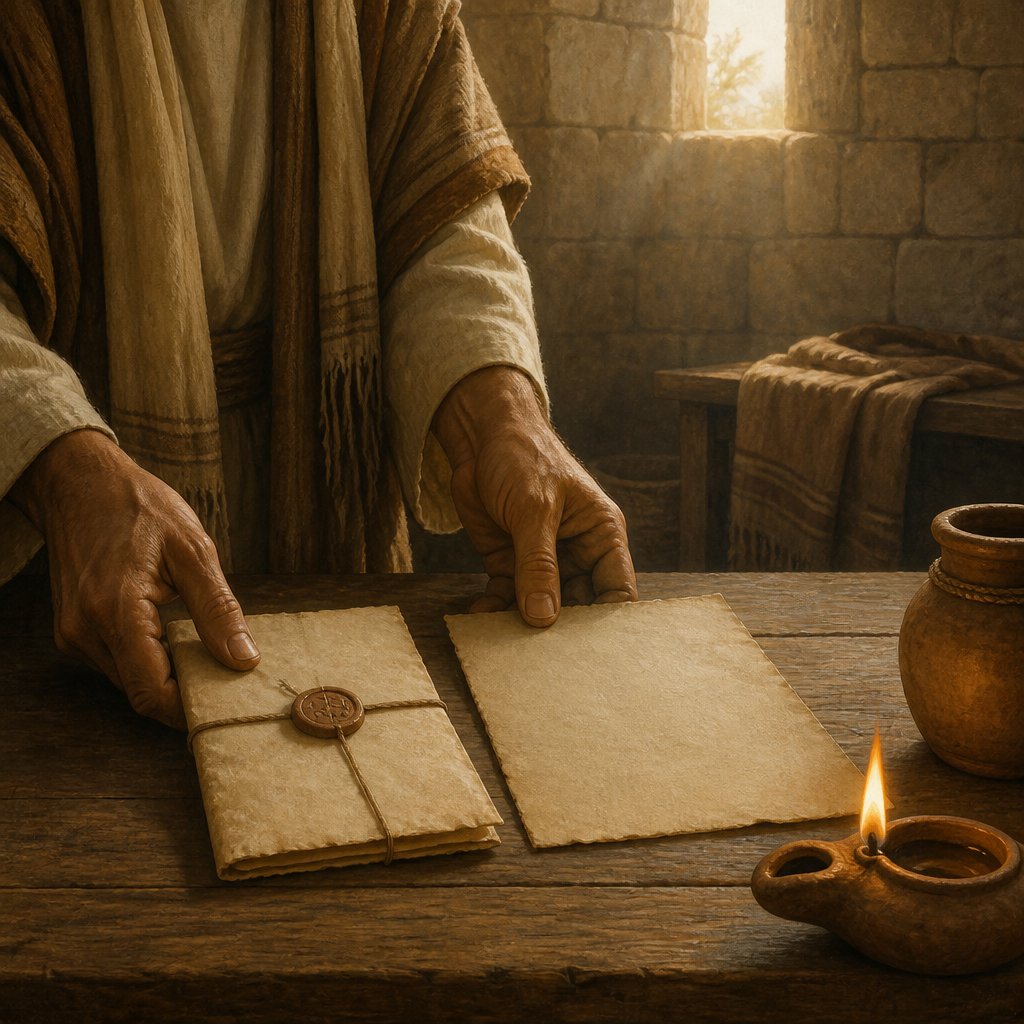
The Bible verse Jeremiah 32:11 in the King James Version (KJV) reads, "So I took the evidence of the purchase, both that which was sealed according to the law and custom, and that which was open." At first glance, this verse may seem insignificant, but when we examine it in its context, we can uncover a deeper meaning.
The book of Jeremiah takes place during a tumultuous period in Israel's history. The prophet Jeremiah is living in a time of great upheaval and uncertainty. The people of Judah have turned away from God, and this has caused significant strife and chaos in the land. As a result, the kingdom of Judah is facing destruction at the hands of the Babylonians.
In the midst of this turmoil, God instructs Jeremiah to purchase a field from his cousin Hanamel. This seems like an unusual command given the circumstances, but it serves as a powerful symbol of hope and restoration. By purchasing the field, Jeremiah is declaring his faith in God's promise to eventually bring the people of Judah back from exile and restore the land. This act of purchasing the field becomes a tangible demonstration of Jeremiah's unwavering belief in God's faithfulness, even in the face of seemingly insurmountable odds.
In verse 11, Jeremiah describes taking the evidence of the purchase, both the sealed and open documents, according to the law and custom. This meticulous attention to detail highlights the importance of the transaction and the legalities surrounding it. It demonstrates Jeremiah's obedience and adherence to the law, as well as his commitment to fulfilling God's instructions with integrity and honor.
The symbolism in this verse is profound. The sealed document represents the certainty of God's promise, while the open document signifies the unfolding of that promise in the future. By including both the sealed and open evidence, Jeremiah is acknowledging the present reality of the Babylonian exile while also looking forward to the fulfillment of God's promise of restoration. This duality emphasizes the tension between the current hardships and the hope for a better future, a theme that resonates throughout the book of Jeremiah.
Furthermore, the act of purchasing the field and meticulously documenting the transaction speaks to the larger biblical theme of stewardship and responsibility. God has entrusted the land to the people of Israel, and by purchasing the field, Jeremiah is affirming his commitment to care for and preserve the land, despite the current desolation. This serves as a reminder of the larger truth that God's people are called to be faithful stewards of the resources and blessings that God has provided.
Ultimately, this verse encapsulates the tension between present circumstances and future hope, between the destruction of exile and the promise of restoration. It serves as a powerful reminder of the faithfulness and sovereignty of God, even in the midst of seemingly insurmountable difficulties. Jeremiah's obedience and unwavering faith in the face of adversity are an inspiration to believers today to trust in God's promises and remain steadfast in their commitment to Him, regardless of the challenges that may arise.
Have questions about Jeremiah 32:11?
Dive deeper into this scripture with Bible Chat — an AI-powered tool for exploring God's Word through conversation. Ask questions, get context, and grow in your understanding of the Bible.
Get Our Apps


Jeremiah 32:11 Artwork

Jeremiah 32:11 - "So I took the evidence of the purchase, both that which was sealed according to the law and custom, and that which was open:"
"So I took the evidence of the purchase, both that which was sealed according to the law and custom, and that which was open:" - Jeremiah 32:11

Jeremiah 32:26 - "¶ Then came the word of the LORD unto Jeremiah, saying,"

Jeremiah 32:6 - "¶ And Jeremiah said, The word of the LORD came unto me, saying,"

Jeremiah 32:18

Jeremiah 32:38 - "And they shall be my people, and I will be their God:"

Jeremiah 32:1 - "The word that came to Jeremiah from the LORD in the tenth year of Zedekiah king of Judah, which was the eighteenth year of Nebuchadrezzar."

"¶ Then came the word of the LORD unto Jeremiah, saying," - Jeremiah 32:26

Jeremiah 32:2 - "For then the king of Babylon's army besieged Jerusalem: and Jeremiah the prophet was shut up in the court of the prison, which was in the king of Judah's house."

Jeremiah 32:13 - "¶ And I charged Baruch before them, saying,"

Jeremiah 32:34 - "But they set their abominations in the house, which is called by my name, to defile it."

Jeremiah 32:32 - "Because of all the evil of the children of Israel and of the children of Judah, which they have done to provoke me to anger, they, their kings, their princes, their priests, and their prophets, and the men of Judah, and the inhabitants of Jerusalem."

Nehemiah 11:32 - "And at Anathoth, Nob, Ananiah,"

Romans 11:25-32

Luke 15:11-32

"¶ And Jeremiah said, The word of the LORD came unto me, saying," - Jeremiah 32:6

Jeremiah 51:32 - "And that the passages are stopped, and the reeds they have burned with fire, and the men of war are affrighted."

Jeremiah 32:10 - "And I subscribed the evidence, and sealed it, and took witnesses, and weighed him the money in the balances."

1 Kings 11:29-32

Jeremiah 11:1 - "The word that came to Jeremiah from the LORD, saying,"

1 Chronicles 11:32 - "Hurai of the brooks of Gaash, Abiel the Arbathite,"

Jeremiah 32:27 - "Behold, I am the LORD, the God of all flesh: is there any thing too hard for me?"

"And they shall be my people, and I will be their God:" - Jeremiah 32:38

Jeremiah 52:32 - "And spake kindly unto him, and set his throne above the throne of the kings that were with him in Babylon,"

Jeremiah 29:11-13

Jeremiah 29:11-13

"And at Anathoth, Nob, Ananiah," - Nehemiah 11:32

Jeremiah 32:15 - "For thus saith the LORD of hosts, the God of Israel; Houses and fields and vineyards shall be possessed again in this land."

Jeremiah 36:32 - "¶ Then took Jeremiah another roll, and gave it to Baruch the scribe, the son of Neriah; who wrote therein from the mouth of Jeremiah all the words of the book which Jehoiakim king of Judah had burned in the fire: and there were added besides unto them many like words."

Jeremiah 29:11-13