What does Jeremiah 24:3 mean?
"Then said the LORD unto me, What seest thou, Jeremiah? And I said, Figs; the good figs, very good; and the evil, very evil, that cannot be eaten, they are so evil." - Jeremiah 24:3
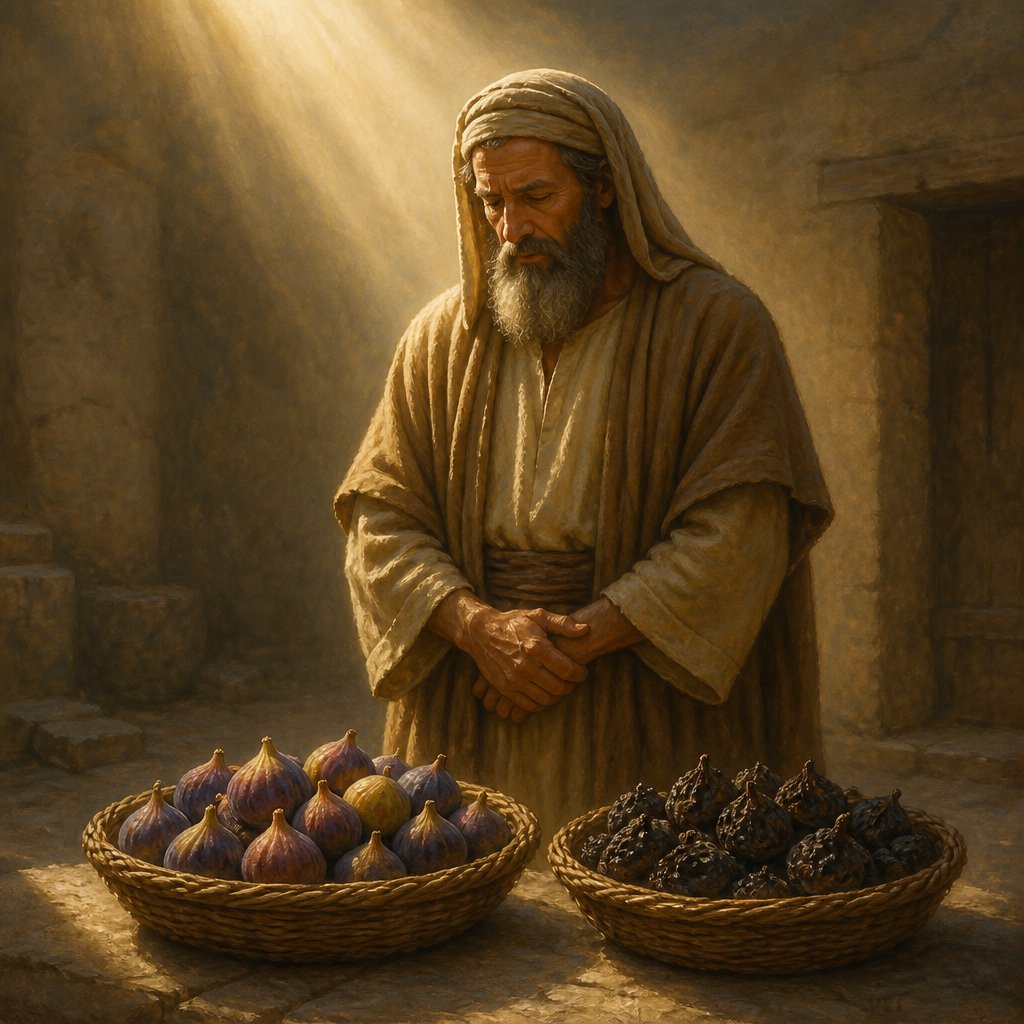
In Jeremiah 24:3, the King James Version (KJV) of the Bible reads: "Then said the Lord unto me, What seest thou, Jeremiah? And I said: Figs; the good figs, very good; and the evil, very evil, that cannot be eaten, they are so evil."
This verse is part of a larger passage in the book of Jeremiah, which is a prophetic book in the Old Testament. Jeremiah was a prophet who lived during the time of the Babylonian exile, and the book of Jeremiah contains his prophecies and messages from God to the people of Judah. In this particular passage, Jeremiah is given a vision by the Lord, in which he sees a basket of figs. The figs represent the people of Judah, and the vision is meant to convey a message about their fate.
The symbolism of figs in this passage is significant. Figs were a common fruit in the ancient Near East, and they often represented prosperity, abundance, and fruitfulness. In this passage, the figs are used to symbolize the people of Judah, and their condition is likened to the quality of the figs. The "good figs" represent the righteous and faithful people, those who have remained true to God and His commandments. The "evil figs" represent the wicked and disobedient people, those who have turned away from God and embraced evil.
The Lord's question to Jeremiah, "What seest thou, Jeremiah?" is a way of prompting Jeremiah to reflect on what he is seeing and to understand its significance. This question also demonstrates the Lord's desire to engage in dialogue with his prophet and to involve him in the revelation of the vision.
When Jeremiah responds that he sees "figs; the good figs, very good; and the evil, very evil, that cannot be eaten, they are so evil," he is acknowledging the extreme contrast between the two groups of people. The "good figs" are of such high quality that they are "very good," indicating their righteousness and worthiness. On the other hand, the "evil figs" are so rotten and corrupt that they cannot even be eaten, emphasizing their wickedness and lack of redeeming qualities.
This passage is a reflection of the themes of sin, righteousness, and judgment that are prevalent throughout the book of Jeremiah. It conveys the idea that God sees and knows the hearts of the people, and he will judge them according to their actions and their faithfulness to Him.
The context of this passage is important for understanding its meaning. At the time of Jeremiah, the kingdom of Judah was in a state of moral and spiritual decay. The people had turned away from God and were engaging in idolatry, injustice, and other sins. Jeremiah had been prophesying to the people, calling them to repentance and warning them of the consequences of their actions. The vision of the figs serves as a visual representation of the spiritual condition of the people and foreshadows the impending judgment that will befall them.
In conclusion, Jeremiah 24:3 is a powerful and evocative passage that uses the symbolism of figs to convey a message about the spiritual condition of the people of Judah. It serves as a sobering reminder of the importance of righteousness and fidelity to God, as well as the repercussions of turning away from Him. The passage also emphasizes the omniscience and justice of God, who sees the hearts of people and will judge them accordingly. It is a timeless message that continues to resonate with readers today, serving as a call to examine our own hearts and actions in light of God's standards.
Have questions about Jeremiah 24:3?
Dive deeper into this scripture with Bible Chat — an AI-powered tool for exploring God's Word through conversation. Ask questions, get context, and grow in your understanding of the Bible.
Get Our Apps


Jeremiah 24:3 Artwork

Jeremiah 24:3 - "Then said the LORD unto me, What seest thou, Jeremiah? And I said, Figs; the good figs, very good; and the evil, very evil, that cannot be eaten, they are so evil."
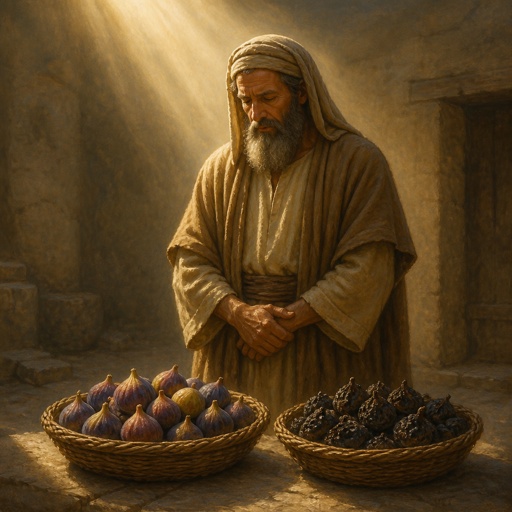
"Then said the LORD unto me, What seest thou, Jeremiah? And I said, Figs; the good figs, very good; and the evil, very evil, that cannot be eaten, they are so evil." - Jeremiah 24:3
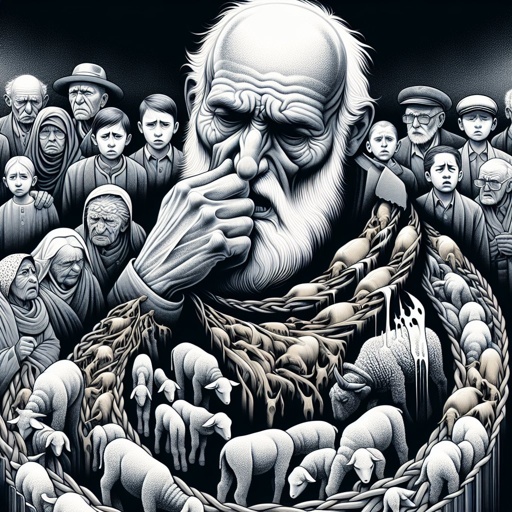
Jeremiah 3:24 - "For shame hath devoured the labour of our fathers from our youth; their flocks and their herds, their sons and their daughters."
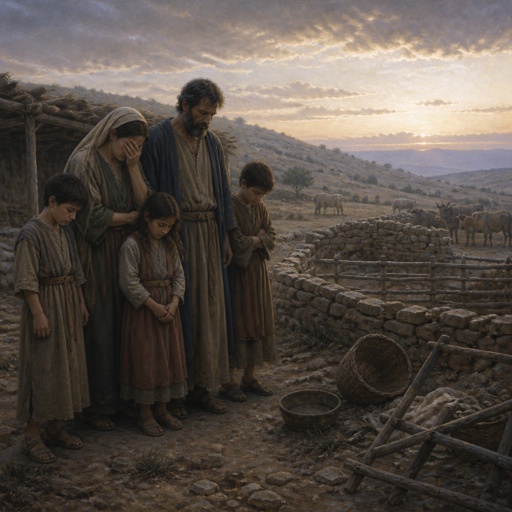
"For shame hath devoured the labour of our fathers from our youth; their flocks and their herds, their sons and their daughters." - Jeremiah 3:24

Jeremiah 38:24 - "¶ Then said Zedekiah unto Jeremiah, Let no man know of these words, and thou shalt not die."

Jeremiah 26:24 - "Nevertheless the hand of Ahikam the son of Shaphan was with Jeremiah, that they should not give him into the hand of the people to put him to death."

Jeremiah 44:24 - "Moreover Jeremiah said unto all the people, and to all the women, Hear the word of the LORD, all Judah that are in the land of Egypt:"

Jeremiah 24:4 - "¶ Again the word of the LORD came unto me, saying,"

Jeremiah 29:24 - "¶ Thus shalt thou also speak to Shemaiah the Nehelamite, saying,"

Jeremiah 13:24 - "Therefore will I scatter them as the stubble that passeth away by the wind of the wilderness."

Jeremiah 25:24 - "And all the kings of Arabia, and all the kings of the mingled people that dwell in the desert,"

Jeremiah 4:24 - "I beheld the mountains, and, lo, they trembled, and all the hills moved lightly."

Jeremiah 21:3 - "¶ Then said Jeremiah unto them, Thus shall ye say to Zedekiah:"

Genesis 3:24

Genesis 24-3

Jeremiah 46:24 - "The daughter of Egypt shall be confounded; she shall be delivered into the hand of the people of the north."

Jeremiah 48:24 - "And upon Kerioth, and upon Bozrah, and upon all the cities of the land of Moab, far or near."

Jeremiah 3:2

Jeremiah 33:3

Romans 3:24

Jeremiah 33:3

Jeremiah 3:1

Jeremiah 3:49

Jeremiah 10:24 - "O LORD, correct me, but with judgment; not in thine anger, lest thou bring me to nothing."

Jeremiah 52:24 - "¶ And the captain of the guard took Seraiah the chief priest, and Zephaniah the second priest, and the three keepers of the door:"

Jeremiah 7:24 - "But they hearkened not, nor inclined their ear, but walked in the counsels and in the imagination of their evil heart, and went backward, and not forward."

Jeremiah 31:24 - "And there shall dwell in Judah itself, and in all the cities thereof together, husbandmen, and they that go forth with flocks."

"¶ Then said Zedekiah unto Jeremiah, Let no man know of these words, and thou shalt not die." - Jeremiah 38:24

Psalm 24:3-4

Jeremiah 20:3 - "And it came to pass on the morrow, that Pashur brought forth Jeremiah out of the stocks. Then said Jeremiah unto him, The LORD hath not called thy name Pashur, but Magor-missabib."