What does Jeremiah 14:2 mean?
"Judah mourneth, and the gates thereof languish; they are black unto the ground; and the cry of Jerusalem is gone up." - Jeremiah 14:2
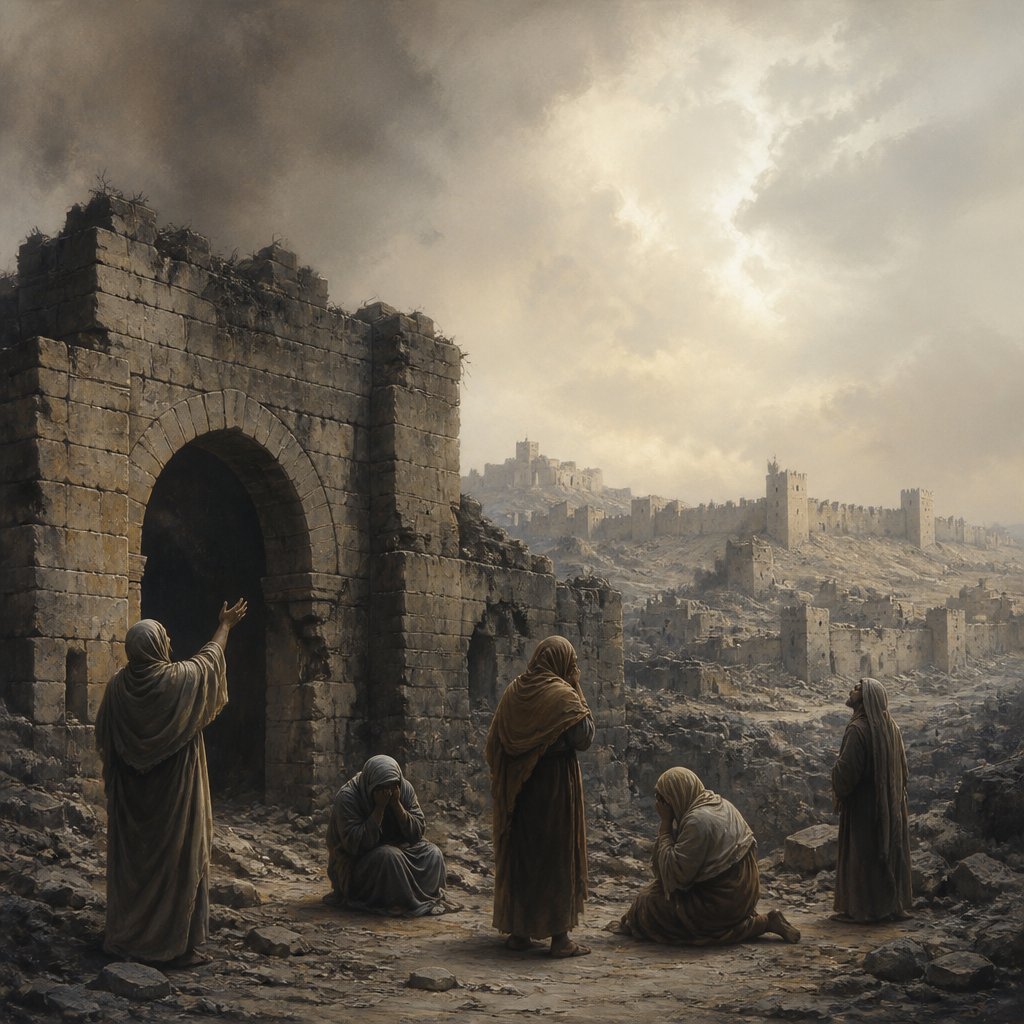
The verse Jeremiah 14:2 in the King James Version of the Bible reads, "Judah mourneth, and the gates thereof languish; they are black unto the ground; and the cry of Jerusalem is gone up." This verse is part of the book of Jeremiah, which is a prophetic book in the Old Testament. The book of Jeremiah contains the messages and prophecies of the prophet Jeremiah, who lived in a tumultuous period in Judah's history.
In this particular verse, Jeremiah is describing the state of Judah, which is both figuratively and literally dark and sorrowful. The use of the word "black" signifies the deep mourning and despair that the people of Judah are experiencing. The gates of the city, which were once strong and vibrant, are now languishing, suggesting a sense of weakness and decay. The cry of Jerusalem has gone up, indicating a desperate plea for help and deliverance.
The context of this verse is important in understanding its meaning. At the time of Jeremiah, Judah was facing political turmoil, moral decline, and the imminent threat of invasion from foreign powers. The people had turned away from God and were engaging in idolatry and injustice. Jeremiah, as a prophet, was tasked with delivering messages of warning and judgment to the people, urging them to turn back to God and seek righteousness.
One of the key themes in this verse is the consequences of sin and disobedience. The mourning and despair in Judah are a direct result of the people's rebellion against God and failure to uphold their covenant with Him. The decay of the city gates symbolizes the breakdown of their society and the loss of strength and protection. The cry of Jerusalem represents the people's desperate need for salvation and restoration.
Another theme that can be derived from this verse is the faithfulness of God. Despite the dire circumstances that the people of Judah find themselves in, there is still hope for redemption. Throughout the book of Jeremiah, God offers the people a path to repentance and restoration. This verse serves as a reminder that even in the midst of suffering and despair, God is still present and willing to hear the cries of His people.
The symbolism in this verse is significant in conveying the message of lamentation and desperation. The imagery of blackness and languishing gates evokes a sense of darkness and hopelessness. The cry of Jerusalem represents the plea for divine intervention and mercy. These symbols serve to underscore the gravity of the situation and the urgency of the people's need for God's intervention.
In conclusion, Jeremiah 14:2 is a poignant depiction of the sorrow and despair that the people of Judah experienced as a result of their disobedience and sin. The verse highlights the consequences of turning away from God and the longing for His deliverance. However, it also conveys a message of hope, as it reflects the faithfulness of God and His willingness to hear the cries of His people. Overall, this verse serves as a powerful reminder of the importance of remaining faithful to God and seeking His mercy and restoration.
Have questions about Jeremiah 14:2?
Dive deeper into this scripture with Bible Chat — an AI-powered tool for exploring God's Word through conversation. Ask questions, get context, and grow in your understanding of the Bible.
Get Our Apps


Jeremiah 14:2 Artwork

Jeremiah 14:2 - "Judah mourneth, and the gates thereof languish; they are black unto the ground; and the cry of Jerusalem is gone up."
"Judah mourneth, and the gates thereof languish; they are black unto the ground; and the cry of Jerusalem is gone up." - Jeremiah 14:2

Jeremiah 14:1 - "The word of the LORD that came to Jeremiah concerning the dearth."
"¶ Is Israel a servant? is he a homeborn slave? why is he spoiled?" - Jeremiah 2:14

Jeremiah 37:14 - "Then said Jeremiah, It is false; I fall not away to the Chaldeans. But he hearkened not to him: so Irijah took Jeremiah, and brought him to the princes."

Jeremiah 29: 4-14

Jeremiah 29: 4-14

Jeremiah 29: 4-14

Jeremiah 29: 4-14

Jeremiah 29: 4-14

"The word of the LORD that came to Jeremiah concerning the dearth." - Jeremiah 14:1

Jeremiah 38:14 - "¶ Then Zedekiah the king sent, and took Jeremiah the prophet unto him into the third entry that is in the house of the LORD: and the king said unto Jeremiah, I will ask thee a thing; hide nothing from me."

Jeremiah 14:11 - "Then said the LORD unto me, Pray not for this people for their good."

Jeremiah 19:14 - "Then came Jeremiah from Tophet, whither the LORD had sent him to prophesy; and he stood in the court of the LORD'S house; and said to all the people,"

Jeremiah 14:5 - "Yea, the hind also calved in the field, and forsook it, because there was no grass."

Jeremiah 48:14 - "¶ How say ye, We are mighty and strong men for the war?"

Jeremiah 14:4 - "Because the ground is chapt, for there was no rain in the earth, the plowmen were ashamed, they covered their heads."

Jeremiah 39:14 - "Even they sent, and took Jeremiah out of the court of the prison, and committed him unto Gedaliah the son of Ahikam the son of Shaphan, that he should carry him home: so he dwelt among the people."

Jeremiah 9:14 - "But have walked after the imagination of their own heart, and after Baalim, which their fathers taught them:"

Jeremiah 26:14 - "As for me, behold, I am in your hand: do with me as seemeth good and meet unto you."

Jeremiah 52:14 - "And all the army of the Chaldeans, that were with the captain of the guard, brake down all the walls of Jerusalem round about."

"Then said Jeremiah, It is false; I fall not away to the Chaldeans. But he hearkened not to him: so Irijah took Jeremiah, and brought him to the princes." - Jeremiah 37:14

Jeremiah 31:14 - "And I will satiate the soul of the priests with fatness, and my people shall be satisfied with my goodness, saith the LORD."

Jeremiah 20:14 - "¶ Cursed be the day wherein I was born: let not the day wherein my mother bare me be blessed."

Jeremiah 6:14 - "They have healed also the hurt of the daughter of my people slightly, saying, Peace, peace; when there is no peace."

Jeremiah 25:2 - "The which Jeremiah the prophet spake unto all the people of Judah, and to all the inhabitants of Jerusalem, saying,"

Jeremiah 1:14 - "Then the LORD said unto me, Out of the north an evil shall break forth upon all the inhabitants of the land."

Jeremiah 3:2

Jeremiah 14:20 - "We acknowledge, O LORD, our wickedness, and the iniquity of our fathers: for we have sinned against thee."

Jeremiah 20:2 - "Then Pashur smote Jeremiah the prophet, and put him in the stocks that were in the high gate of Benjamin, which was by the house of the LORD."