What does James 2:24 mean?
"Ye see then how that by works a man is justified, and not by faith only." - James 2:24
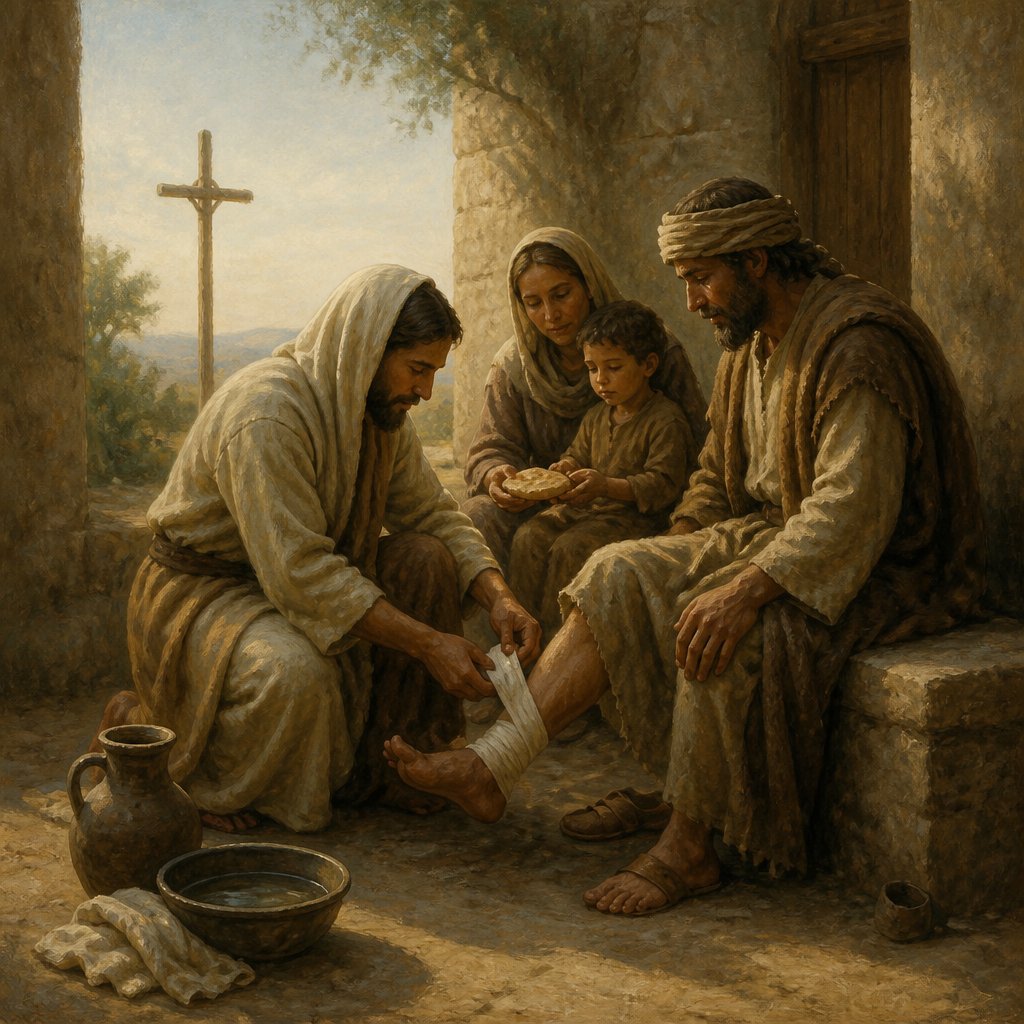
James 2:24 in the King James Version of the Bible states, "Ye see then how that by works a man is justified, and not by faith only." This powerful verse from the Epistle of James encapsulates a central theme in the Christian faith and has been the subject of much theological debate and discussion.
The context of James 2:24 is essential for understanding its meaning. The overarching theme of the Epistle of James is the relationship between faith and works. In the preceding verses, James emphasizes the importance of putting one's faith into action, rather than relying solely on professed beliefs. He specifically addresses the issue of showing partiality to the rich and neglecting the poor, highlighting the incongruity between claiming to have faith in Christ while acting in ways that are contrary to his teachings.
In James 2:14-26, James argues that true faith is demonstrated through actions and deeds, rather than words alone. He uses the example of Abraham, who was justified by his willingness to offer his son Isaac as a sacrifice (Genesis 22). James contrasts this with the example of Rahab, the prostitute, who was justified by her actions in hiding the Israelite spies (Joshua 2). In both cases, their faith was made evident through their works.
The verse contains several layers of meaning. Firstly, it challenges the notion that faith alone is sufficient for salvation. This aligns with the broader biblical teaching that genuine faith always results in a transformed life and good works. James is cautioning against a superficial, intellectual faith that does not produce tangible change in a person's behavior and character.
Secondly, the verse underscores the idea that faith and works are interconnected. While salvation is received through faith in Christ, genuine faith is not passive but active. It is demonstrated through acts of compassion, justice, and righteousness. Without works, faith is incomplete and ultimately ineffective.
The verse also carries profound implications for the Christian life. It calls believers to live out their faith in practical ways, reflecting the love and compassion of Christ through their actions. It challenges the notion that faith can be compartmentalized from everyday life and urges a holistic integration of belief and behavior.
In terms of symbolism, James 2:24 represents the tension between grace and works in Christian theology. The verse emphasizes the necessity of both faith and works in the believer's life, without elevating one over the other. This stands in contrast to the teachings of the apostle Paul, who emphasizes salvation by grace through faith apart from works (Ephesians 2:8-9). The tension between these perspectives has been a point of theological debate for centuries, demonstrating the richness and complexity of biblical truth.
Overall, James 2:24 is a pivotal scripture that challenges believers to examine the authenticity of their faith and the fruit it produces. It also serves as a reminder of the inseparable link between faith and works, urging Christians to embody the love and compassion of Christ in tangible ways. This verse continues to be a source of contemplation and inspiration for believers as they seek to live out their faith in a world in need of grace and justice.
Have questions about James 2:24?
Dive deeper into this scripture with Bible Chat — an AI-powered tool for exploring God's Word through conversation. Ask questions, get context, and grow in your understanding of the Bible.
Get Our Apps


James 2:24 Artwork

James 2:24 - "Ye see then how that by works a man is justified, and not by faith only."
"Ye see then how that by works a man is justified, and not by faith only." - James 2:24

James 2:2-4

James 2:4 - "Are ye not then partial in yourselves, and are become judges of evil thoughts?"

"Are ye not then partial in yourselves, and are become judges of evil thoughts?" - James 2:4

james 2:26

Luke 24:10 - "It was Mary Magdalene, and Joanna, and Mary the mother of James, and other women that were with them, which told these things unto the apostles."

James 1:2-13

James 1: 2-4

James 1:2-13

James 1:2-4

James 5:2 - "Your riches are corrupted, and your garments are motheaten."

Acts 12:2 - "And he killed James the brother of John with the sword."

James 2:15 - "If a brother or sister be naked, and destitute of daily food,"

James 2:7 - "Do not they blaspheme that worthy name by the which ye are called?"

“And it came to pass after this, that Benhadad king of Syria gathered all his host, and went up, and besieged Samaria.” — 2 Kings 6:24 (KJV)

James 2:17 - "Even so faith, if it hath not works, is dead, being alone."

James 2:12 - "So speak ye, and so do, as they that shall be judged by the law of liberty."

James 2:2 - "For if there come unto your assembly a man with a gold ring, in goodly apparel, and there come in also a poor man in vile raiment;"

James 2:26 - "For as the body without the spirit is dead, so faith without works is dead also."

James 1:2 - "My brethren, count it all joy when ye fall into divers temptations;"

James 2:9 - "But if ye have respect to persons, ye commit sin, and are convinced of the law as transgressors."

James 2:20 - "But wilt thou know, O vain man, that faith without works is dead?"

James 2:22 - "Seest thou how faith wrought with his works, and by works was faith made perfect?"

"For he beholdeth himself, and goeth his way, and straightway forgetteth what manner of man he was." - James 1:24

James 2:19 - "Thou believest that there is one God; thou doest well: the devils also believe, and tremble."

James 2:10 - "For whosoever shall keep the whole law, and yet offend in one point, he is guilty of all."

James 2:1 - "My brethren, have not the faith of our Lord Jesus Christ, the Lord of glory, with respect of persons."
![John 16:23-24 NKJV
"And in that day you will ask Me nothing. Most assuredly, I say to you, whatever you ask the Father in My name He will give you. [24] Until now you have asked nothing in My name. Ask, and you will receive, that your joy may be full.](https://media.bible.art/a724a0d9-763c-4af1-8351-34d21ef3af26-thumbnail.jpg)
John 16:23-24 NKJV "And in that day you will ask Me nothing. Most assuredly, I say to you, whatever you ask the Father in My name He will give you. [24] Until now you have asked nothing in My name. Ask, and you will receive, that your joy may be full.

James 2:13 - "For he shall have judgment without mercy, that hath shewed no mercy; and mercy rejoiceth against judgment."