What does Isaiah 9:2 mean?
"The people that walked in darkness have seen a great light: they that dwell in the land of the shadow of death, upon them hath the light shined." - Isaiah 9:2
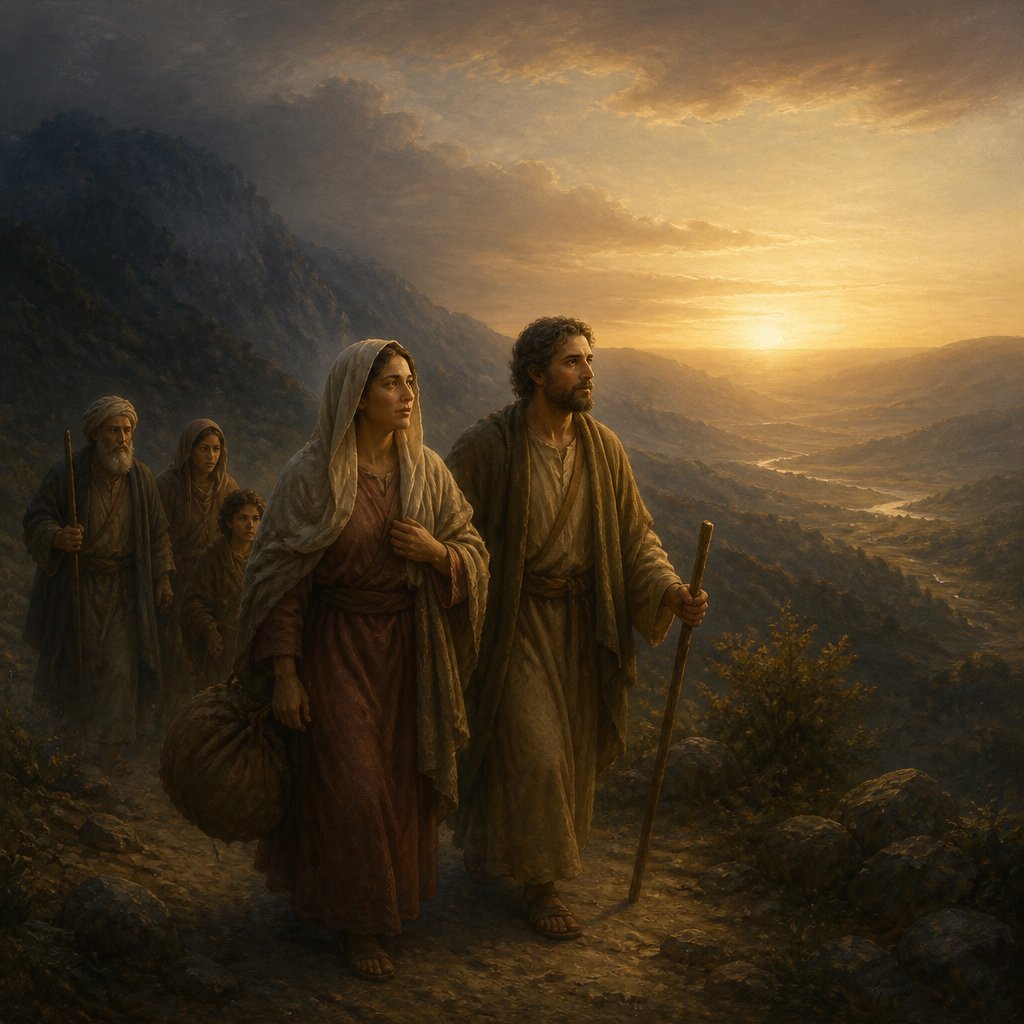
Isaiah 9:2 in the King James Version says, “The people that walked in darkness have seen a great light: they that dwell in the land of the shadow of death, upon them hath the light shined.” Its meaning rises out of the movement of Isaiah’s prophecy from judgment into mercy, from affliction into promise. Isaiah has been speaking into a time when the covenant people were experiencing the heavy consequences of sin and political turmoil, with real invasion and oppression in view, and with spiritual blindness underneath it. In the chapter just before, the prophet describes distress, hunger, vexation, and a kind of frantic wandering in which men “curse their king and their God,” and look upward and to the earth only to find “trouble and darkness, dimness of anguish.” Isaiah 9:2 answers that bleak portrait with a sudden reversal: the darkness is not the final word, because God himself brings light.
The verse begins by portraying life without God’s saving presence as walking in darkness. Darkness in Isaiah is more than the absence of information; it is the condition of a people under the weight of divine displeasure, confusion, and fear. To “walk” in darkness suggests an ongoing state, a settled pattern of existence where the path ahead is hidden and danger is near. It is moral and spiritual darkness as well as circumstantial darkness, because Isaiah consistently joins outward calamity with inward rebellion, showing that the deepest night is the estrangement of the heart from the Lord. When Isaiah says these people “have seen a great light,” he speaks of intervention rather than self-discovery. The light is not kindled by human wisdom or political strategy; it is given, shown, and revealed. The people do not manufacture dawn; dawn arrives upon them.
The second line intensifies the first by using one of Scripture’s strongest images: “the land of the shadow of death.” This phrase evokes the sense of living on the edge of the grave, in a region where death casts a long, cold shade over ordinary life. It expresses more than personal mortality; it suggests a communal experience of doom, oppression, and helplessness, like a nation living under sentence. In such a “land,” people do not merely stumble; they “dwell,” as though death’s shadow has become their environment and their address. Yet Isaiah’s word is that “upon them hath the light shined.” The direction is important: it is light coming down and coming in, not a torch carried up from below. The verb “shined” implies active, prevailing radiance. The light does not merely flicker at a distance; it breaks into their habitation and lays claim to their darkness.
In its immediate prophetic flow, this “light” is tied to the deliverance God promised to bring after the humiliation of certain regions. The earlier verse at the start of Isaiah 9 speaks of “the land of Zebulun and the land of Naphtali,” places associated with hardship and invasion, and it promises that God would in time make them “glorious.” Isaiah 9:2 is thus the announcement that those who were first to taste affliction would not be last to taste restoration. This is a recurring theme in God’s dealings: the Lord often chooses what is despised or wounded to display his grace, so that deliverance is recognized as his work and not man’s.
At the same time, Isaiah 9:2 is inseparable from the larger Messianic promise that immediately follows in the same passage. The “great light” is not merely an improved political climate; it is bound to the coming of a divinely given ruler and saviour. The next verse declares, “For unto us a child is born, unto us a son is given,” and goes on to describe the government upon his shoulder and the names by which he is called. The light, therefore, is ultimately personal. It is the illumination and salvation that come with the advent of the promised King, whose reign brings truth, peace, and righteousness. In Isaiah’s symbolism, light is often associated with God’s presence and God’s self-disclosure; so when the light shines, it signals that God is drawing near, making himself known, and rescuing his people. Darkness is alienation; light is visitation.
The verse also carries the theme of reversal, a hallmark of prophetic hope. Those walking become those seeing; those dwelling in death’s shadow become those visited by light. Sight replaces blindness, direction replaces wandering, life’s radiance displaces death’s dread. This reversal is not described as a gradual human ascent, but as a decisive divine act: “have seen” and “hath…shined” speak of something accomplished and undeniable. It is as if Isaiah, standing in the night, speaks of morning with the certainty of God’s promise, because in prophetic perspective the certainty of God’s word is stronger than the apparent permanence of the present gloom.
Symbolically, “darkness” gathers up sin, ignorance of God, oppression, and judgment, while “light” gathers up revelation, deliverance, holiness, and joy. “Great light” suggests not a small consolation but a comprehensive salvation, sufficient to overcome the deepest night. “Shadow of death” suggests the extremity of human helplessness, the point at which strength fails and hope expires; and that is precisely where the light shines, emphasizing that God’s salvation reaches those who cannot save themselves.
The significance of Isaiah 9:2, then, is that it announces God’s answer to human darkness: a light that comes from outside the darkness, from God’s own initiative, and that shines upon those most afflicted. It stands as a bridge between the reality of judgment described in the preceding context and the promise of a righteous, peace-giving reign that follows. In one sentence it compresses the movement of redemption: from gloom to glory, from death’s shadow to life’s dawn, from wandering to seeing, from despair to the certainty that God will not leave his people without a shining light.
Have questions about Isaiah 9:2?
Dive deeper into this scripture with Bible Chat — an AI-powered tool for exploring God's Word through conversation. Ask questions, get context, and grow in your understanding of the Bible.
Get Our Apps


Isaiah 9:2 Artwork

Isaiah 9:2 - "The people that walked in darkness have seen a great light: they that dwell in the land of the shadow of death, upon them hath the light shined."
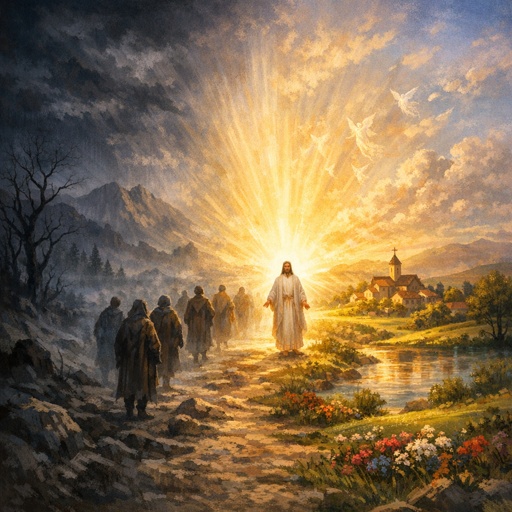
"The people that walked in darkness have seen a great light: they that dwell in the land of the shadow of death, upon them hath the light shined." - Isaiah 9:2
"The people that walked in darkness have seen a great light: they that dwell in the land of the shadow of death, upon them hath the light shined." - Isaiah 9:2

Isaiah 2:9 - "And the mean man boweth down, and the great man humbleth himself: therefore forgive them not."

Isaiah 9:6

Isaiah 9:6

Isaiah 9:6

Isaiah 9:6

2 Kings 20:9 - "And Isaiah said, This sign shalt thou have of the LORD, that the LORD will do the thing that he hath spoken: shall the shadow go forward ten degrees, or go back ten degrees?"
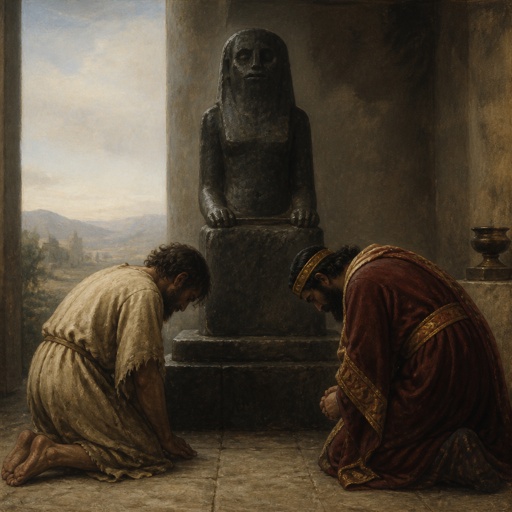
"And the mean man boweth down, and the great man humbleth himself: therefore forgive them not." - Isaiah 2:9

Isaiah 11:1-9

Isaiah 50:7–9

Isaiah 11:1-9

Isaiah 9:1-4

Isaiah 11:1-9

Isaiah 9:9 - "And all the people shall know, even Ephraim and the inhabitant of Samaria, that say in the pride and stoutness of heart,"

Isaiah 10:9 - "Is not Calno as Carchemish? is not Hamath as Arpad? is not Samaria as Damascus?"

Isaiah 30:9 - "That this is a rebellious people, lying children, children that will not hear the law of the LORD:"

Isaiah 9:16 - "For the leaders of this people cause them to err; and they that are led of them are destroyed."

Isaiah 19:9 - "Moreover they that work in fine flax, and they that weave networks, shall be confounded."

Isaiah 9:8 - "¶ The Lord sent a word into Jacob, and it hath lighted upon Israel."

Isaiah 2:1 - "The word that Isaiah the son of Amoz saw concerning Judah and Jerusalem."

Isaiah 9:15 - "The ancient and honourable, he is the head; and the prophet that teacheth lies, he is the tail."

Isaiah 24:9 - "They shall not drink wine with a song; strong drink shall be bitter to them that drink it."

Isaiah 56:9 - "¶ All ye beasts of the field, come to devour, yea, all ye beasts in the forest."

Isaiah 9:13 - "¶ For the people turneth not unto him that smiteth them, neither do they seek the LORD of hosts."

Isaiah 9:14 - "Therefore the LORD will cut off from Israel head and tail, branch and rush, in one day."

Isaiah 38:9 - "¶ The writing of Hezekiah king of Judah, when he had been sick, and was recovered of his sickness:"

Isaiah 12:2

Isaiah 43:2