What does Isaiah 7:1 mean?
"And it came to pass in the days of Ahaz the son of Jotham, the son of Uzziah, king of Judah, that Rezin the king of Syria, and Pekah the son of Remaliah, king of Israel, went up toward Jerusalem to war against it, but could not prevail against it." - Isaiah 7:1
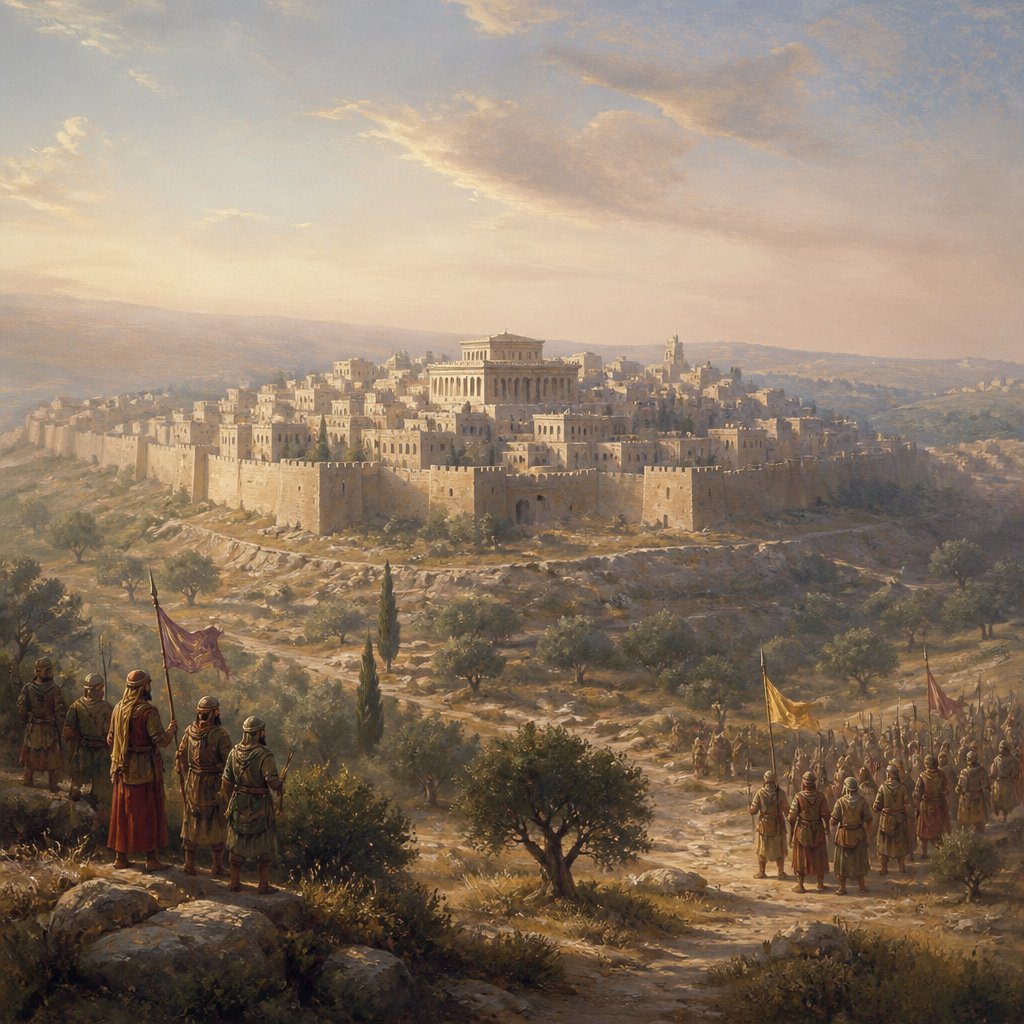
Isaiah 7:1 in the King James Version of the Bible reads, "And it came to pass in the days of Ahaz the son of Jotham, the son of Uzziah, king of Judah, that Rezin the king of Syria, and Pekah the son of Remaliah, king of Israel, went up toward Jerusalem to war against it, but could not prevail against it." This verse is the beginning of a chapter that delves into the political and military turmoil faced by the kingdom of Judah during the time of King Ahaz.
To truly understand the significance of this verse, it is important to delve into the historical and cultural context in which it was written. The book of Isaiah is set during a time of great political and social upheaval in the ancient Near East. The Assyrian Empire was expanding its reach, and as a result, smaller kingdoms and tribes in the region were vying for power and influence. This is the backdrop against which the events of Isaiah 7 take place.
The verse specifically mentions the days of King Ahaz, who reigned over Judah from around 735 BC to 715 BC. During his reign, the kingdom of Judah was threatened by neighboring powers, particularly the allied forces of Syria and Israel. Rezin, the king of Syria, and Pekah, the king of Israel, had formed a coalition and had set their sights on Jerusalem, the capital of Judah. Their intention was to overthrow the current regime and install a puppet ruler who would be more sympathetic to their interests. However, the verse also states that despite their efforts, they "could not prevail against it."
This verse sets the stage for the events that follow in the rest of Isaiah 7, where the prophet Isaiah delivers a message from God to King Ahaz, reassuring him that the invasion will not succeed and encouraging him to trust in the Lord. This serves as a powerful demonstration of God's sovereignty and protection over the nation of Judah, even in the face of formidable enemies.
One of the key themes that can be drawn from this verse is the concept of trust and reliance on God in the face of adversity. King Ahaz was faced with a daunting military threat, and it would have been easy for him to give in to fear and despair. However, the verse demonstrates that the true source of strength and security lies in God alone. This theme is a recurring one throughout the book of Isaiah, as the prophet consistently urges the people of Judah to turn back to God and seek His guidance and protection.
Another important theme that can be derived from this verse is the idea of divine intervention in the affairs of humanity. The fact that the invading forces "could not prevail" against Jerusalem is a clear indication of God's active involvement in the unfolding events. This serves as a powerful reminder that God is in control of the course of history and that He is able to thwart the plans of those who seek to harm His people.
In addition to these themes, the verse also serves as a reminder of the historical and political realities of the ancient Near East. The mention of specific kings and kingdoms provides a glimpse into the geopolitical landscape of the time, and the military maneuverings described in the verse would have been a very real and pressing concern for the people of Judah.
In terms of symbolism, the verse can be seen as a testament to the resilience and endurance of the kingdom of Judah in the face of adversity. Despite the formidable threat posed by the allied forces, Jerusalem remained unconquered. This can be seen as a symbol of the enduring strength of God's chosen people and His faithfulness to His promises.
In conclusion, Isaiah 7:1 is a verse that speaks to the themes of trust in God, divine intervention, and the historical context of the ancient Near East. It serves as a reminder of the timeless truths found in the book of Isaiah and the wider message of hope and deliverance that it conveys.
Have questions about Isaiah 7:1?
Dive deeper into this scripture with Bible Chat — an AI-powered tool for exploring God's Word through conversation. Ask questions, get context, and grow in your understanding of the Bible.
Get Our Apps


Isaiah 7:1 Artwork

Isaiah 7:1 - "And it came to pass in the days of Ahaz the son of Jotham, the son of Uzziah, king of Judah, that Rezin the king of Syria, and Pekah the son of Remaliah, king of Israel, went up toward Jerusalem to war against it, but could not prevail against it."
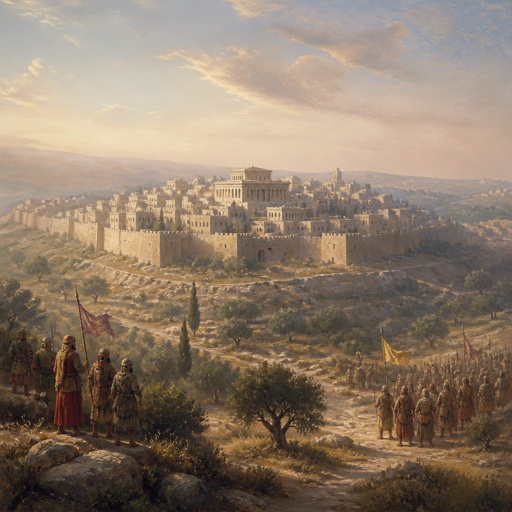
"And it came to pass in the days of Ahaz the son of Jotham, the son of Uzziah, king of Judah, that Rezin the king of Syria, and Pekah the son of Remaliah, king of Israel, went up toward Jerusalem to war against it, but could not prevail against it." - Isaiah 7:1

Isaiah 49 1-7
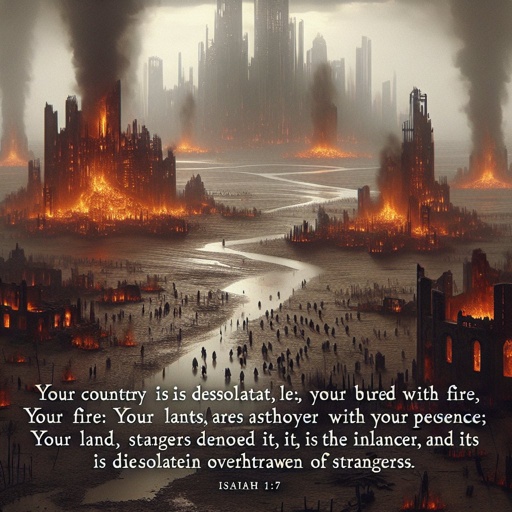
Isaiah 1:7 - "Your country is desolate, your cities are burned with fire: your land, strangers devour it in your presence, and it is desolate, as overthrown by strangers."

isaiah 6:7

isaiah 6:7

Isaiah 7:7 - "Thus saith the Lord GOD, It shall not stand, neither shall it come to pass."

Isaiah 50:7–9

Isaiah 6:4-7

Isaiah 14:7 - "The whole earth is at rest, and is quiet: they break forth into singing."

Isaiah 7:10 - "¶ Moreover the LORD spake again unto Ahaz, saying,"

Isaiah 7:12 - "But Ahaz said, I will not ask, neither will I tempt the LORD."

Isaiah 7:3 - "Then said the LORD unto Isaiah, Go forth now to meet Ahaz, thou, and Shear-jashub thy son, at the end of the conduit of the upper pool in the highway of the fuller's field;"

Isaiah 24:7 - "The new wine mourneth, the vine languisheth, all the merryhearted do sigh."

Isaiah 13:7 - "Therefore shall all hands be faint, and every man's heart shall melt:"

Isaiah 26:7 - "The way of the just is uprightness: thou, most upright, dost weigh the path of the just."

Isaiah 2:1 - "The word that Isaiah the son of Amoz saw concerning Judah and Jerusalem."

Isaiah 1:1 - "The vision of Isaiah the son of Amoz, which he saw concerning Judah and Jerusalem in the days of Uzziah, Jotham, Ahaz, and Hezekiah, kings of Judah."

2 Kings 20:7 - "And Isaiah said, Take a lump of figs. And they took and laid it on the boil, and he recovered."

Isaiah 54:7 - "For a small moment have I forsaken thee; but with great mercies will I gather thee."

Isaiah 33:7 - "Behold, their valiant ones shall cry without: the ambassadors of peace shall weep bitterly."

Isaiah 7:21 - "And it shall come to pass in that day, that a man shall nourish a young cow, and two sheep;"

Isaiah 13:1 - "The burden of Babylon, which Isaiah the son of Amoz did see."

Isaiah 60:1

Isaiah 7:11 - "Ask thee a sign of the LORD thy God; ask it either in the depth, or in the height above."

Isaiah 11:1

Isaiah 7:15 - "Butter and honey shall he eat, that he may know to refuse the evil, and choose the good."

Isaiah 40:7 - "The grass withereth, the flower fadeth: because the spirit of the LORD bloweth upon it: surely the people is grass."

Isaiah 7:5 - "Because Syria, Ephraim, and the son of Remaliah, have taken evil counsel against thee, saying,"

"Thus saith the Lord GOD, It shall not stand, neither shall it come to pass." - Isaiah 7:7