What does Isaiah 60:1 mean?
"Arise, shine; for thy light is come, and the glory of the LORD is risen upon thee." - Isaiah 60:1
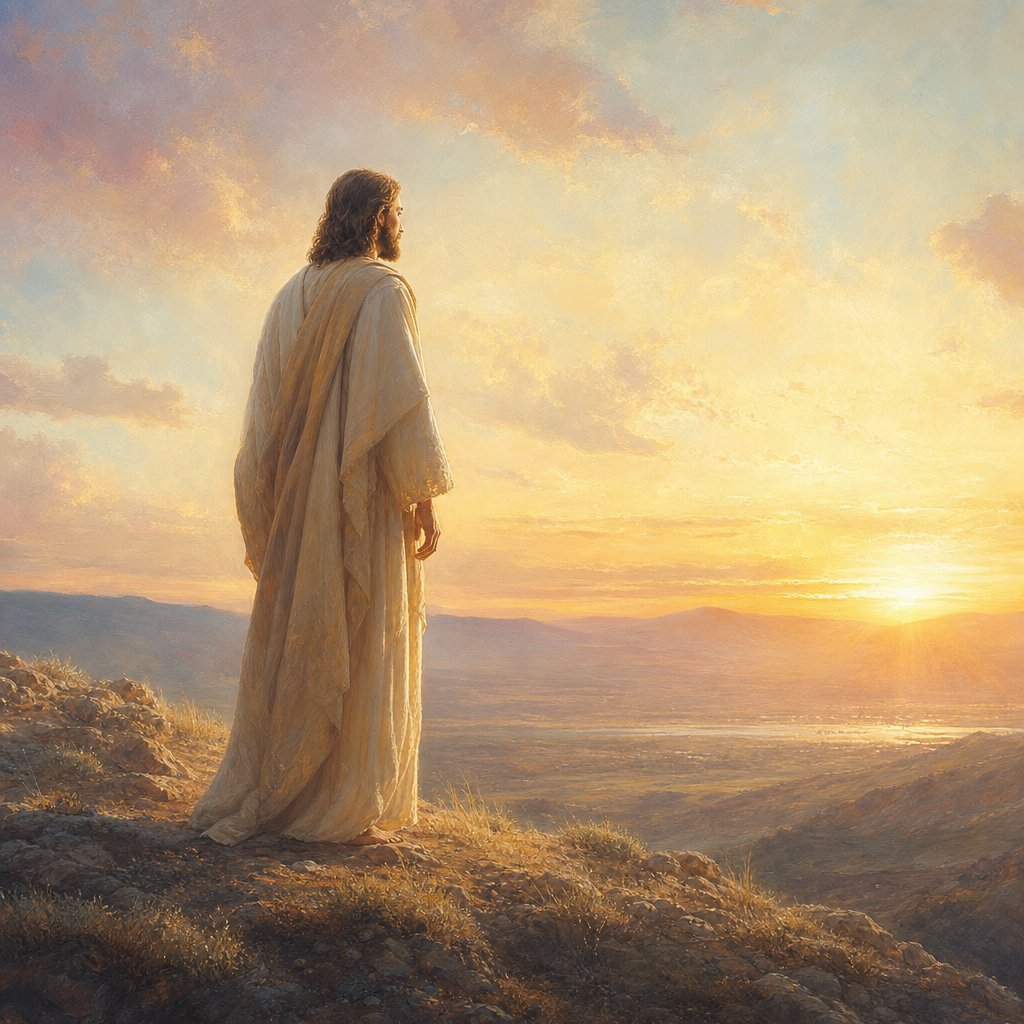
“Arise, shine; for thy light is come, and the glory of the LORD is risen upon thee.” (Isaiah 60:1, KJV)
In Isaiah 60:1 the prophet speaks as though addressing Zion, Jerusalem, and by extension the covenant people, calling them out of a posture of helplessness and dimness into a posture of awakened life. “Arise” is the language of being lifted from sitting in the dust, from mourning, captivity, weakness, or spiritual lethargy. It is not merely a suggestion to feel hopeful; it is a summons to stand as a people restored by God’s own intervention. The command assumes that the prior condition was low and dark, and that God himself is now changing that condition. “Shine” follows “Arise” because the shining is not self-generated; it is the consequence of standing up into the reality of what God has done. Zion is called to reflect what has come upon her.
The reason given is decisive: “for thy light is come.” In KJV language, “thy light” is not simply private illumination or human insight, but the arrival of God’s saving presence and favor—light as deliverance, guidance, truth, and life. Throughout Isaiah, light and darkness function as spiritual and historical realities: darkness is affliction, ignorance, oppression, and judgment; light is salvation, revelation, and restoration. When Isaiah says “thy light is come,” he announces that what Zion lacked has arrived from God. The verse therefore carries the sense of a new day breaking after a long night, a turning of the tide not because Zion discovered a way out, but because God has brought light to her.
The second clause intensifies the first: “and the glory of the LORD is risen upon thee.” “Glory” in the KJV carries the weight of God’s manifested presence, the public display of his majesty, holiness, and covenant faithfulness. The phrase “is risen” uses sunrise imagery: God’s glory is pictured as dawn breaking over Zion. The symbolism is deliberate. Sunrise does not depend upon the earth’s effort; it is an act of God’s ordering of the world. In the same way, Zion’s restoration is portrayed as something God causes to rise. The glory “upon thee” signals not only that God is with his people, but that his presence is visible and recognized, so that Zion becomes a place where God’s character and rule are seen.
The immediate context in Isaiah 60 supports this reading by contrasting the darkness of the world with God’s light upon Zion: “For, behold, the darkness shall cover the earth, and gross darkness the people: but the LORD shall arise upon thee, and his glory shall be seen upon thee.” (Isaiah 60:2, KJV). Isaiah 60:1 therefore functions as the opening trumpet call of a chapter that describes the reversal of Zion’s shame and desolation into honor, gathering, and abundance under God’s favor. The chapter goes on to depict nations coming to the light, kings to the brightness of Zion’s rising, and a transformation of sorrow into peace. In that flow, verse 1 is the hinge between the old condition of affliction and the new condition of divine visitation.
Historically within Isaiah’s larger message, this verse speaks into the hope of restoration after judgment. Zion had been warned of chastening because of sin, idolatry, and injustice, yet Isaiah also proclaims that God will not abandon his covenant purposes. The call to “Arise, shine” assumes that God’s redemptive plan is moving forward, and that his people are summoned to live in alignment with the new reality he is bringing. The verse therefore holds together divine initiative and human response: God brings the light; Zion is called to rise and reflect it.
Symbolically, the “light” and “glory” point beyond mere political recovery to spiritual renewal and the revelation of God’s salvation. Light in Isaiah frequently connects with the theme of God guiding his people and revealing righteousness. Glory suggests the nearness of God in a way that changes the identity of the community. Zion is not told to manufacture splendor but to become radiant because God’s glory is upon her. The significance is that God’s presence reconstitutes the people: their dignity, mission, and visibility among the nations are restored because the LORD has acted.
Read as Scripture in the KJV canon, Isaiah 60:1 also resonates with the broader biblical pattern of God calling his people from darkness to light, from deathlike collapse to resurrection-like standing. It sets a tone of expectancy and public witness: when God’s glory rises upon Zion, Zion is not only comforted but also positioned to be a beacon. The verse’s force is therefore both consoling and commissioning. It comforts by announcing that the light has come; it commissions by commanding Zion to arise and shine in response to the risen glory of the LORD.
Have questions about Isaiah 60:1?
Dive deeper into this scripture with Bible Chat — an AI-powered tool for exploring God's Word through conversation. Ask questions, get context, and grow in your understanding of the Bible.
Get Our Apps


Isaiah 60:1 Artwork

Isaiah 60:1

Isaiah 60:1 - "Arise, shine; for thy light is come, and the glory of the LORD is risen upon thee."

Izaiáš 60:1
"Arise, shine; for thy light is come, and the glory of the LORD is risen upon thee." - Isaiah 60:1

"Arise, shine; for thy light is come, and the glory of the LORD is risen upon thee." - Isaiah 60:1

Isaiah 60:1-3 - "Arise, shine, for your light has come, and the glory of the Lord rises upon you. See, darkness covers the earth and thick darkness is over the peoples, but the Lord rises upon you and his glory appears over you. Nations will come to your light, and kings to the brightness of your dawn."

An epic digital art representation of Isaiah 60:1-3. The scene unfolds with a symbolic figure radiating light and standing amidst utter darkness that covers the earth. Looking up, the figure sees the resplendent glory of a divine entity rising above them, bringing hope and illumination. Hordes of people engulfed in gloom are depicted afar, their features indistinct. Yet, the divine light shines upon these figures, banishing shadows and revealing their faces. A multitude of individuals from various nations, and multiple representations of royal figures approach the radiant figure, drawn towards the brilliance of a new dawn.
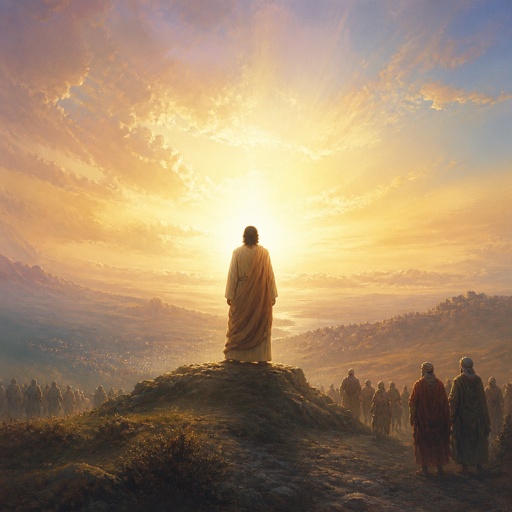
"Arise, shine, for your light has come, and the glory of the Lord rises upon you. See, darkness covers the earth and thick darkness is over the peoples, but the Lord rises upon you and his glory appears over you. Nations will come to your light, and kings to the brightness of your dawn." - Isaiah 60:1-3

isaiah 60:6

Isaiah 60:8 - "Who are these that fly as a cloud, and as the doves to their windows?"

Isaiah 60:3 - "And the Gentiles shall come to thy light, and kings to the brightness of thy rising."

"Who are these that fly as a cloud, and as the doves to their windows?" - Isaiah 60:8

Isaiah 60:12 - "For the nation and kingdom that will not serve thee shall perish; yea, those nations shall be utterly wasted."

Isaiah 60:22 - "A little one shall become a thousand, and a small one a strong nation: I the LORD will hasten it in his time."

Isaiah 60:15 - "Whereas thou hast been forsaken and hated, so that no man went through thee, I will make thee an eternal excellency, a joy of many generations."

Isaiah 60:2 - "For, behold, the darkness shall cover the earth, and gross darkness the people: but the LORD shall arise upon thee, and his glory shall be seen upon thee."
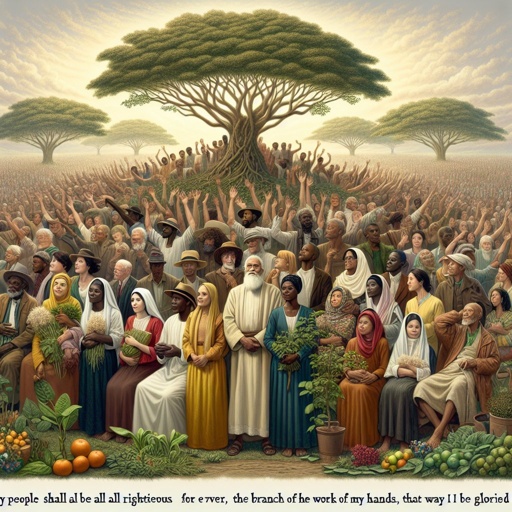
Isaiah 60:21 - "Thy people also shall be all righteous: they shall inherit the land for ever, the branch of my planting, the work of my hands, that I may be glorified."

Isaiah 60:18 - "Violence shall no more be heard in thy land, wasting nor destruction within thy borders; but thou shalt call thy walls Salvation, and thy gates Praise."

Isaiah 60:17 - "For brass I will bring gold, and for iron I will bring silver, and for wood brass, and for stones iron: I will also make thy officers peace, and thine exactors righteousness."
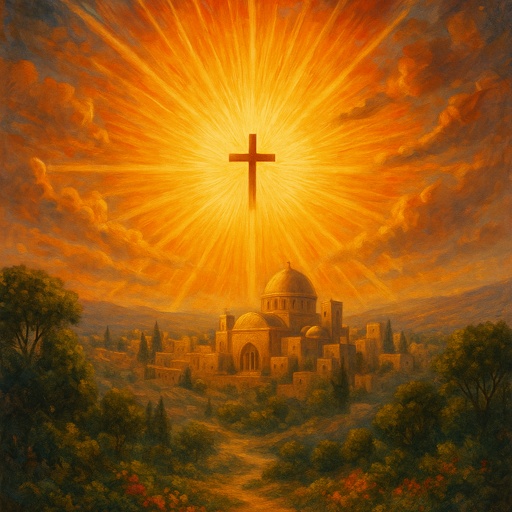
"The sun shall be no more thy light by day; neither for brightness shall the moon give light unto thee: but the LORD shall be unto thee an everlasting light, and thy God thy glory." - Isaiah 60:19
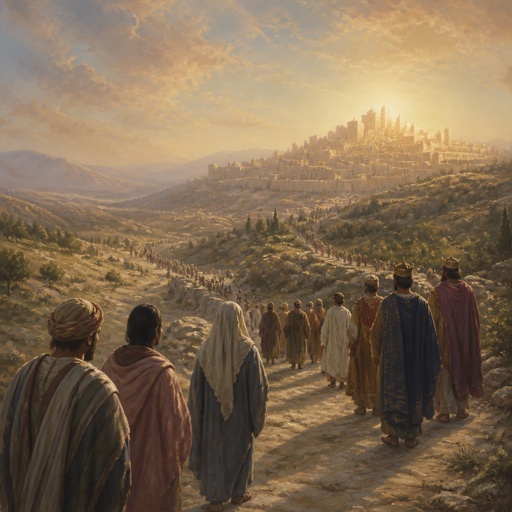
"And the Gentiles shall come to thy light, and kings to the brightness of thy rising." - Isaiah 60:3

Isaiah 60:13 - "The glory of Lebanon shall come unto thee, the fir tree, the pine tree, and the box together, to beautify the place of my sanctuary; and I will make the place of my feet glorious."

Isaiah 60:6 - "The multitude of camels shall cover thee, the dromedaries of Midian and Ephah; all they from Sheba shall come: they shall bring gold and incense; and they shall shew forth the praises of the LORD."

Isaiah 60:11 - "Therefore thy gates shall be open continually; they shall not be shut day nor night; that men may bring unto thee the forces of the Gentiles, and that their kings may be brought."

Isaiah 60:20 - "Thy sun shall no more go down; neither shall thy moon withdraw itself: for the LORD shall be thine everlasting light, and the days of thy mourning shall be ended."

Luke 1:60 - "And his mother answered and said, Not so; but he shall be called John."

Isaiah 60:19 - "The sun shall be no more thy light by day; neither for brightness shall the moon give light unto thee: but the LORD shall be unto thee an everlasting light, and thy God thy glory."

Isaiah 60:10 - "And the sons of strangers shall build up thy walls, and their kings shall minister unto thee: for in my wrath I smote thee, but in my favour have I had mercy on thee."

Isaiah 60:16 - "Thou shalt also suck the milk of the Gentiles, and shalt suck the breast of kings: and thou shalt know that I the LORD am thy Saviour and thy Redeemer, the mighty One of Jacob."

Isaiah 60:5 - "Then thou shalt see, and flow together, and thine heart shall fear, and be enlarged; because the abundance of the sea shall be converted unto thee, the forces of the Gentiles shall come unto thee."