What does Isaiah 53:9 mean?
"And he made his grave with the wicked, and with the rich in his death; because he had done no violence, neither was any deceit in his mouth." - Isaiah 53:9
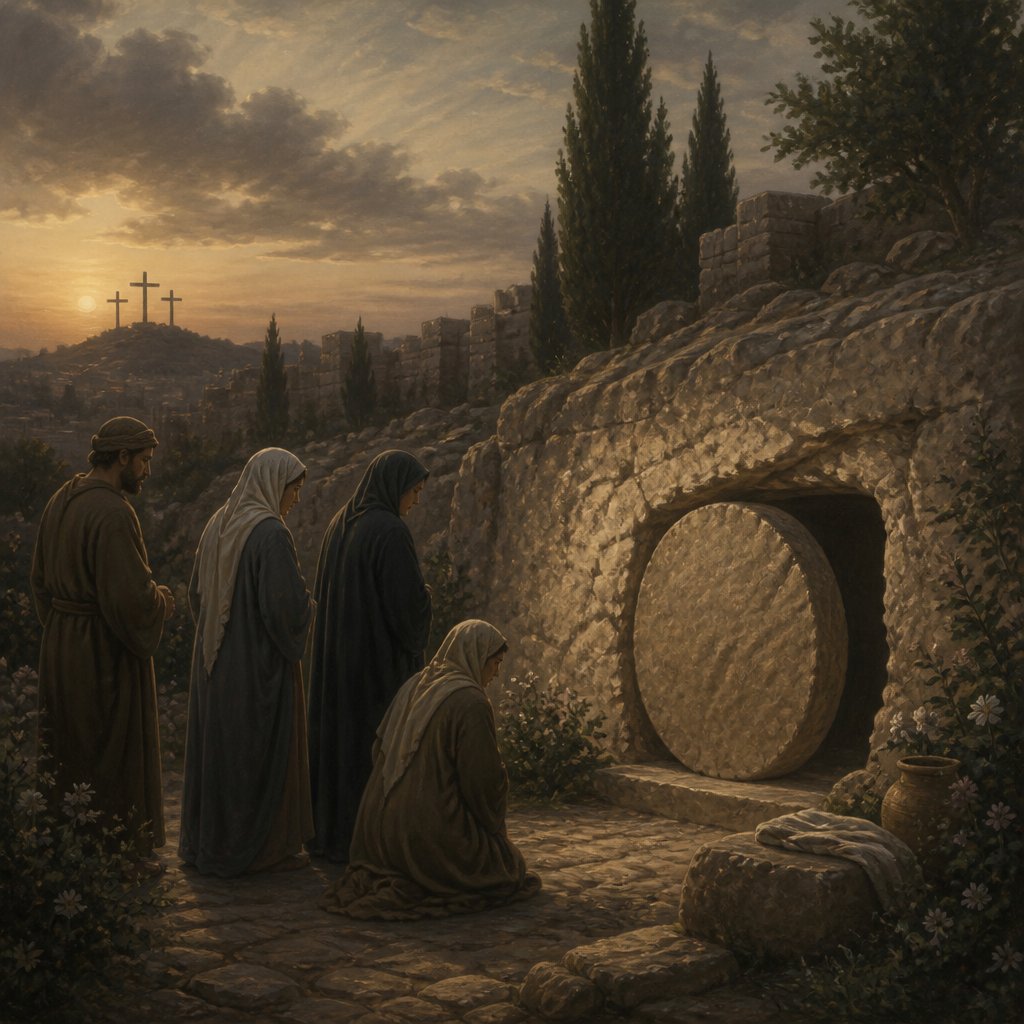
Isaiah 53:9 in the King James Version of the Bible states: "And he made his grave with the wicked, and with the rich in his death; because he had done no violence, neither was any deceit in his mouth."
This verse is part of a larger passage in the book of Isaiah known as the "Suffering Servant" prophecy. This passage is often interpreted by Christians as a prophecy of the life, death, and resurrection of Jesus Christ, while it is also viewed differently by Jewish theologians.
In this particular verse, the prophet Isaiah speaks of the suffering and death of the Servant of the Lord, who is understood by Christians to be a description of Jesus. The verse discusses the contrasting circumstances of the Servant's burial - on one hand, he is "made his grave with the wicked" and on the other, he is "with the rich in his death." This paradox speaks to the dual nature of Christ's crucifixion and subsequent burial.
The imagery of being buried with the wicked and with the rich carries deep symbolic meaning. It suggests that the Servant identified with the sinful and the marginalized, yet at the same time, was honored in death by wealthy and influential individuals. This duality reflects the paradoxes of the Christian faith - Jesus, who was sinless, willingly identified Himself with the sinful and bore the consequences of their sin, while also being exalted and ultimately victorious over sin and death.
The verse also emphasizes the innocence and integrity of the Servant, stating that "he had done no violence, neither was any deceit in his mouth." This echoes the portrayal of Jesus in the New Testament as a blameless and spotless Lamb who was without sin. It underscores the fact that Jesus' death was not a result of any wrongdoing on His part, but rather a sacrificial act for the redemption of humanity.
In a broader context, this verse is part of a prophecy in Isaiah that speaks to the suffering and atonement of the Servant of the Lord. It underscores the redemptive purpose of Jesus' death and burial, emphasizing the fulfillment of God's plan for the salvation of humanity through the sacrifice of His Son.
The themes of suffering, innocence, and redemption are central to this verse and the larger passage of Isaiah 53. The suffering of the Servant is not in vain but serves a higher purpose in the redemption of mankind. This message of hope and salvation through suffering has been a source of comfort and strength for countless believers throughout history.
In summary, Isaiah 53:9 speaks to the paradoxical nature of Jesus' burial, as well as the innocence and redemptive purpose of His suffering and death. It is a powerful and evocative passage that underscores the profound love of God in providing a means of salvation for humanity through the sacrificial death of His Son. This verse continues to be a source of inspiration and contemplation for Christians, reaffirming their faith in the redemptive work of Jesus Christ.
Have questions about Isaiah 53:9?
Dive deeper into this scripture with Bible Chat — an AI-powered tool for exploring God's Word through conversation. Ask questions, get context, and grow in your understanding of the Bible.
Get Our Apps


Isaiah 53:9 Artwork

Isaiah 53:9 - "And he made his grave with the wicked, and with the rich in his death; because he had done no violence, neither was any deceit in his mouth."
"And he made his grave with the wicked, and with the rich in his death; because he had done no violence, neither was any deceit in his mouth." - Isaiah 53:9

Isaiah 53

Isaiah: 53

Isaiah 53

Isaiah 53

Isaiah 53

Isaiah 53:5

isaiah 53 1

Isaiah 53:2

Isaiah 53 3 illustration

Isaiah 53:1 - "Who hath believed our report? and to whom is the arm of the LORD revealed?"

Isaiah 53:2-3 depiction of Jesus Christ


Luke 9:53 - "And they did not receive him, because his face was as though he would go to Jerusalem."

Judges 9:53 - "And a certain woman cast a piece of a millstone upon Abimelech's head, and all to brake his skull."

Isaiah 53:5 - "But he was wounded for our transgressions, he was bruised for our iniquities: the chastisement of our peace was upon him; and with his stripes we are healed."

Isaiah 53:4 - "¶ Surely he hath borne our griefs, and carried our sorrows: yet we did esteem him stricken, smitten of God, and afflicted."

Isaiah 53:3 - "He is despised and rejected of men; a man of sorrows, and acquainted with grief: and we hid as it were our faces from him; he was despised, and we esteemed him not."

"But he was wounded for our transgressions, he was bruised for our iniquities: the chastisement of our peace was upon him; and with his stripes we are healed." - Isaiah 53:5

"For he shall grow up before him as a tender plant, and as a root out of a dry ground: he hath no form nor comeliness; and when we shall see him, there is no beauty that we should desire him." - Isaiah 53:2

"For he shall grow up before him as a tender plant, and as a root out of a dry ground: he hath no form nor comeliness; and when we shall see him, there is no beauty that we should desire him." - Isaiah 53:2

Isaiah 53:11 - "He shall see of the travail of his soul, and shall be satisfied: by his knowledge shall my righteous servant justify many; for he shall bear their iniquities."

"Who hath believed our report? and to whom is the arm of the LORD revealed?" - Isaiah 53:1

Isaiah 53:6 - "All we like sheep have gone astray; we have turned every one to his own way; and the LORD hath laid on him the iniquity of us all."

Isaiah 53:8 - "He was taken from prison and from judgment: and who shall declare his generation? for he was cut off out of the land of the living: for the transgression of my people was he stricken."

Isaiah 53:7 - "He was oppressed, and he was afflicted, yet he opened not his mouth: he is brought as a lamb to the slaughter, and as a sheep before her shearers is dumb, so he openeth not his mouth."

Isaiah 53:2 - "For he shall grow up before him as a tender plant, and as a root out of a dry ground: he hath no form nor comeliness; and when we shall see him, there is no beauty that we should desire him."

"And they did not receive him, because his face was as though he would go to Jerusalem." - Luke 9:53

Isaiah 53:12 - "Therefore will I divide him a portion with the great, and he shall divide the spoil with the strong; because he hath poured out his soul unto death: and he was numbered with the transgressors; and he bare the sin of many, and made intercession for the transgressors."