What does Isaiah 53:11 mean?
"He shall see of the travail of his soul, and shall be satisfied: by his knowledge shall my righteous servant justify many; for he shall bear their iniquities." - Isaiah 53:11
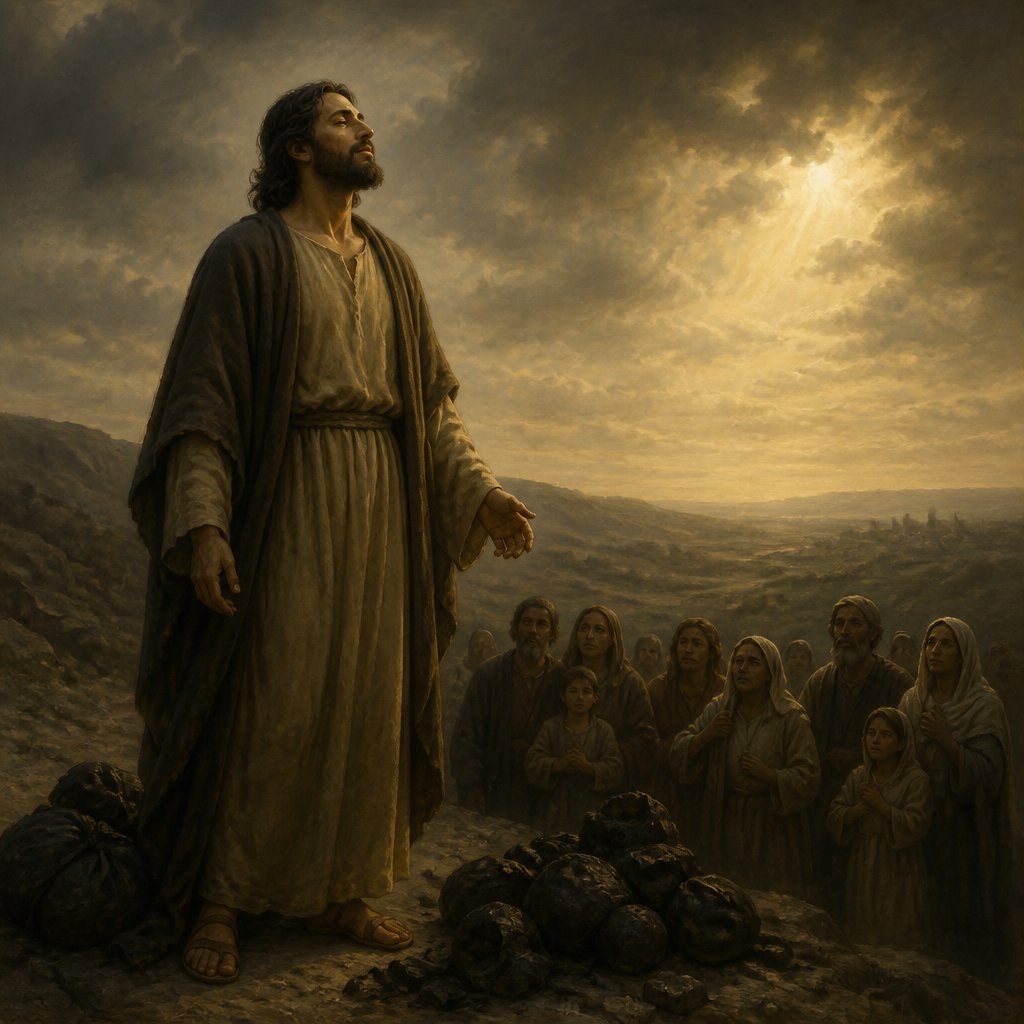
Isaiah 53:11 (KJV): "He shall see of the travail of his soul, and shall be satisfied: by his knowledge shall my righteous servant justify many; for he shall bear their iniquities."
This verse comes from the book of Isaiah in the Old Testament and is a part of the famous "Suffering Servant" passage. This particular verse is a powerful statement about the redemption and justification that comes through the suffering and sacrifice of the Servant, who is widely interpreted as a prophetic representation of Jesus Christ.
The context of Isaiah 53 is crucial for understanding the meaning of this verse. In the beginning of the chapter, the prophet Isaiah speaks of a Servant of the Lord who would suffer greatly, and through his suffering, would bring about redemption and atonement for the people. This Servant is depicted as humiliated, oppressed, and ultimately killed, yet his death would bring about the salvation of many. The prophet Isaiah, writing around 700 years before the birth of Christ, is describing the suffering and death of Jesus Christ, which would bring salvation to all who believe in him.
The verse begins with the affirmation that the Servant "shall see of the travail of his soul." This phrase speaks to the ultimate satisfaction and fulfillment that the Servant will experience as a result of the suffering he endured. The word "travail" conveys the intense suffering and hardship that the Servant experienced, and the image of "seeing" can be interpreted as an acknowledgement of the results of that travail. The Servant will not only experience the suffering, but will also witness the fruits of that suffering. This can be understood as a vision of the redemption and salvation that will come through his sacrifice.
The verse continues with the declaration that "by his knowledge shall my righteous servant justify many." This speaks to the role of the Servant in bringing about justification and righteousness for the people. Through his deep understanding and knowledge, the Servant will be able to justify many, meaning that he will make them righteous before God. This knowledge is often interpreted as the divine wisdom and understanding that the Servant possesses, which enables him to bring about the salvation of the people.
The latter part of the verse states, "for he shall bear their iniquities." This is a direct reference to the sacrificial nature of the Servant's suffering. The word "iniquities" refers to the sins and transgressions of the people, and the Servant will bear them, taking them upon himself. This concept of substitutionary atonement is central to Christian theology, as it mirrors the belief that Jesus Christ, the ultimate fulfillment of the Suffering Servant, bore the sins of humanity on the cross, providing a way for people to be reconciled to God.
Symbolically, this verse is rich with meaning. The image of travail and satisfaction speaks to the profound depths of suffering and redemption. The knowledge of the Servant represents divine wisdom and understanding, suggesting that the salvation brought about is of a profound and transcendent nature. The bearing of iniquities harkens back to the sacrificial system of the Old Testament, but finds its ultimate fulfillment in the person of Jesus Christ, who bore the sins of the world.
The themes of redemption, sacrifice, and atonement are central to this verse. It serves as a powerful foreshadowing of the death and resurrection of Jesus Christ, which lies at the heart of the Christian faith. The verse also speaks to the transformative power of suffering and the ultimate fulfillment that comes through it.
In conclusion, Isaiah 53:11 is a profound statement about the redemption and atonement that comes through the suffering and sacrifice of the Suffering Servant, who is understood in Christian theology as a prophetic representation of Jesus Christ. The verse speaks to the ultimate satisfaction and fulfillment of the Servant, the justification and righteousness that he brings, and the bearing of the iniquities of the people. It is a powerful declaration of hope and redemption that continues to resonate with believers today.
Have questions about Isaiah 53:11?
Dive deeper into this scripture with Bible Chat — an AI-powered tool for exploring God's Word through conversation. Ask questions, get context, and grow in your understanding of the Bible.
Get Our Apps


Isaiah 53:11 Artwork

Isaiah 53:11 - "He shall see of the travail of his soul, and shall be satisfied: by his knowledge shall my righteous servant justify many; for he shall bear their iniquities."
"He shall see of the travail of his soul, and shall be satisfied: by his knowledge shall my righteous servant justify many; for he shall bear their iniquities." - Isaiah 53:11

Isaiah 53

Isaiah: 53

Isaiah 53

Isaiah 53

Isaiah 53

Isaiah 53:5

isaiah 53 1

Isaiah 53:2

Isaiah 53 3 illustration

Isaiah 53:1 - "Who hath believed our report? and to whom is the arm of the LORD revealed?"

Isaiah 53:2-3 depiction of Jesus Christ


John 11:53 - "Then from that day forth they took counsel together for to put him to death."

Isaiah 53:5 - "But he was wounded for our transgressions, he was bruised for our iniquities: the chastisement of our peace was upon him; and with his stripes we are healed."

Isaiah 53:9 - "And he made his grave with the wicked, and with the rich in his death; because he had done no violence, neither was any deceit in his mouth."

Isaiah 53:4 - "¶ Surely he hath borne our griefs, and carried our sorrows: yet we did esteem him stricken, smitten of God, and afflicted."

Isaiah 53:3 - "He is despised and rejected of men; a man of sorrows, and acquainted with grief: and we hid as it were our faces from him; he was despised, and we esteemed him not."

"But he was wounded for our transgressions, he was bruised for our iniquities: the chastisement of our peace was upon him; and with his stripes we are healed." - Isaiah 53:5

"For he shall grow up before him as a tender plant, and as a root out of a dry ground: he hath no form nor comeliness; and when we shall see him, there is no beauty that we should desire him." - Isaiah 53:2

"For he shall grow up before him as a tender plant, and as a root out of a dry ground: he hath no form nor comeliness; and when we shall see him, there is no beauty that we should desire him." - Isaiah 53:2

"Who hath believed our report? and to whom is the arm of the LORD revealed?" - Isaiah 53:1

Luke 11:53 - "And as he said these things unto them, the scribes and the Pharisees began to urge him vehemently, and to provoke him to speak of many things:"

Isaiah 53:6 - "All we like sheep have gone astray; we have turned every one to his own way; and the LORD hath laid on him the iniquity of us all."

Isaiah 53:8 - "He was taken from prison and from judgment: and who shall declare his generation? for he was cut off out of the land of the living: for the transgression of my people was he stricken."

Isaiah 53:7 - "He was oppressed, and he was afflicted, yet he opened not his mouth: he is brought as a lamb to the slaughter, and as a sheep before her shearers is dumb, so he openeth not his mouth."

"Then from that day forth they took counsel together for to put him to death." - John 11:53

Isaiah 53:2 - "For he shall grow up before him as a tender plant, and as a root out of a dry ground: he hath no form nor comeliness; and when we shall see him, there is no beauty that we should desire him."

Isaiah 53:12 - "Therefore will I divide him a portion with the great, and he shall divide the spoil with the strong; because he hath poured out his soul unto death: and he was numbered with the transgressors; and he bare the sin of many, and made intercession for the transgressors."