What does Isaiah 49:15-16 mean?
"15 Can a woman forget her sucking child, that she should not have compassion on the son of her womb? yea, they may forget, yet will I not forget thee. 16 Behold, I have graven thee upon the palms of my hands; thy walls are continually before me." - Isaiah 49:15-16
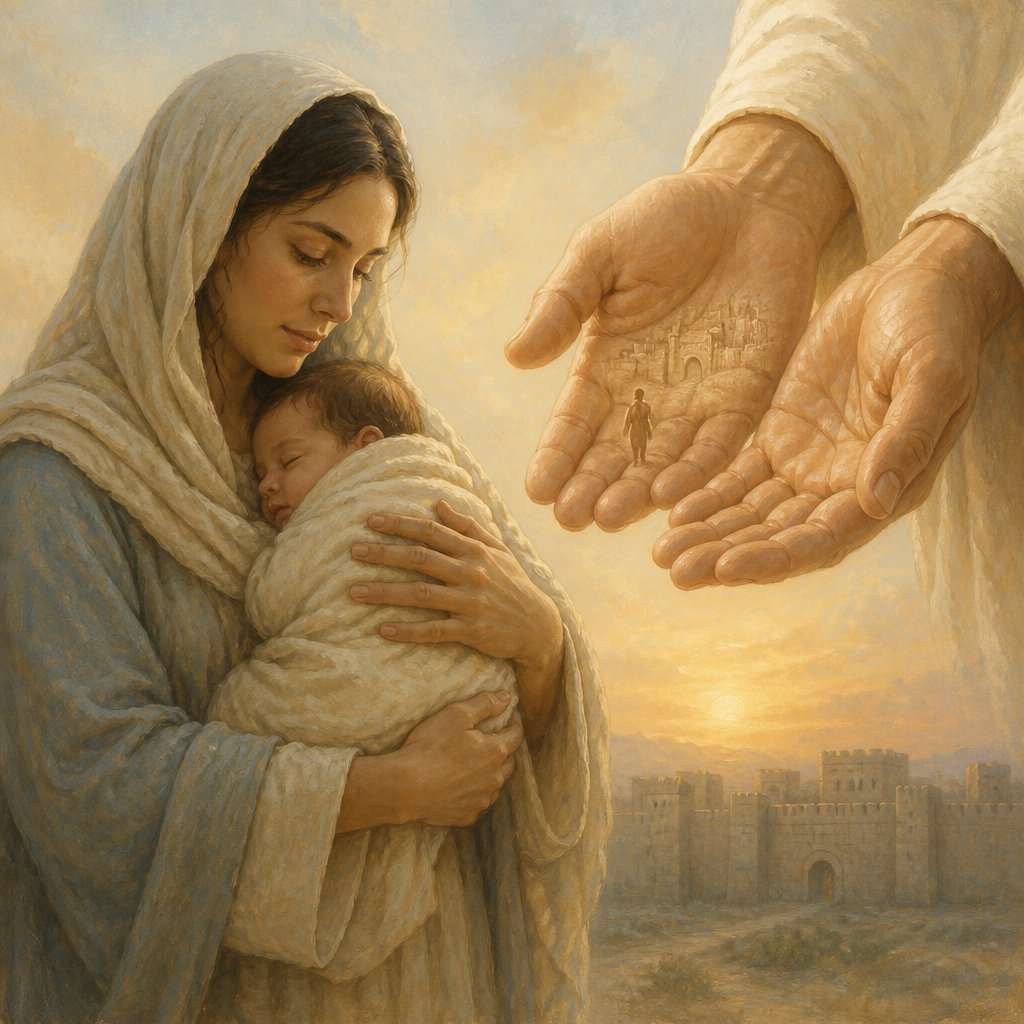
Isaiah 49:15-16 in the King James Version of the Bible says, "Can a woman forget her sucking child, that she should not have compassion on the son of her womb? yea, they may forget, yet will I not forget thee. Behold, I have graven thee upon the palms of my hands; thy walls are continually before me." This passage is rich in symbolism and carries themes of motherly love, divine care, and the enduring nature of God's love for his people.
The imagery of a mother and her child is used to illustrate the depth of God's love and concern for his people. The rhetorical question posed in verse 15, "Can a woman forget her sucking child, that she should not have compassion on the son of her womb?" underscores the natural, instinctual bond between a mother and her child. The idea of a mother forgetting her child is inconceivable, as it goes against the very essence of maternal love and care. In the context of this passage, God is likened to a mother who is incapable of forgetting or abandoning her child, emphasizing the unwavering nature of his love and compassion for his people.
The subsequent affirmation, "yea, they may forget, yet will I not forget thee," serves as a powerful reassurance to the Israelites and, by extension, to all believers. It is a declaration of God's commitment to his people, despite their shortcomings and failings. This verse conveys the message that God's love is unconditional and enduring, transcending human limitations and frailties.
The imagery of God engraving his people upon the palms of his hands in verse 16 further emphasizes the permanence and indelibility of his love. The physical act of engraving denotes a deliberate and intentional marking, symbolizing the deeply personal and intimate nature of God's relationship with his people. The mention of "thy walls" being continually before God serves as a reminder that the concerns and well-being of his people are always present in his thoughts and actions.
This passage from Isaiah also has broader implications in the larger biblical narrative. It foreshadows the coming of Jesus Christ and his redemptive work on the cross. The mention of engraving upon the palms of God's hands can be seen as a prefiguration of the crucifixion, where Jesus bore the marks of crucifixion in his hands as a demonstration of his sacrificial love for humanity. The imagery of God's people being engraved upon his hands can also be interpreted as an allusion to the new covenant established through Christ's atoning sacrifice, signifying the unbreakable bond between God and his people.
In a broader theological context, this passage speaks to the overarching theme of God's faithfulness and steadfast love throughout the biblical narrative. It echoes the recurring motif of God's covenantal commitment to his people, as seen in the Old Testament and fulfilled in the New Testament. It underscores the unwavering nature of God's character and his relentless pursuit of reconciliation and restoration for his people.
In conclusion, Isaiah 49:15-16 encapsulates the profound depth of God's love and care for his people, using the powerful imagery of a mother's love for her child to convey the unwavering nature of divine love. This passage serves as a source of comfort and assurance for believers, reaffirming the enduring commitment of God to his people and foreshadowing the redemptive work of Jesus Christ. As a testament to God's faithfulness and unchanging nature, this passage continues to inspire and uplift believers in their faith journey.
Have questions about Isaiah 49:15-16?
Dive deeper into this scripture with Bible Chat — an AI-powered tool for exploring God's Word through conversation. Ask questions, get context, and grow in your understanding of the Bible.
Get Our Apps


Isaiah 49:15-16 Artwork

Isaiah 49:15-16 - "Can a mother forget the baby at her breast and have no compassion on the child she has borne? Though she may forget, I will not forget you! See, I have engraved you on the palms of my hands; your walls are ever before me."
"Can a mother forget the baby at her breast and have no compassion on the child she has borne? Though she may forget, I will not forget you! See, I have engraved you on the palms of my hands; your walls are ever before me." - Isaiah 49:15-16

Isaiah 49:16 - "Behold, I have graven thee upon the palms of my hands; thy walls are continually before me."

Isaiah 49:15 - "Can a woman forget her sucking child, that she should not have compassion on the son of her womb? yea, they may forget, yet will I not forget thee."
!["Behold, I have graven thee upon the palms of [my] hands; thy walls [are] continually before me." - Isaiah 49:16](https://media.bible.art/b07c325d-8129-47ec-bf44-63ea459287ab-thumbnail.jpg)
"Behold, I have graven thee upon the palms of [my] hands; thy walls [are] continually before me." - Isaiah 49:16

Isaiah 49 1-7
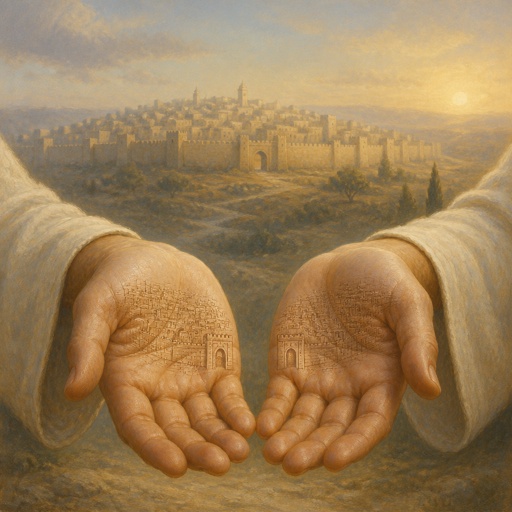
"Behold, I have graven thee upon the palms of my hands; thy walls are continually before me." - Isaiah 49:16
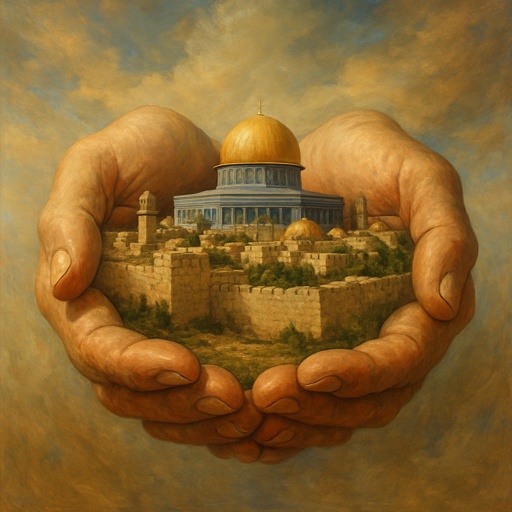
Isaiah 49:16 Behold, I have inscribed you Jerusalem on the palms of My hands; your walls are ever before Me

Joshua 15:49 - "And Dannah, and Kirjath-sannah, which is Debir,"

Isaiah 49:24 - "¶ Shall the prey be taken from the mighty, or the lawful captive delivered?"

Isaiah 49:11 - "And I will make all my mountains a way, and my highways shall be exalted."

Genesis 49:16 - "¶ Dan shall judge his people, as one of the tribes of Israel."

Isaiah 49:14 - "But Zion said, The LORD hath forsaken me, and my Lord hath forgotten me."

Isaiah 49:3 - "And said unto me, Thou art my servant, O Israel, in whom I will be glorified."

Isaiah 49:12 - "Behold, these shall come from far: and, lo, these from the north and from the west; and these from the land of Sinim."

Jeremiah 49:15 - "For, lo, I will make thee small among the heathen, and despised among men."

Isaiah 49:17 - "Thy children shall make haste; thy destroyers and they that made thee waste shall go forth of thee."

Psalms 49:16 - "Be not thou afraid when one is made rich, when the glory of his house is increased;"

"And Dannah, and Kirjath-sannah, which is Debir," - Joshua 15:49
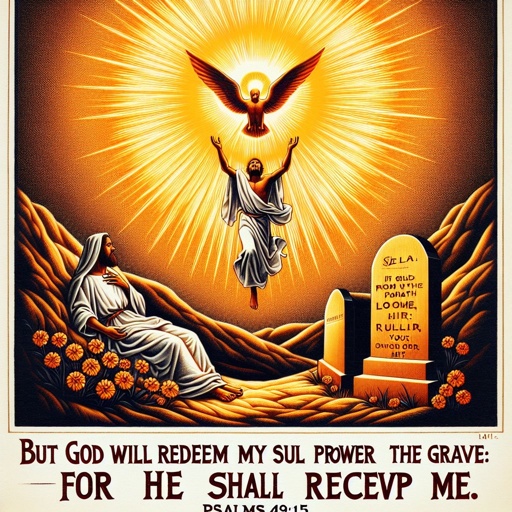
Psalms 49:15 - "But God will redeem my soul from the power of the grave: for he shall receive me. Selah."

1 Corinthians 15:49 - "And as we have borne the image of the earthy, we shall also bear the image of the heavenly."
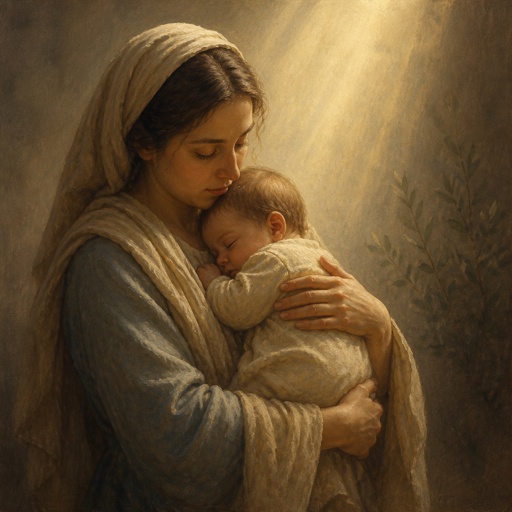
"Can a woman forget her sucking child, that she should not have compassion on the son of her womb? yea, they may forget, yet will I not forget thee." - Isaiah 49:15

Genesis 49:15 - "And he saw that rest was good, and the land that it was pleasant; and bowed his shoulder to bear, and became a servant unto tribute."

Numbers 16:49 - "Now they that died in the plague were fourteen thousand and seven hundred, beside them that died about the matter of Korah."

Isaiah 49:9 - "That thou mayest say to the prisoners, Go forth; to them that are in darkness, Shew yourselves. They shall feed in the ways, and their pastures shall be in all high places."

"¶ Shall the prey be taken from the mighty, or the lawful captive delivered?" - Isaiah 49:24

Isaiah 49:13 - "¶ Sing, O heavens; and be joyful, O earth; and break forth into singing, O mountains: for the LORD hath comforted his people, and will have mercy upon his afflicted."

Isaiah 49:19 - "For thy waste and thy desolate places, and the land of thy destruction, shall even now be too narrow by reason of the inhabitants, and they that swallowed thee up shall be far away."

Psalm 49:16-17 - "Do not be overawed when others grow rich, when the splendor of their houses increases; for they will take nothing with them when they die, their splendor will not descend with them."
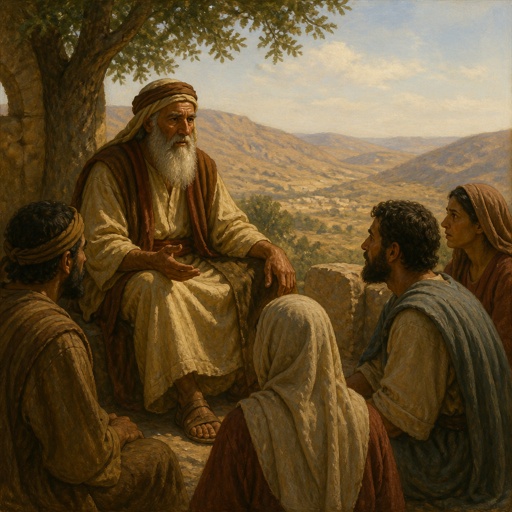
"¶ Dan shall judge his people, as one of the tribes of Israel." - Genesis 49:16