What does Isaiah 44:1 mean?
"Yet now hear, O Jacob my servant; and Israel, whom I have chosen:" - Isaiah 44:1
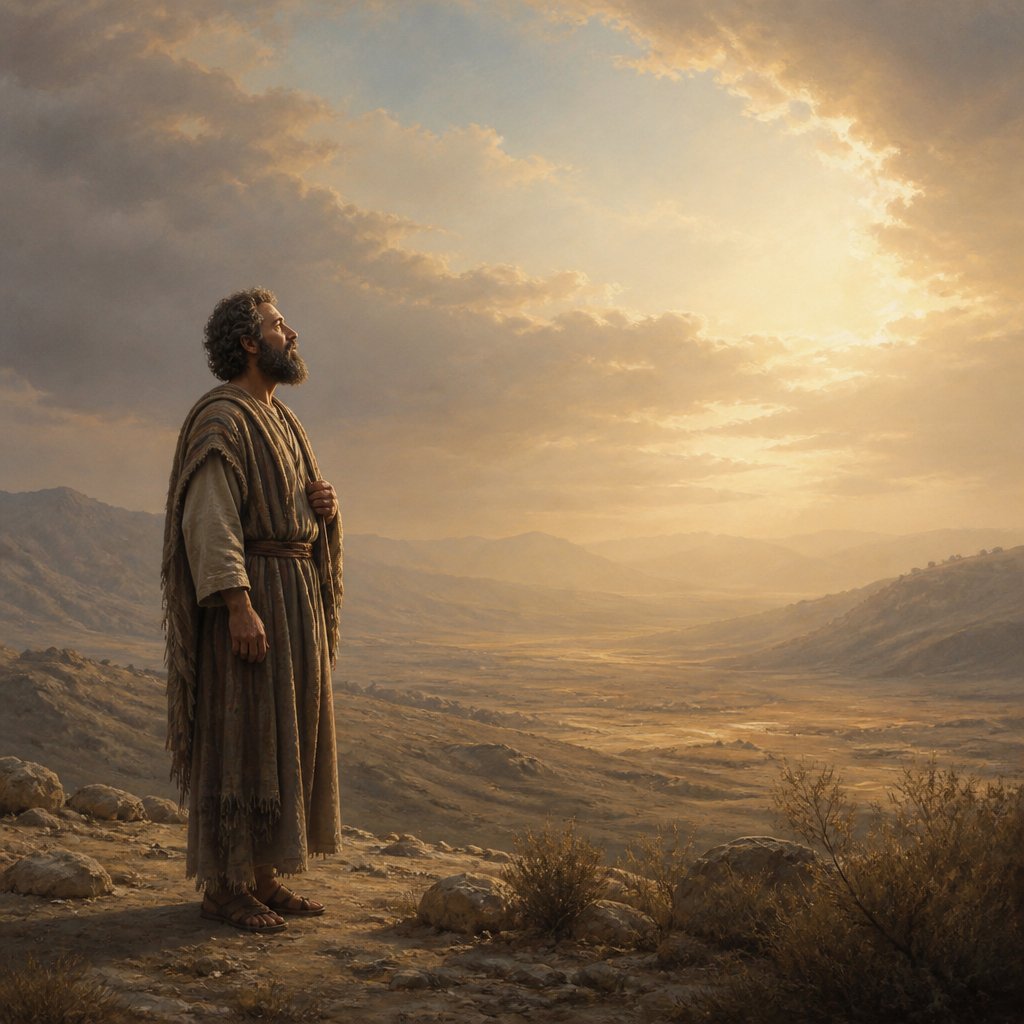
Isaiah 44:1 in the King James Version of the Bible states, "Yet now hear, O Jacob my servant; and Israel, whom I have chosen." This verse is part of a larger passage in which the prophet Isaiah addresses the restoration of Israel and the role of God's chosen people in fulfilling His plan for salvation.
The book of Isaiah is generally divided into three main sections. The first section (chapters 1-39) focuses on impending judgment and the need for repentance. The second section (chapters 40-55) turns to a message of comfort and hope, emphasizing God's power to save and His ultimate plan for redemption. The final section (chapters 56-66) addresses the renewal and restoration of God's people. Isaiah 44:1 falls within the second section, which is often referred to as the "Book of Consolation."
The verse begins with the word "Yet," which serves as a transitional phrase indicating a shift in the tone of the passage. It suggests a contrast between what has been previously mentioned and what will now be emphasized. In this case, the contrast is between the impending judgment and the promise of restoration for Israel and its people.
The verse addresses Jacob and Israel, both of which are synonymous with the nation of Israel. Jacob, the grandson of Abraham, had his name changed to Israel by God (Genesis 32:28) and became the father of the twelve tribes of Israel. Throughout the Old Testament, Jacob and Israel are used interchangeably to refer to the descendants of Jacob.
The use of the term "my servant" underscores the special relationship between God and the nation of Israel. This language is reminiscent of the covenantal relationship between God and His people, in which Israel is chosen as a special instrument to fulfill God's purposes on earth. This idea of being chosen by God is a recurring theme in the Hebrew Bible, and it carries both a sense of privilege and responsibility.
The verse emphasizes the divine election of Israel, highlighting the fact that God has chosen this particular nation for His redemptive plan. This concept is central to the larger theme of the book of Isaiah, which consistently emphasizes the divine sovereignty and the unique role of Israel in God's plan for salvation. Throughout the Old Testament, Israel is depicted as God's chosen people, called to be a light to the nations and to bring about the fulfillment of God's purposes on earth.
The message of Isaiah 44:1 is one of affirmation and assurance, conveying the idea that despite the trials and tribulations that Israel may face, God has not abandoned them. Instead, He reaffirms His commitment to His chosen people and promises to restore and redeem them. This serves as a source of hope and encouragement for the Israelites, assuring them that God's faithfulness and steadfast love will ultimately triumph over their present circumstances.
In terms of context, the larger passage in which Isaiah 44:1 is situated speaks to the futility of idolatry and the greatness of God as the one true Creator and Savior. The verse immediately preceding 44:1 warns against the worship of idols, emphasizing their inability to save or bring about true deliverance. The mention of Israel as God's chosen servant stands in stark contrast to the lifeless and powerless idols that the surrounding nations worship.
Symbolically, the reference to Jacob and Israel as God's servant conveys the idea of a special relationship between God and His people. The language of servanthood connotes a sense of purpose and mission, highlighting Israel's role in carrying out God's will. This imagery also amplifies the sense of divine calling and responsibility that is placed upon the nation of Israel. Additionally, the imagery of chosenness and divine election serves as a symbolic reminder of Israel's unique standing as the people of God, set apart for His purposes.
In conclusion, Isaiah 44:1 is a powerful declaration of God's unwavering commitment to His chosen people. It highlights the special relationship between God and Israel, emphasizing their role as God's servant and the recipients of His grace and favor. The verse also serves as a reminder of God's faithfulness and the assurance of His ultimate plan for redemption and restoration. As part of the broader message of the book of Isaiah, Isaiah 44:1 underscores the sovereign power of God and the central role of Israel in His redemptive plan for the world.
Have questions about Isaiah 44:1?
Dive deeper into this scripture with Bible Chat — an AI-powered tool for exploring God's Word through conversation. Ask questions, get context, and grow in your understanding of the Bible.
Get Our Apps


Isaiah 44:1 Artwork

Isaiah 44:1 - "Yet now hear, O Jacob my servant; and Israel, whom I have chosen:"
"Yet now hear, O Jacob my servant; and Israel, whom I have chosen:" - Isaiah 44:1

Isaiah 44:25

isaiah 44:3

Isaiah 44:4 - "And they shall spring up as among the grass, as willows by the water courses."

Isaiah 44:27 - "That saith to the deep, Be dry, and I will dry up thy rivers:"

Isaiah 44:10 - "Who hath formed a god, or molten a graven image that is profitable for nothing?"

Isaiah 44:25 - "That frustrateth the tokens of the liars, and maketh diviners mad; that turneth wise men backward, and maketh their knowledge foolish;"

Isaiah 44:18 - "They have not known nor understood: for he hath shut their eyes, that they cannot see; and their hearts, that they cannot understand."

Ezekiel 44 v 1

Ezekiel 44 v 1

Isaiah 44:9 - "¶ They that make a graven image are all of them vanity; and their delectable things shall not profit; and they are their own witnesses; they see not, nor know; that they may be ashamed."

Matthew 5:44

Matthew 5:44

"That saith to the deep, Be dry, and I will dry up thy rivers:" - Isaiah 44:27

Isaiah 44:22 - "I have blotted out, as a thick cloud, thy transgressions, and, as a cloud, thy sins: return unto me; for I have redeemed thee."

Isaiah 44:6 - "Thus saith the LORD the King of Israel, and his redeemer the LORD of hosts; I am the first, and I am the last; and beside me there is no God."

"And they shall spring up as among the grass, as willows by the water courses." - Isaiah 44:4

Isaiah 44:20 - "He feedeth on ashes: a deceived heart hath turned him aside, that he cannot deliver his soul, nor say, Is there not a lie in my right hand?"

acts 10:44-46

"Who hath formed a god, or molten a graven image that is profitable for nothing?" - Isaiah 44:10

Isaiah 44:28 - "That saith of Cyrus, He is my shepherd, and shall perform all my pleasure: even saying to Jerusalem, Thou shalt be built; and to the temple, Thy foundation shall be laid."

Isaiah 44:14 - "He heweth him down cedars, and taketh the cypress and the oak, which he strengtheneth for himself among the trees of the forest: he planteth an ash, and the rain doth nourish it."

Isaiah 44:12 - "The smith with the tongs both worketh in the coals, and fashioneth it with hammers, and worketh it with the strength of his arms: yea, he is hungry, and his strength faileth: he drinketh no water, and is faint."

1 Chronicles 1:44 - "And when Bela was dead, Jobab the son of Zerah of Bozrah reigned in his stead."

Isaiah 44:21 - "¶ Remember these, O Jacob and Israel; for thou art my servant: I have formed thee; thou art my servant: O Israel, thou shalt not be forgotten of me."

Isaiah 44:3 - "For I will pour water upon him that is thirsty, and floods upon the dry ground: I will pour my spirit upon thy seed, and my blessing upon thine offspring:"

Isaiah 44:17 - "And the residue thereof he maketh a god, even his graven image: he falleth down unto it, and worshippeth it, and prayeth unto it, and saith, Deliver me; for thou art my god."

Isaiah 44:5 - "One shall say, I am the LORD'S; and another shall call himself by the name of Jacob; and another shall subscribe with his hand unto the LORD, and surname himself by the name of Israel."

John 1:44 - "Now Philip was of Bethsaida, the city of Andrew and Peter."