What does Isaiah 41:10 mean?
"¶ Fear thou not; for I am with thee: be not dismayed; for I am thy God: I will strengthen thee; yea, I will help thee; yea, I will uphold thee with the right hand of my righteousness." - Isaiah 41:10

Isaiah 41:10 in the KJV reads, “Fear thou not; for I am with thee: be not dismayed; for I am thy God: I will strengthen thee; yea, I will help thee; yea, I will uphold thee with the right hand of my righteousness.” Its meaning unfolds as a direct, covenant-shaped word of comfort spoken by the LORD to a people who are weak, threatened, and tempted to despair. The verse does not begin with a command that stands alone; it begins with a command fastened to a reason. “Fear thou not” is immediately grounded in “for I am with thee.” The heart of the promise is presence. In Scripture, fear is often the natural response to danger, uncertainty, exile, or the seeming triumph of enemies; here, fear is answered not by denying the reality of trouble but by declaring the reality of God’s nearness. The LORD does not merely send reassurance from afar; He identifies Himself as present with His own.
The verse belongs to a larger movement in Isaiah 41 where the LORD speaks as the One who rules history, calls nations to account, and then turns to address His servant. The surrounding context repeatedly contrasts the living God with the helplessness of idols, and it portrays the LORD as the One who “calleth” and “hold[s]” His people, shaping events and sustaining them. Within that setting, Isaiah 41:10 functions as a concentrated statement of what God’s sovereignty means for the frightened believer: because He governs the great and the small, He can also govern the fears of His people; because He is the true God, He can give what false gods cannot—strength, help, and secure upholding.
The second phrase, “be not dismayed,” speaks to more than momentary fear. To be dismayed is to be shattered in spirit, thrown down inwardly, made to look around in anxious confusion as if no path forward exists. The LORD answers that inward collapse with an identity statement: “for I am thy God.” This is personal and possessive language, echoing the covenant pattern in Scripture where God binds Himself to His people. The comfort is not merely that God exists, but that He is “thy God,” the One who has taken responsibility, by His own promise, for those who belong to Him. The verse thus moves from presence (“I am with thee”) to relationship (“I am thy God”), showing that the cure for dread is not self-confidence but God-confidence rooted in who He is to His people.
Then come four promises in a rising sequence, each reinforcing the other. “I will strengthen thee” addresses inability; the LORD supplies what the fearful person lacks. “Yea, I will help thee” addresses need and burden; strength is not only inward capacity but also God’s active assistance in real circumstances. “Yea, I will uphold thee” addresses instability and the danger of falling; it is the picture of God supporting the one who cannot stand alone. The repeated “yea” gives the sentence a solemn insistence, as though the LORD anticipates the objections of fear—“Will it really be so? Can I really endure?”—and answers them by pressing the promise more firmly into the heart.
The climactic image, “with the right hand of my righteousness,” is rich with symbolism. In biblical language the “right hand” commonly signifies power, skill, and effective action, the hand by which a king defends and delivers. It is not an abstract encouragement but an emblem of God’s active might. Yet it is not raw power detached from character; it is the “right hand” not merely of strength but “of my righteousness.” In the KJV phrasing, “righteousness” carries the sense of God’s moral perfection and His faithfulness to what is right. This means His support is not arbitrary or unreliable. He upholds according to His righteous nature and His righteous commitments. The comfort of the verse is therefore both tender and weighty: God’s help is as sure as His own righteousness, and His power is exercised in harmony with His holiness. The believer’s safety rests not on shifting emotions or changing circumstances but on the steadfastness of God’s right and righteous rule.
The themes woven through Isaiah 41:10 include divine presence, covenant relationship, strengthening grace, providential help, and sustaining power. It also implicitly addresses the temptation to seek security elsewhere. In a chapter that exposes idols as unable to save or even to speak, this verse presents the LORD as the only One whose word can carry a trembling heart. The significance of the verse lies in how it answers fear at its roots: fear says you are alone, but God says, “I am with thee”; fear says you will be overwhelmed, but God says, “I will strengthen thee”; fear says you cannot manage what is coming, but God says, “I will help thee”; fear says you will fall, but God says, “I will uphold thee.” And the final ground of all this is God Himself—His right hand, and His righteousness—so that the promise is not simply encouragement for a better mood, but assurance anchored in the unchanging character and active faithfulness of the LORD.
Have questions about Isaiah 41:10?
Dive deeper into this scripture with Bible Chat — an AI-powered tool for exploring God's Word through conversation. Ask questions, get context, and grow in your understanding of the Bible.
Get Our Apps


Isaiah 41:10 Artwork

isaiah 41:10

isaiah 41:10

isaiah 41:10

isaiah 41:10

isaiah 41:10

isaiah 41:10

isaiah 41:10

isaiah 41:10

isaiah 41:10

isaiah 41:10

isaiah 41:10

isaiah 41:10

isaiah 41:10

isaiah 41:10

isaiah 41:10

isaiah 41:10

isaiah 41:10

isaiah 41:10

isaiah 41:10
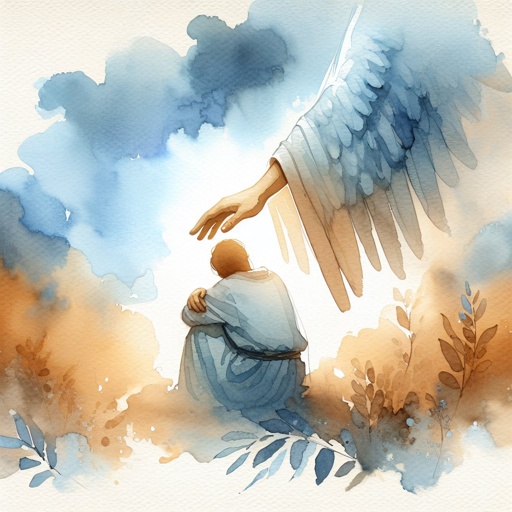
isaiah 41:10

isaiah 41:10

isaiah 41:10

isaiah 41:10

Isaiah 41:10

isaiah 41:10

Isaiah 41 : 10

Isaiah 41:10

isaiah 41:10

Isaiah 41:10

Isaiah 41:10