What does Isaiah 38:7 mean?
"And this shall be a sign unto thee from the LORD, that the LORD will do this thing that he hath spoken;" - Isaiah 38:7
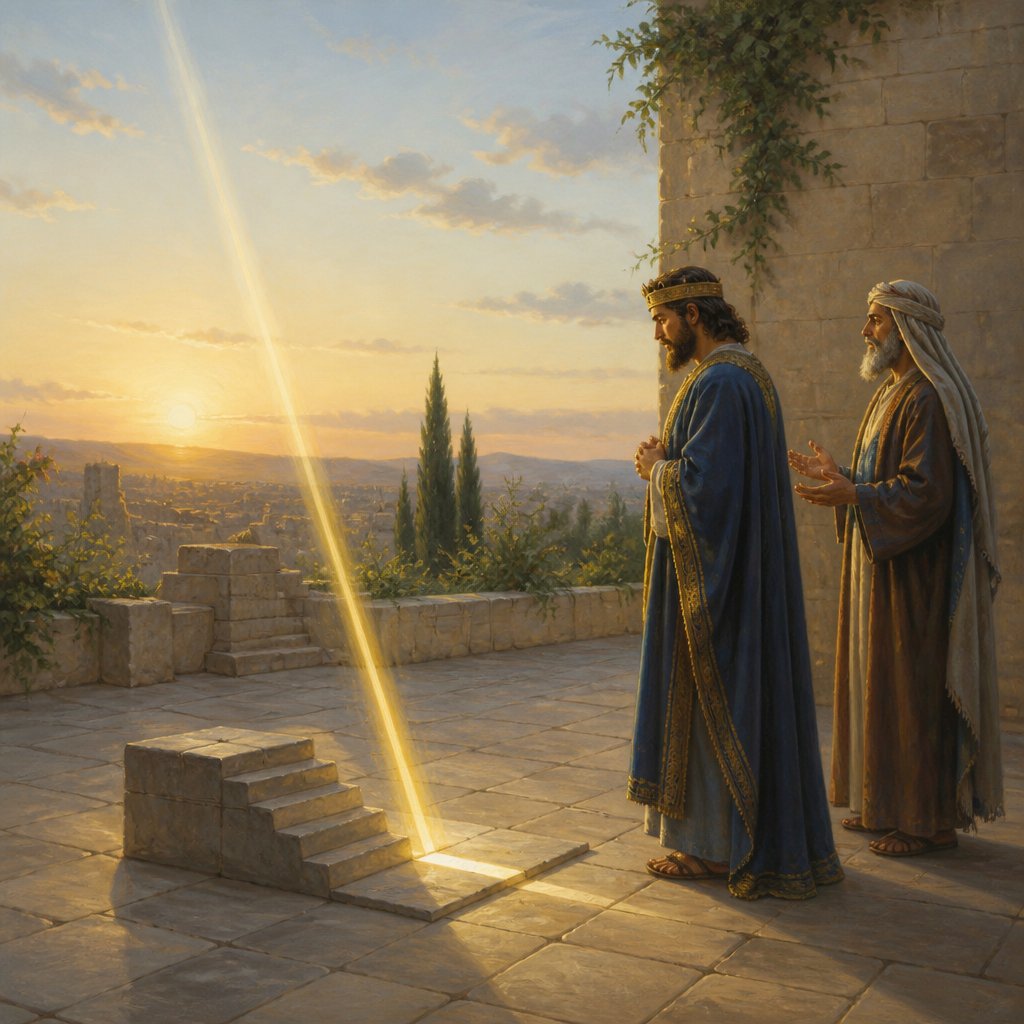
The Bible verse Isaiah 38:7 from the King James Version (KJV) reads: "And this shall be a sign unto thee from the Lord, that the Lord will do this thing that he hath spoken;" This verse appears in the book of Isaiah, which is one of the major prophets in the Old Testament. This particular verse is part of a larger passage that details the miraculous healing of King Hezekiah, who was deathly ill and was given a sign by the Lord that he would be healed.
The context of this verse is important for understanding its meaning and significance. In Isaiah 38, King Hezekiah falls gravely ill and is told by the prophet Isaiah that he will not recover from his sickness, but will die. In response, Hezekiah prays fervently to the Lord, pleading for mercy and healing. The Lord hears Hezekiah's prayer and commands Isaiah to deliver a message of healing to the king. This verse is part of that message, serving as a sign to Hezekiah that the Lord will indeed fulfill his promise of healing.
The theme of divine intervention and faith is central to this passage. It speaks to the power of prayer and the faithfulness of God to his people. Despite the prognosis of death, Hezekiah's unwavering faith and fervent prayer lead to a miraculous healing. The verse serves as a reminder that God is sovereign over life and death, and that his plans and purposes can supersede human limitations and expectations.
The symbolism in this verse lies in the "sign unto thee from the Lord" that is promised to Hezekiah. Throughout the Bible, signs and wonders are often used to demonstrate God's power and his faithfulness to his people. In this case, the sign serves as a reassurance to Hezekiah that God will fulfill his promise of healing. It symbolizes the trustworthiness of God's word and his ability to intervene in the affairs of humanity.
Furthermore, the verse illustrates the intimate and personal nature of God's relationship with his people. The Lord provides a specific sign to Hezekiah, demonstrating his care and concern for the individual. This personal interaction between God and a faithful servant highlights the depth of God's love and his willingness to demonstrate his presence in tangible ways.
In a broader theological sense, this verse points to the redemptive power of God. Hezekiah's healing serves as a foreshadowing of the ultimate healing and restoration that God offers through the atoning work of Jesus Christ. Through his death and resurrection, Christ offers healing and salvation to all who believe in him, fulfilling the promise of God's faithfulness and mercy.
In conclusion, Isaiah 38:7 is a powerful testament to the faithfulness and sovereignty of God. It speaks to the themes of divine intervention, faith, and the personal nature of God's relationship with his people. The verse serves as a symbol of God's trustworthiness and his ability to provide signs and wonders as a confirmation of his word. Ultimately, it points to the redemptive work of God through Christ, offering hope and healing to all who put their faith in him.
Have questions about Isaiah 38:7?
Dive deeper into this scripture with Bible Chat — an AI-powered tool for exploring God's Word through conversation. Ask questions, get context, and grow in your understanding of the Bible.
Get Our Apps


Isaiah 38:7 Artwork

Isaiah 38:7 - "And this shall be a sign unto thee from the LORD, that the LORD will do this thing that he hath spoken;"
"And this shall be a sign unto thee from the LORD, that the LORD will do this thing that he hath spoken;" - Isaiah 38:7

Isaiah 38:4 - "¶ Then came the word of the LORD to Isaiah, saying,"

Isaiah 38:17

John 7:38

John 7:38

John 7:38

John 7:38

"¶ Then came the word of the LORD to Isaiah, saying," - Isaiah 38:4

John 7:38

John 7:38

John 7:38

Isaiah 38:21 - "For Isaiah had said, Let them take a lump of figs, and lay it for a plaister upon the boil, and he shall recover."

Job 38:4-7

Isaiah 38:2 - "Then Hezekiah turned his face toward the wall, and prayed unto the LORD,"

Isaiah 38:6 - "And I will deliver thee and this city out of the hand of the king of Assyria: and I will defend this city."

1 Kings 7:27-38

1 Kings 7:27-38

1 Chronicles 7:38 - "And the sons of Jether; Jephunneh, and Pispah, and Ara."

Isaiah 38:9 - "¶ The writing of Hezekiah king of Judah, when he had been sick, and was recovered of his sickness:"

Isaiah 38:22 - "Hezekiah also had said, What is the sign that I shall go up to the house of the LORD?"

Numbers 7:38 - "One golden spoon of ten shekels, full of incense:"

Nehemiah 7:38 - "The children of Senaah, three thousand nine hundred and thirty."

Psalms 38:7 - "For my loins are filled with a loathsome disease: and there is no soundness in my flesh."

Genesis 38:7 - "And Er, Judah's firstborn, was wicked in the sight of the LORD; and the LORD slew him."

Isaiah 38:18 - "For the grave cannot praise thee, death can not celebrate thee: they that go down into the pit cannot hope for thy truth."

Isaiah 38:1 - "In those days was Hezekiah sick unto death. And Isaiah the prophet the son of Amoz came unto him, and said unto him, Thus saith the LORD, Set thine house in order: for thou shalt die, and not live."

Isaiah 38:19 - "The living, the living, he shall praise thee, as I do this day: the father to the children shall make known thy truth."

Job 38:7 - "When the morning stars sang together, and all the sons of God shouted for joy?"

Isaiah 38:11 - "I said, I shall not see the LORD, even the LORD, in the land of the living: I shall behold man no more with the inhabitants of the world."