What does Isaiah 38:17 mean?
"Behold, for peace I had great bitterness: but thou hast in love to my soul delivered it from the pit of corruption: for thou hast cast all my sins behind thy back." - Isaiah 38:17
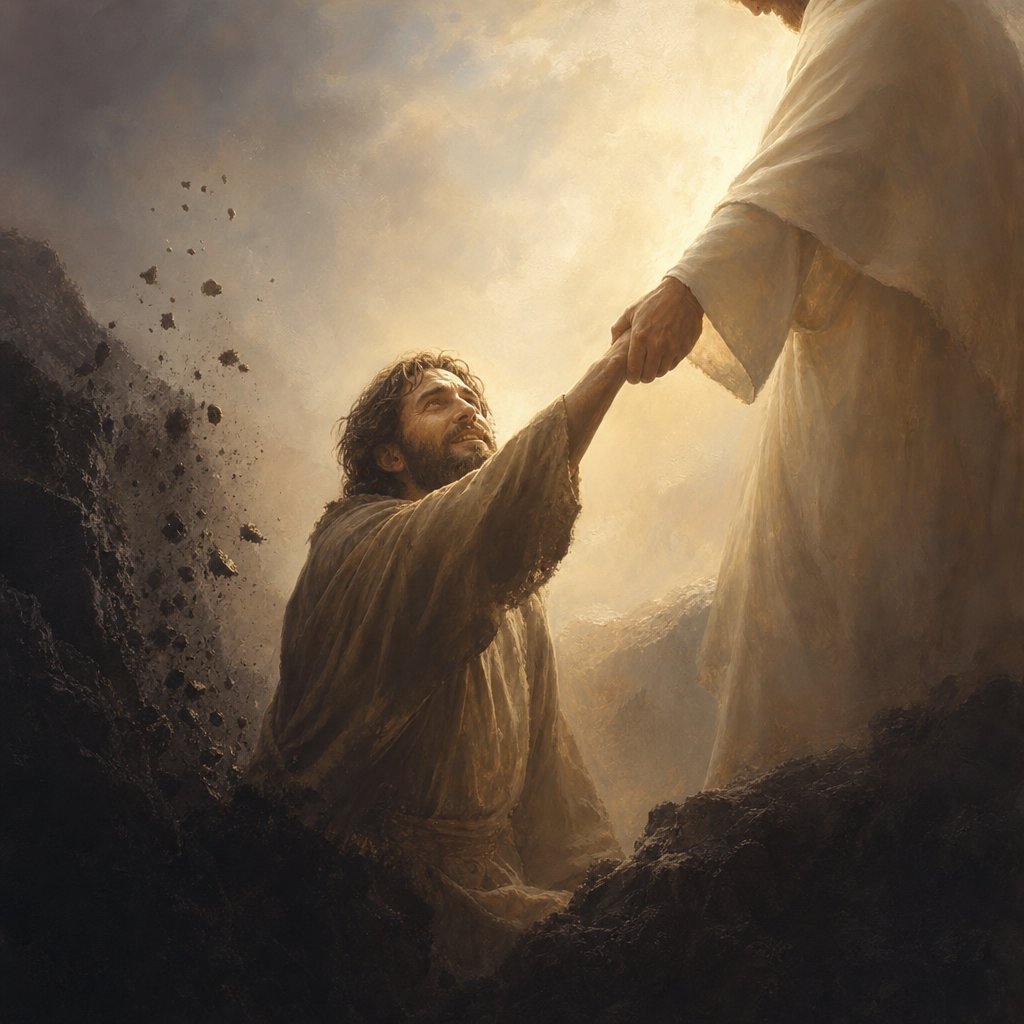
Isaiah 38:17 in the KJV sits inside King Hezekiah’s personal record of what it felt like to be brought down to the edge of death and then raised up again by the word of the LORD. The chapter is not written as abstract theology but as testimony. Hezekiah had been told by Isaiah, “Set thine house in order: for thou shalt die, and not live” (Isaiah 38:1). He turned his face to the wall, prayed, and wept sore. God answered by adding fifteen years to his life and giving a sign. Verses 9–20 are then “the writing of Hezekiah king of Judah, when he had been sick, and was recovered of his sickness” (Isaiah 38:9). Verse 17 belongs to the heart of that writing, where the king interprets his suffering and recovery in the light of God’s mercy.
The verse reads, “Behold, for peace I had great bitterness: but thou hast in love to my soul delivered it from the pit of corruption: for thou hast cast all my sins behind thy back” (Isaiah 38:17). Its first movement holds a paradox that frames the whole experience: “for peace I had great bitterness.” In Hezekiah’s mouth, “peace” is not merely the absence of trouble; it is the hoped-for condition of safety, wholeness, and settledness under God’s favour. Yet the path that led to that peace ran through “great bitterness.” The bitterness is the felt agony of sickness, fear of death, and the inward wrestling that fills the earlier lines of the writing: he speaks of being “cut off” (Isaiah 38:12), of a “lion” breaking his bones (Isaiah 38:13), and of chattering like a crane or a swallow (Isaiah 38:14). Isaiah 38:17 gathers those images into a single confession: what was intended to end in peace passed through an experience that tasted like ruin. The verse therefore teaches that peace may come, in God’s providence, by way of painful discipline or deep affliction, and that the bitterness is not necessarily proof of God’s abandonment. In this context it becomes the dark backdrop against which God’s deliverance shines.
The second movement turns from Hezekiah’s experience to God’s character: “but thou hast in love to my soul delivered it from the pit of corruption.” The contrast is decisive. Bitterness is real, but it is not ultimate. The phrase “in love to my soul” places the recovery in the realm of covenant affection, not mere circumstance. Hezekiah is not saying only that he got better; he is saying the Lord acted out of love toward his life, his person, his inner being. The “pit of corruption” is a vivid symbol drawn from the language of death and the grave, and in the chapter it corresponds to the thought that he was on the verge of going down to the place where life decays and praise is silenced. Just a few verses later he says, “For the grave cannot praise thee, death can not celebrate thee: they that go down into the pit cannot hope for thy truth” (Isaiah 38:18). The “pit” therefore symbolizes the realm where human strength ends, where the body returns to corruption, and where, from Hezekiah’s vantage point, the public, living testimony of praising God in the congregation would cease. God’s deliverance “from the pit of corruption” is not only rescue from a physical end but restoration to the land of the living where worship and witness continue. Within the story, it is the reversal of a death sentence by divine mercy.
The third movement reaches even deeper, tying the near-death experience to the issue of sin: “for thou hast cast all my sins behind thy back.” Hezekiah interprets his restoration not merely as healing but as forgiveness. The image is strong and personal. To cast something “behind thy back” is to refuse to keep it before one’s face, refuse to look upon it as a charge being held in view. It signifies removal from regard, a deliberate choice not to bring it forward for condemnation. In prose terms, Hezekiah is saying that God has put his sins out of sight as far as God’s dealings with him are concerned. This connects his peace to reconciliation: the sweetness of being spared is inseparable from the greater mercy of having guilt dealt with. The verse thus links three realities that often get separated in human thinking: affliction, deliverance, and forgiveness. Hezekiah’s “peace” is not simply that his body recovered; it is that God’s love has intervened, that his life has been pulled back from the brink, and that his relationship with God has been cleared of the weight of sin.
In the flow of Isaiah 38, this confession also clarifies the purpose of his extended life. Hezekiah immediately follows with the thought that the living, not the dead, praise God: “The living, the living, he shall praise thee, as I do this day” (Isaiah 38:19). The deliverance from the pit is therefore deliverance unto testimony. God’s casting sins behind His back is not permission to forget God; it is the foundation for renewed worship and for teaching the next generation, “the father to the children shall make known thy truth” (Isaiah 38:19). The symbolism of “pit” and “behind thy back” serves that end: the pit represents the terminal silence of the grave; forgiveness represents the removal of what would rightly bar fellowship with God; love represents the motive in God; peace represents the outcome in the believer’s life. Read in its setting, Isaiah 38:17 is the distilled meaning of Hezekiah’s crisis: what felt like bitterness was turned into peace because God, out of love, rescued him from death and removed his sins from His sight, so that Hezekiah could live to praise the LORD.
Have questions about Isaiah 38:17?
Dive deeper into this scripture with Bible Chat — an AI-powered tool for exploring God's Word through conversation. Ask questions, get context, and grow in your understanding of the Bible.
Get Our Apps


Isaiah 38:17 Artwork

Isaiah 38:17

Isaiah 38:17 - "Behold, for peace I had great bitterness: but thou hast in love to my soul delivered it from the pit of corruption: for thou hast cast all my sins behind thy back."
"Behold, for peace I had great bitterness: but thou hast in love to my soul delivered it from the pit of corruption: for thou hast cast all my sins behind thy back." - Isaiah 38:17

Isaiah 38:4 - "¶ Then came the word of the LORD to Isaiah, saying,"

"¶ Then came the word of the LORD to Isaiah, saying," - Isaiah 38:4

Isaiah 38:21 - "For Isaiah had said, Let them take a lump of figs, and lay it for a plaister upon the boil, and he shall recover."

1 Samuel 17:38-40

Isaiah 38:2 - "Then Hezekiah turned his face toward the wall, and prayed unto the LORD,"

Psalms 38:17 - "For I am ready to halt, and my sorrow is continually before me."

Isaiah 38:16-17 - "O Lord, by these things men live, and in all these is the life of my spirit. Oh restore me to health and make me live! Behold, it was for my welfare that I had great bitterness; but in love you have delivered my life from the pit of destruction, for you have cast all my sins behind your back."

Isaiah 38:6 - "And I will deliver thee and this city out of the hand of the king of Assyria: and I will defend this city."

Isaiah 38:9 - "¶ The writing of Hezekiah king of Judah, when he had been sick, and was recovered of his sickness:"

Isaiah 38:22 - "Hezekiah also had said, What is the sign that I shall go up to the house of the LORD?"

Isaiah 38:7 - "And this shall be a sign unto thee from the LORD, that the LORD will do this thing that he hath spoken;"

Job 38:17 - "Have the gates of death been opened unto thee? or hast thou seen the doors of the shadow of death?"

Isaiah 38:18 - "For the grave cannot praise thee, death can not celebrate thee: they that go down into the pit cannot hope for thy truth."

Isaiah 38:1 - "In those days was Hezekiah sick unto death. And Isaiah the prophet the son of Amoz came unto him, and said unto him, Thus saith the LORD, Set thine house in order: for thou shalt die, and not live."

Isaiah 54:17

Isaiah 54:17

Isaiah 38:19 - "The living, the living, he shall praise thee, as I do this day: the father to the children shall make known thy truth."

2 Kings 17:38 - "And the covenant that I have made with you ye shall not forget; neither shall ye fear other gods."

Isaiah 38:11 - "I said, I shall not see the LORD, even the LORD, in the land of the living: I shall behold man no more with the inhabitants of the world."

Isaiah 38:20 - "The LORD was ready to save me: therefore we will sing my songs to the stringed instruments all the days of our life in the house of the LORD."

Isaiah 38:10 - "I said in the cutting off of my days, I shall go to the gates of the grave: I am deprived of the residue of my years."

Isaiah 38:16 - "O Lord, by these things men live, and in all these things is the life of my spirit: so wilt thou recover me, and make me to live."

Exodus 38:17 - "And the sockets for the pillars were of brass; the hooks of the pillars and their fillets of silver; and the overlaying of their chapiters of silver; and all the pillars of the court were filleted with silver."

"For Isaiah had said, Let them take a lump of figs, and lay it for a plaister upon the boil, and he shall recover." - Isaiah 38:21

1 Samuel 17:38 - "¶ And Saul armed David with his armour, and he put an helmet of brass upon his head; also he armed him with a coat of mail."

Genesis 38:17 - "And he said, I will send thee a kid from the flock. And she said, Wilt thou give me a pledge, till thou send it?"

"Then Hezekiah turned his face toward the wall, and prayed unto the LORD," - Isaiah 38:2