What does Isaiah 37:7 mean?
"Behold, I will send a blast upon him, and he shall hear a rumour, and return to his own land; and I will cause him to fall by the sword in his own land." - Isaiah 37:7
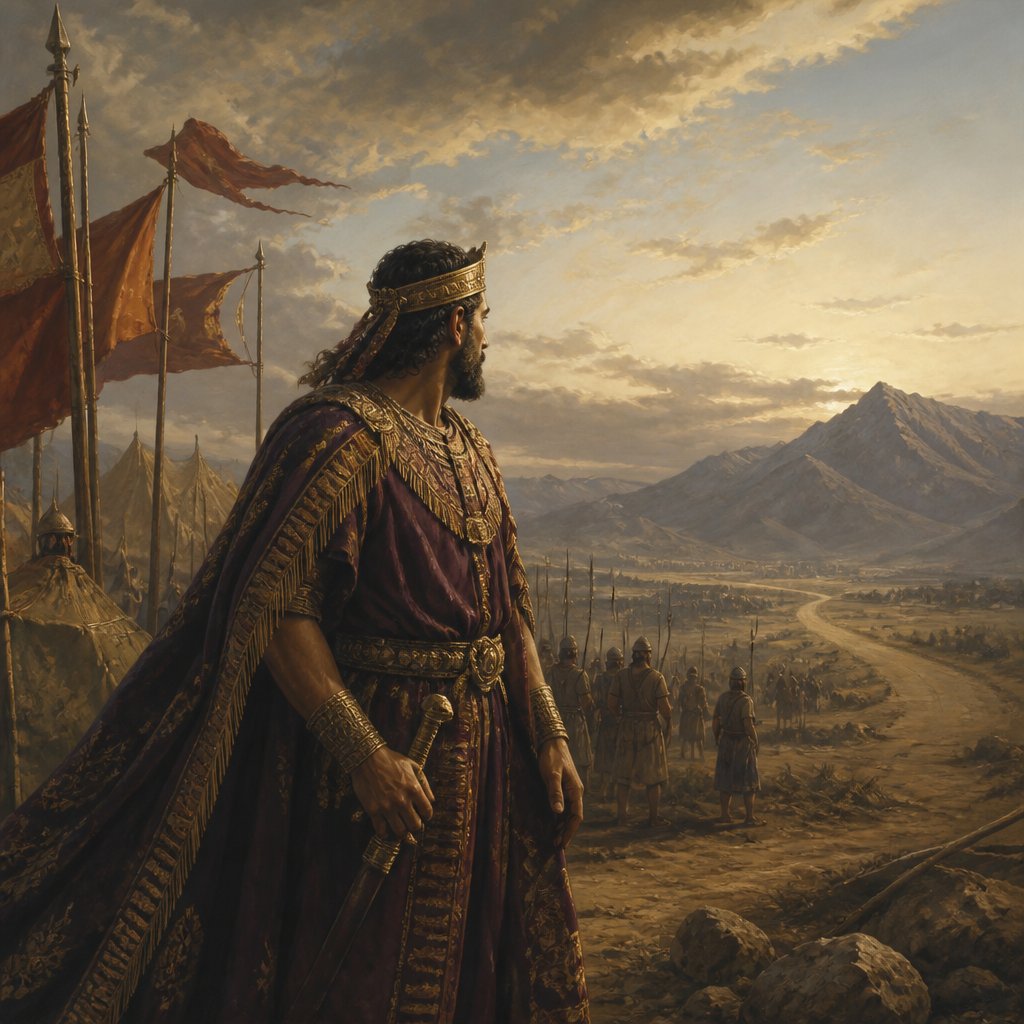
Isaiah 37:7 in the King James Version of the Bible reads, "Behold, I will send a blast upon him, and he shall hear a rumour, and return to his own land; and I will cause him to fall by the sword in his own land." This verse is part of a larger passage in the book of Isaiah that recounts the story of King Hezekiah's confrontation with the Assyrian king Sennacherib.
The book of Isaiah is a prophetic book that is attributed to the prophet Isaiah, who lived in the 8th century BC. The book is known for its vivid imagery, powerful language, and themes of judgment, salvation, and the coming of the Messiah. In the specific passage of Isaiah 37, King Hezekiah is facing a dire situation as the Assyrian forces, led by Sennacherib, are threatening to conquer the kingdom of Judah.
In this verse, King Hezekiah is reassured by the prophet Isaiah that God will send a blast upon Sennacherib, causing him to hear a rumor that will prompt him to return to his own land. The verse also predicts Sennacherib's downfall by the sword in his own land. This prophecy is a reflection of the divine intervention and protection that King Hezekiah and the people of Judah can expect from God in the face of their enemies.
The themes of divine protection, trust in God's providence, and the fulfillment of prophecy are central to this verse. It serves as a reminder to King Hezekiah and the people of Judah that their ultimate security and deliverance come from God alone. It also emphasizes the idea that God is not only aware of the threat posed by the Assyrian army but is also actively involved in shaping the outcome of the situation.
The context of this verse is crucial to understanding its significance. At the time of the events described in Isaiah 37, the kingdom of Judah was facing a formidable adversary in the form of the powerful Assyrian empire. Sennacherib's forces had already conquered much of the region, and Judah was next on their list. In the face of this existential threat, King Hezekiah turned to the prophet Isaiah for guidance and reassurance.
In this verse, Isaiah foretells the downfall of Sennacherib and the deliverance of Judah from the Assyrian threat. This proclamation would have been a source of immense comfort and hope for King Hezekiah and the people of Judah, as it reaffirmed their faith in God's ability to protect them and uphold His covenant with them.
The symbolism in this verse is profound. The "blast" that God sends upon Sennacherib can be seen as a metaphor for divine judgment and punishment. Sennacherib's "return to his own land" signifies his retreat and ultimate defeat at the hands of God. The imagery of Sennacherib falling by the sword in his own land reflects the poetic justice of divine retribution.
Overall, Isaiah 37:7 is a powerful declaration of God's sovereignty and His commitment to protecting His people. It serves as a testament to the faith and resilience of King Hezekiah and the people of Judah in the face of overwhelming odds. The verse is a reminder that in times of crisis and uncertainty, it is crucial to place our trust in God and His promises, knowing that He holds the ultimate power over the fates of nations and individuals alike.
Have questions about Isaiah 37:7?
Dive deeper into this scripture with Bible Chat — an AI-powered tool for exploring God's Word through conversation. Ask questions, get context, and grow in your understanding of the Bible.
Get Our Apps


Isaiah 37:7 Artwork

Isaiah 37:7 - "Behold, I will send a blast upon him, and he shall hear a rumour, and return to his own land; and I will cause him to fall by the sword in his own land."
"Behold, I will send a blast upon him, and he shall hear a rumour, and return to his own land; and I will cause him to fall by the sword in his own land." - Isaiah 37:7

Isaiah 37:5 - "So the servants of king Hezekiah came to Isaiah."

Isaiah 37:37 - "¶ So Sennacherib king of Assyria departed, and went and returned, and dwelt at Nineveh."

Isaiah 37:15 - "And Hezekiah prayed unto the LORD, saying,"

John 7:37-39

John 7:37-39

"So the servants of king Hezekiah came to Isaiah." - Isaiah 37:5

Ezekiel 37:7

Psalms 37:7

Isaiah 37:2 - "And he sent Eliakim, who was over the household, and Shebna the scribe, and the elders of the priests covered with sackcloth, unto Isaiah the prophet the son of Amoz."

"¶ So Sennacherib king of Assyria departed, and went and returned, and dwelt at Nineveh." - Isaiah 37:37

Mark 7:31-37

Ezekiel 37 1-7

Mark 7:31-37

Isaiah 37:18 - "Of a truth, LORD, the kings of Assyria have laid waste all the nations, and their countries,"

Isaiah 37:13 - "Where is the king of Hamath, and the king of Arphad, and the king of the city of Sepharvaim, Hena, and Ivah?"

Isaiah 37:21 - "¶ Then Isaiah the son of Amoz sent unto Hezekiah, saying, Thus saith the LORD God of Israel, Whereas thou hast prayed to me against Sennacherib king of Assyria:"

Isaiah 37:35 - "For I will defend this city to save it for mine own sake, and for my servant David's sake."

"And Hezekiah prayed unto the LORD, saying," - Isaiah 37:15

Isaiah 37:34 - "By the way that he came, by the same shall he return, and shall not come into this city, saith the LORD."

Isaiah 37:31 - "And the remnant that is escaped of the house of Judah shall again take root downward, and bear fruit upward:"

Isaiah 37:28 - "But I know thy abode, and thy going out, and thy coming in, and thy rage against me."

1 Chronicles 7:37 - "Bezer, and Hod, and Shamma, and Shilshah, and Ithran, and Beera."

Nehemiah 7:37 - "The children of Lod, Hadid, and Ono, seven hundred twenty and one."

Isaiah 37:6 - "¶ And Isaiah said unto them, Thus shall ye say unto your master, Thus saith the LORD, Be not afraid of the words that thou hast heard, wherewith the servants of the king of Assyria have blasphemed me."

Isaiah 37:32 - "For out of Jerusalem shall go forth a remnant, and they that escape out of mount Zion: the zeal of the LORD of hosts shall do this."

Isaiah 37:19 - "And have cast their gods into the fire: for they were no gods, but the work of men's hands, wood and stone: therefore they have destroyed them."

Isaiah 37:1 - "And it came to pass, when king Hezekiah heard it, that he rent his clothes, and covered himself with sackcloth, and went into the house of the LORD."

Isaiah 37:8 - "¶ So Rabshakeh returned, and found the king of Assyria warring against Libnah: for he had heard that he was departed from Lachish."