What does Isaiah 28:23-29 mean?
"Listen and hear my voice; pay attention and hear what I say. When a farmer plows for planting, does he plow continually? Does he keep on breaking up and working the soil? When he has leveled the surface, does he not sow caraway and scatter cumin? Does he not plant wheat in its place, barley in its plot, and spelt in its field? His God instructs him and teaches him the right way. Caraway is not threshed with a sledge, nor is the wheel of a cart rolled over cumin; caraway is beaten out with a rod, and cumin with a stick. Grain must be ground to make bread; so one does not go on threshing it forever. The wheels of a threshing cart may be rolled over it, but one does not use horses to grind grain. All this also comes from the Lord Almighty, whose plan is wonderful, whose wisdom is magnificent." - Isaiah 28:23-29
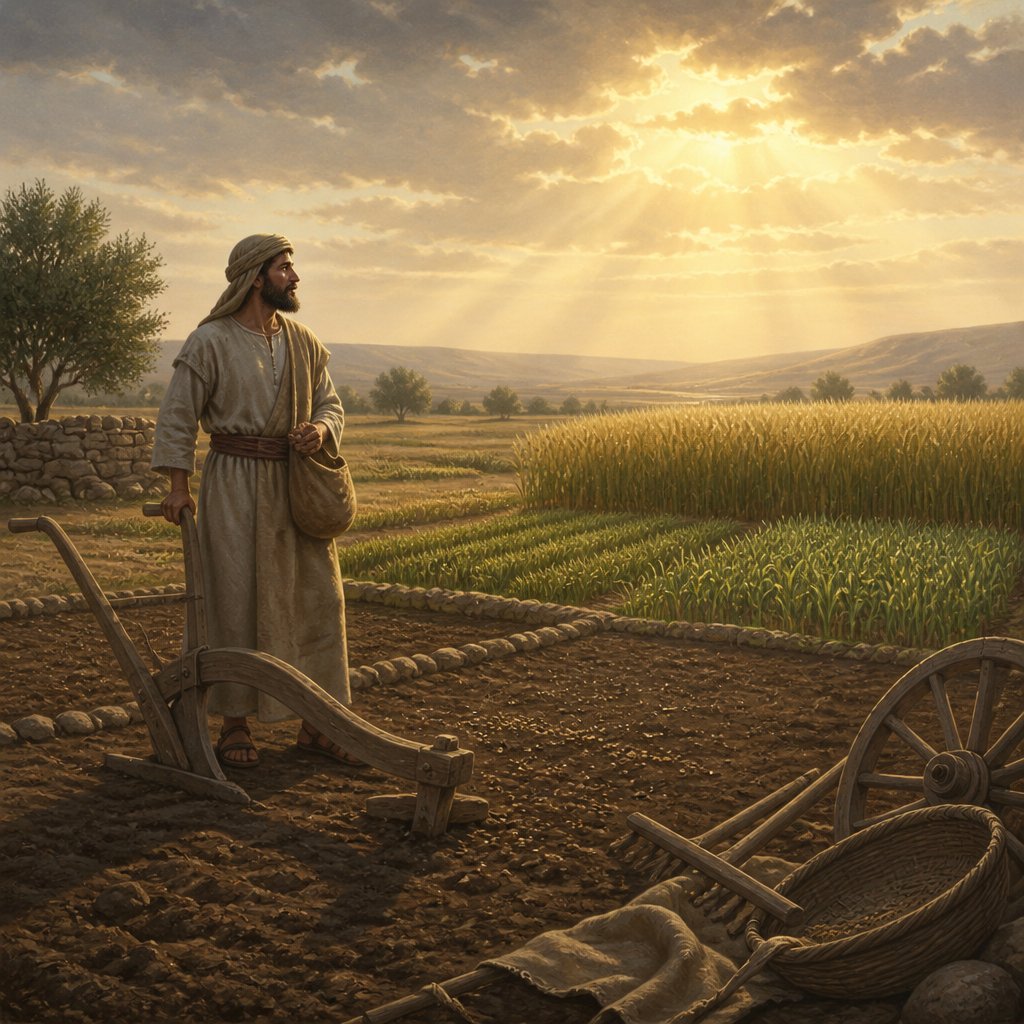
In Isaiah 28:23-29 (KJV), the prophet Isaiah delivers a message from the Lord concerning the careful and deliberate manner in which the Lord deals with His creation. This passage is part of a larger section in which Isaiah exhorts the people of Judah to heed the word of the Lord and to trust in His wisdom and understanding. In the specific verses mentioned, Isaiah uses the metaphor of a farmer to illustrate God's sovereignty and wisdom in His dealings with His people.
The passage begins with the rhetorical question, "Give ye ear, and hear my voice; hearken, and hear my speech" (Isaiah 28:23, KJV). This serves as an invitation for the hearers to pay attention to the message that is being proclaimed. The Lord is calling for the people to listen closely to His words, as He is about to impart a valuable lesson through the analogy of a farmer and his agricultural practices.
Isaiah then goes on to elaborate on the methodical and intentional manner in which a farmer approaches the cultivation of his crops. He asks, "Doth the plowman plow all day to sow? doth he open and break the clods of his ground?" (Isaiah 28:24, KJV). The implied answer to these questions is no. The plowman does not plow continuously, nor does he constantly break up the soil. Instead, the farmer follows a prescribed order and timing in his agricultural work. He plows the ground, breaks up the clods, and carefully prepares the soil before sowing the seeds. In this way, the farmer demonstrates foresight, patience, and wisdom in his labor.
Isaiah then makes a parallel between the farming practices and the way in which the Lord instructs and guides His people. He explains, "This also cometh forth from the Lord of hosts, which is wonderful in counsel, and excellent in working" (Isaiah 28:29, KJV). Through this comparison, Isaiah emphasizes the deliberate and purposeful nature of God's actions in the lives of His people. Just as the plowman exercises care and prudence in his agricultural work, so too does the Lord exercise wisdom and understanding in His dealings with His creation.
The themes present in this passage revolve around the concepts of divine sovereignty, wisdom, and providence. The analogy of the farmer serves to illustrate the meticulous and intentional manner in which the Lord carries out His plans and purposes. It also highlights the Lord's authority and control over all things, as He orchestrates the events of the world according to His divine will.
The context in which Isaiah delivers this message is crucial to understanding its significance. The people of Judah were facing the imminent threat of invasion and destruction by foreign nations. In response to this crisis, Isaiah sought to remind the people of the Lord's power and wisdom, and to encourage them to trust in His sovereignty. By using the analogy of the farmer, Isaiah reassures the people that the Lord is in control of their circumstances and is working out His plans for their ultimate good.
The symbolism present in this passage is closely tied to the agricultural imagery used by Isaiah. The farmer represents the Lord, while the act of plowing and sowing symbolizes the careful and intentional manner in which the Lord guides and directs His people. The breaking up of the clods of the ground serves as a metaphor for the Lord's transformative work in the lives of His people, as He prepares and shapes them according to His purpose.
In conclusion, Isaiah 28:23-29 (KJV) offers a powerful message about the sovereignty and wisdom of the Lord. By drawing parallels between the actions of a farmer and the providential care of the Lord, Isaiah underscores the deliberate and purposeful nature of God's dealings with His creation. This passage serves as a reminder to trust in the Lord's wisdom and providence, even in the midst of difficult circumstances. It also reassures believers of the Lord's authority and control over all things, as He works out His plans for the ultimate fulfillment of His divine purposes.
Have questions about Isaiah 28:23-29?
Dive deeper into this scripture with Bible Chat — an AI-powered tool for exploring God's Word through conversation. Ask questions, get context, and grow in your understanding of the Bible.
Get Our Apps


Isaiah 28:23-29 Artwork

Isaiah 28:23-29 - "Listen and hear my voice; pay attention and hear what I say. When a farmer plows for planting, does he plow continually? Does he keep on breaking up and working the soil? When he has leveled the surface, does he not sow caraway and scatter cumin? Does he not plant wheat in its place, barley in its plot, and spelt in its field? His God instructs him and teaches him the right way. Caraway is not threshed with a sledge, nor is the wheel of a cart rolled over cumin; caraway is beaten out with a rod, and cumin with a stick. Grain must be ground to make bread; so one does not go on threshing it forever. The wheels of a threshing cart may be rolled over it, but one does not use horses to grind grain. All this also comes from the Lord Almighty, whose plan is wonderful, whose wisdom is magnificent."

"Listen and hear my voice; pay attention and hear what I say. When a farmer plows for planting, does he plow continually? Does he keep on breaking up and working the soil? When he has leveled the surface, does he not sow caraway and scatter cumin? Does he not plant wheat in its place, barley in its plot, and spelt in its field? His God instructs him and teaches him the right way. Caraway is not threshed with a sledge, nor is the wheel of a cart rolled over cumin; caraway is beaten out with a rod, and cumin with a stick. Grain must be ground to make bread; so one does not go on threshing it forever. The wheels of a threshing cart may be rolled over it, but one does not use horses to grind grain. All this also comes from the Lord Almighty, whose plan is wonderful, whose wisdom is magnificent." - Isaiah 28:23-29

Exodus 23:28-29

Isaiah 28:29 - "This also cometh forth from the LORD of hosts, which is wonderful in counsel, and excellent in working."

Isaiah 28:23 - "¶ Give ye ear, and hear my voice; hearken, and hear my speech."

"¶ Give ye ear, and hear my voice; hearken, and hear my speech." - Isaiah 28:23

Isaiah 29:23 - "But when he seeth his children, the work of mine hands, in the midst of him, they shall sanctify my name, and sanctify the Holy One of Jacob, and shall fear the God of Israel."

"This also cometh forth from the LORD of hosts, which is wonderful in counsel, and excellent in working." - Isaiah 28:29

Isaiah 40:28-29 - "Hast thou not known? hast thou not heard, that the everlasting God, the LORD, the Creator of the ends of the earth, fainteth not, neither is weary? there is no searching of his understanding. He giveth power to the faint; and to them that have no might he increaseth strength."

MATTHEW 28: 23

Joel 2:28-29

Joel 2:28-29

Joel 2:28-29

Isaiah 29:6

Isaiah 29:12

Isaiah 29:4

Isaiah 29:4

Isaiah 29:18

Exodus 23:28

Isaiah 28:12

Isaiah 28:12

Matthew 23:28

Exodus 23:28

Matthew 23:28

John 14:23-29

John 14:23-29

John 14:23-29

Exodus 23:27-28

Numbers 28:29 - "A several tenth deal unto one lamb, throughout the seven lambs;"

2 Samuel 23:28 - "Zalmon the Ahohite, Maharai the Netophathite,"