What does Isaiah 26:3 mean?
"Thou wilt keep him in perfect peace, whose mind is stayed on thee: because he trusteth in thee." - Isaiah 26:3

“Thou wilt keep him in perfect peace, whose mind is stayed on thee: because he trusteth in thee.” Isaiah 26:3 (KJV) speaks as a promise addressed to God, not merely as a proverb offered about God. It is part of a song of praise in Isaiah 26, where the people of God look beyond present trouble to the certainty of the LORD’s righteous rule and the security he provides. In that setting, the verse is not detached encouragement but a line within worship: it assumes a world where strong cities can fall, where pride is brought low, and where salvation is ultimately the LORD’s work. The peace described is therefore not dependent on outward stability; it belongs to those who are anchored to God while history shakes.
The immediate context strengthens this. Isaiah 26 opens, “In that day shall this song be sung in the land of Judah; We have a strong city; salvation will God appoint for walls and bulwarks” (Isaiah 26:1, KJV). The chapter contrasts the “strong city” made secure by God’s salvation with the lofty city that is humbled (Isaiah 26:5). That contrast frames Isaiah 26:3 as the inner counterpart to the outer imagery. God appoints “walls and bulwarks” of salvation for his people, and he also keeps the trusting person in “perfect peace.” The city imagery symbolizes security, order, and protection; the verse teaches that the deepest security is not stonework but a guarded life, an inward stability God himself maintains.
The phrase “perfect peace” in the KJV conveys wholeness rather than mere calm feelings. It is peace without fracture, peace that is complete in kind, suited to the soul’s need. Within Isaiah’s larger message, peace is tied to right rule and right relationship with God. The chapter says, “Let the righteous nation which keepeth the truth enter in” (Isaiah 26:2, KJV), and it adds, “the way of the just is uprightness” (Isaiah 26:7, KJV). Peace in Isaiah 26:3 is therefore not presented as a psychological technique but as a gift that belongs to a certain moral and spiritual posture: a life turned Godward, walking uprightly, waiting for him. This is why the verse immediately grounds the peace in a reason: “because he trusteth in thee.” The peace is not self-generated; it is the fruit of trust.
“Whose mind is stayed on thee” provides the central symbolism and spiritual mechanics of the promise. To be “stayed” is to be held up, supported, and fixed. The mind in Scripture is more than passing thoughts; it includes intention, attention, and the set of the heart’s inward direction. The image is of a person leaning the weight of life upon God, fastening the inner life to him as one might brace a structure against collapse. In the flow of Isaiah 26, this is especially significant because the chapter speaks repeatedly about waiting, longing, and enduring through divine judgments: “Yea, in the way of thy judgments, O LORD, have we waited for thee; the desire of our soul is to thy name” (Isaiah 26:8, KJV). The “stayed” mind is the mind that waits without drifting, desires without scattering, and remains oriented toward the LORD when circumstances could otherwise pull it into fear or bitterness.
The verse also implies divine agency and divine guardianship. “Thou wilt keep him” portrays God as the keeper of the person’s peace. The peace is not merely discovered; it is kept, guarded, maintained. That fits the chapter’s broader emphasis on the LORD as the one who brings down the proud, establishes the righteous, and governs the world: “for when thy judgments are in the earth, the inhabitants of the world will learn righteousness” (Isaiah 26:9, KJV). In other words, peace is not a denial of God’s judgments or the world’s turmoil; it is something God preserves in the trusting person in the midst of a world being set right.
Trust is the moral and spiritual hinge. “Because he trusteth in thee” explains why the mind remains stayed and why peace is kept. Trust here is not a vague optimism; in Isaiah 26 it is bound up with God’s character and permanence. The very next verse presses the same point: “Trust ye in the LORD for ever: for in the LORD JEHOVAH is everlasting strength” (Isaiah 26:4, KJV). That statement supplies the logic behind Isaiah 26:3: the LORD is not temporary strength but “everlasting strength,” so the mind that rests on him rests on what cannot decay. The verse therefore teaches that the stability of peace matches the stability of its object. A mind stayed on what changes will be pulled apart by change; a mind stayed on the everlasting LORD is held together.
Read within Isaiah’s prophetic horizon, Isaiah 26:3 also carries covenant overtones. The “song” of Isaiah 26 looks toward a future “day” of deliverance and the establishment of righteousness, when God’s people acknowledge him as their true source of safety and order. “Perfect peace” becomes a mark of belonging to that redeemed community, not because they have engineered ideal conditions, but because their inward posture is rightly fixed on God. The verse thus invites the reader into the chapter’s overall movement: away from human pride and self-made security, toward the LORD as salvation, strength, and keeper; away from scattered anxieties, toward a settled mind; away from fragile peace based on circumstances, toward a whole peace grounded “because he trusteth in thee.”
The significance of Isaiah 26:3 in the KJV is therefore both personal and communal, both inward and prophetic. It portrays peace as God’s preserving gift, given to the one whose inner life is supported by a continual orientation toward him. It assumes hardship and upheaval, yet promises a completeness of peace that outlasts them, because it is tied to trust in the LORD JEHOVAH, whose strength is everlasting.
Have questions about Isaiah 26:3?
Dive deeper into this scripture with Bible Chat — an AI-powered tool for exploring God's Word through conversation. Ask questions, get context, and grow in your understanding of the Bible.
Get Our Apps


Isaiah 26:3 Artwork

Isaiah 26:3

Isaiah 26:3 - "Thou wilt keep him in perfect peace, whose mind is stayed on thee: because he trusteth in thee."

"Thou wilt keep him in perfect peace, whose mind is stayed on thee: because he trusteth in thee." - Isaiah 26:3

"Thou wilt keep him in perfect peace, whose mind is stayed on thee: because he trusteth in thee." - Isaiah 26:3

Isaiah 26:3-4 - "You will keep in perfect peace those whose minds are steadfast, because they trust in you. Trust in the Lord forever, for the Lord, the Lord himself, is the Rock eternal."

"Thou wilt keep him in perfect peace, whose mind is stayed on thee: because he trusteth in thee." - Isaiah 26:3

"You will keep in perfect peace those whose minds are steadfast, because they trust in you. Trust in the Lord forever, for the Lord, the Lord himself, is the Rock eternal." - Isaiah 26:3-4

Isaiah 3:26 - "And her gates shall lament and mourn; and she being desolate shall sit upon the ground."

Isaiah 40:26

isaiah 40:26

"And her gates shall lament and mourn; and she being desolate shall sit upon the ground." - Isaiah 3:26

Isaiah 26:4 - "Trust ye in the LORD for ever: for in the LORD JEHOVAH is everlasting strength:"

Isaiah 26:6 - "The foot shall tread it down, even the feet of the poor, and the steps of the needy."

Isaiah 28:26 - "For his God doth instruct him to discretion, and doth teach him."

Isaiah 26:2 - "Open ye the gates, that the righteous nation which keepeth the truth may enter in."

Isaiah 26:7 - "The way of the just is uprightness: thou, most upright, dost weigh the path of the just."

Isaiah 14:26 - "This is the purpose that is purposed upon the whole earth: and this is the hand that is stretched out upon all the nations."

Isaiah 43:26 - "Put me in remembrance: let us plead together: declare thou, that thou mayest be justified."

Isaiah 12:3
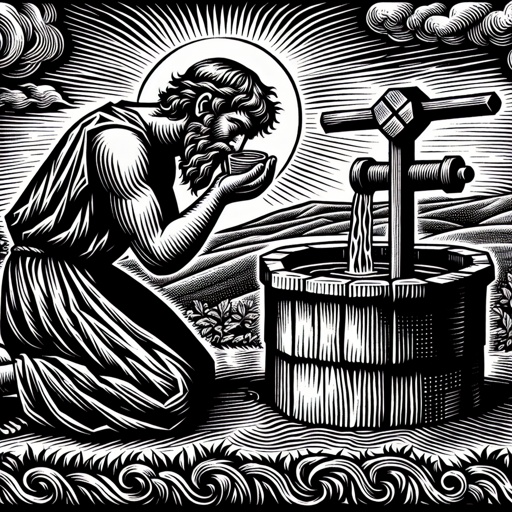
Isaiah 12:3

Isaiah 12:3

Isaiah 12:3

Isaiah 12:3

Isaiah 12:3

Isaiah 12:3

Isaiah 12:3

isaiah 44:3

Isaiah 12:3

Isaiah 12:3

Isaiah 12:3