What does Hosea 5:13 mean?
"When Ephraim saw his sickness, and Judah saw his wound, then went Ephraim to the Assyrian, and sent to king Jareb: yet could he not heal you, nor cure you of your wound." - Hosea 5:13
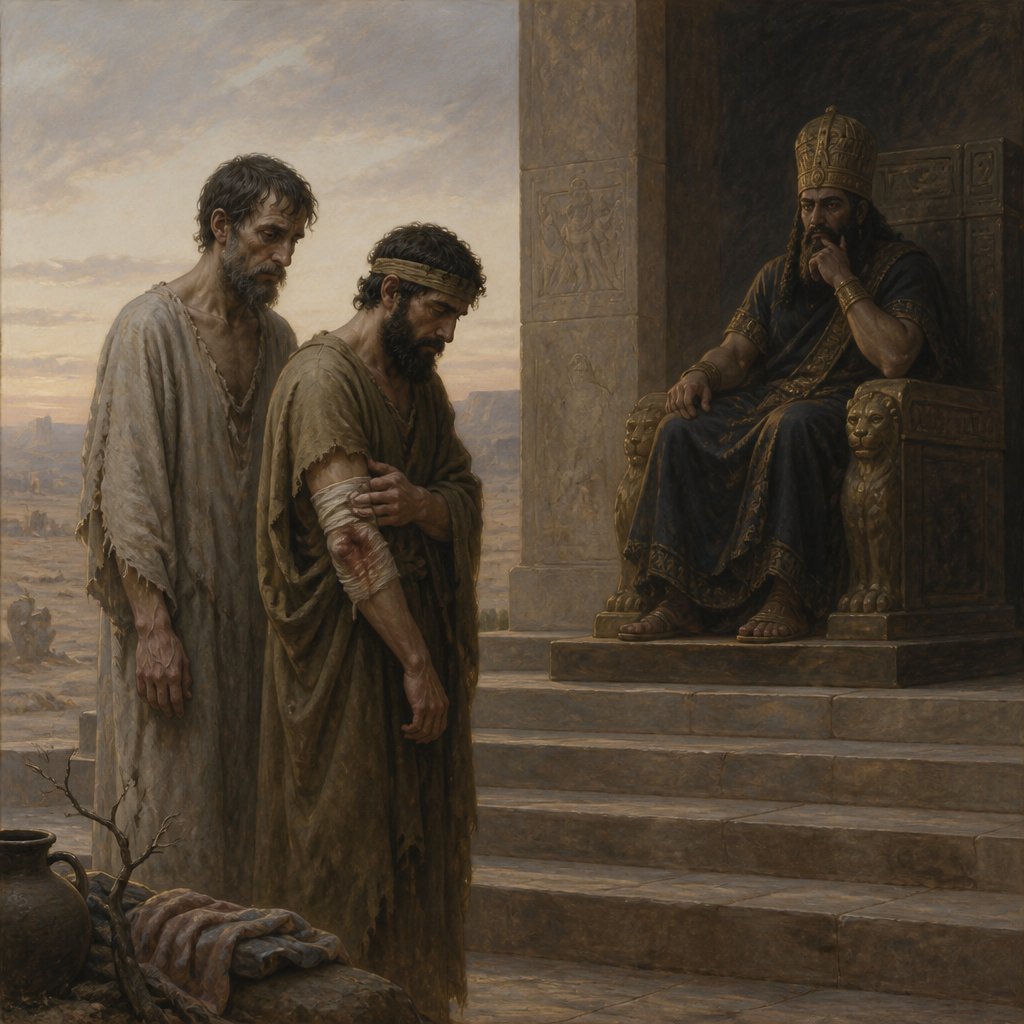
Hosea 5:13 (KJV) says, "When Ephraim saw his sickness, and Judah saw his wound, then went Ephraim to the Assyrian, and sent to King Jareb: yet could he not heal you, nor cure you of your wound." This verse is a part of the Old Testament book of Hosea, which contains prophecies and teachings from the prophet Hosea. In this passage, Hosea is addressing the kingdoms of Israel and Judah, in the context of their spiritual sickness and their reliance on worldly powers for healing and support.
The verse begins with a description of the sickness and wound of Ephraim and Judah, two of the twelve tribes of Israel. This sickness and wound are likely meant to symbolize the spiritual and moral decay of the kingdoms, as well as their vulnerability to external threats. The use of sickness and wound as metaphors implies that the source of their suffering is internal, caused by their own sinful actions and disobedience to God's laws.
The next part of the verse describes how Ephraim turns to the Assyrian and sends to King Jareb for help. This represents the Israelites' attempt to seek aid from powerful foreign nations, rather than turning to God for healing and protection. The Assyrian Empire was a formidable force during this time, and seeking their assistance was seen as a strategic move to address their military and political vulnerabilities. However, Hosea warns that this reliance on worldly powers will ultimately prove futile. Despite their efforts, their wounds cannot be healed, and their sickness cannot be cured by human means alone.
The underlying theme of this verse is the consequences of turning away from God and relying on worldly powers. The kingdoms of Israel and Judah are portrayed as having fallen into a state of spiritual and moral decay, seeking solutions to their problems from human sources rather than turning to God. Their actions result in temporary relief at best, as the Assyrian and King Jareb are unable to provide true healing and deliverance. This serves as a warning against placing one's trust in anything other than God, as ultimately, only He can provide the true solution to their problems.
The symbolism in this verse is striking, as the sickness and wound represent more than just physical ailments. They are indicative of the deeper spiritual and moral sickness that plagues the kingdoms of Israel and Judah. Their actions are symptomatic of a larger issue, namely, their turning away from God and His commandments. This is a common theme throughout the Old Testament, as the Israelites frequently succumb to idolatry and disobedience, leading to their downfall and punishment.
Overall, Hosea 5:13 offers a cautionary tale of the dangers of seeking worldly solutions to spiritual problems. The Israelites' reliance on powerful nations for security and healing only serves to highlight their underlying spiritual sickness and moral decay. This passage serves as a reminder of the importance of staying faithful to God and seeking His guidance and healing, rather than turning to human powers for salvation. It also serves as a powerful statement on the consequences of straying from God's path and the futility of seeking solutions through human means. This warning is just as relevant today as it was in ancient times, reminding believers of the enduring importance of faith and obedience.
Have questions about Hosea 5:13?
Dive deeper into this scripture with Bible Chat — an AI-powered tool for exploring God's Word through conversation. Ask questions, get context, and grow in your understanding of the Bible.
Get Our Apps


Hosea 5:13 Artwork

Hosea 5:13 - "When Ephraim saw his sickness, and Judah saw his wound, then went Ephraim to the Assyrian, and sent to king Jareb: yet could he not heal you, nor cure you of your wound."
"When Ephraim saw his sickness, and Judah saw his wound, then went Ephraim to the Assyrian, and sent to king Jareb: yet could he not heal you, nor cure you of your wound." - Hosea 5:13

Hosea 13:5 - "¶ I did know thee in the wilderness, in the land of great drought."

"¶ I did know thee in the wilderness, in the land of great drought." - Hosea 13:5

Hosea 3:1-5

Hosea 13:12 - "The iniquity of Ephraim is bound up; his sin is hid."

Hosea 12:5 - "Even the LORD God of hosts; the LORD is his memorial."

Hosea 12:13 - "And by a prophet the LORD brought Israel out of Egypt, and by a prophet was he preserved."

Hosea 13:9 - "¶ O Israel, thou hast destroyed thyself; but in me is thine help."

Hosea 1:2-11;2:14;3:5

Hosea 5:12 - "Therefore will I be unto Ephraim as a moth, and to the house of Judah as rottenness."

Hosea 14:5-6 – "I will be like the dew to Israel; he will blossom like a lily."

Hosea 13:7 - "Therefore I will be unto them as a lion: as a leopard by the way will I observe them:"

Hosea 9:5 - "What will ye do in the solemn day, and in the day of the feast of the LORD?"

Hosea 13:13 - "The sorrows of a travailing woman shall come upon him: he is an unwise son; for he should not stay long in the place of the breaking forth of children."
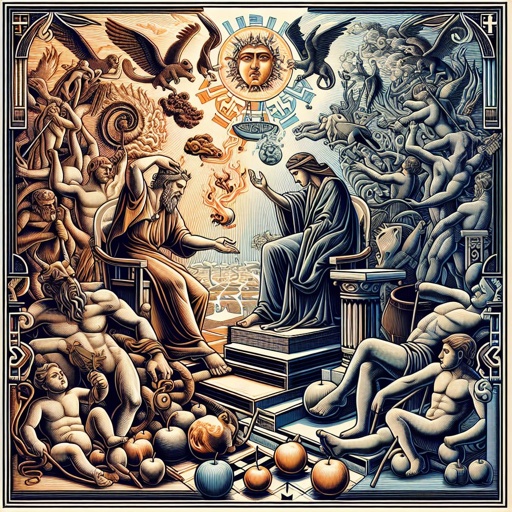
Hosea 5:5 - "And the pride of Israel doth testify to his face: therefore shall Israel and Ephraim fall in their iniquity; Judah also shall fall with them."

Hosea 13:11 - "I gave thee a king in mine anger, and took him away in my wrath."

Hosea 1:5 - "And it shall come to pass at that day, that I will break the bow of Israel in the valley of Jezreel."

Hosea 5:11 - "Ephraim is oppressed and broken in judgment, because he willingly walked after the commandment."

Hosea 5:2 - "And the revolters are profound to make slaughter, though I have been a rebuker of them all."

Hosea 13:6 - "According to their pasture, so were they filled; they were filled, and their heart was exalted; therefore have they forgotten me."

Hosea 9:13 - "Ephraim, as I saw Tyrus, is planted in a pleasant place: but Ephraim shall bring forth his children to the murderer."

Hosea 13:1 - "When Ephraim spake trembling, he exalted himself in Israel; but when he offended in Baal, he died."

Hosea 11:5 - "¶ He shall not return into the land of Egypt, but the Assyrian shall be his king, because they refused to return."

Hosea 14:5 - "I will be as the dew unto Israel: he shall grow as the lily, and cast forth his roots as Lebanon."

"The iniquity of Ephraim is bound up; his sin is hid." - Hosea 13:12

Hosea 5:8 - "Blow ye the cornet in Gibeah, and the trumpet in Ramah: cry aloud at Beth-aven, after thee, O Benjamin."

Hosea 13:3 - "Therefore they shall be as the morning cloud, and as the early dew that passeth away, as the chaff that is driven with the whirlwind out of the floor, and as the smoke out of the chimney."

Hosea 5:6 - "They shall go with their flocks and with their herds to seek the LORD; but they shall not find him; he hath withdrawn himself from them."

Hosea 5:15 - "¶ I will go and return to my place, till they acknowledge their offence, and seek my face: in their affliction they will seek me early."