What does Hebrews 9:20 mean?
"Saying, This is the blood of the testament which God hath enjoined unto you." - Hebrews 9:20
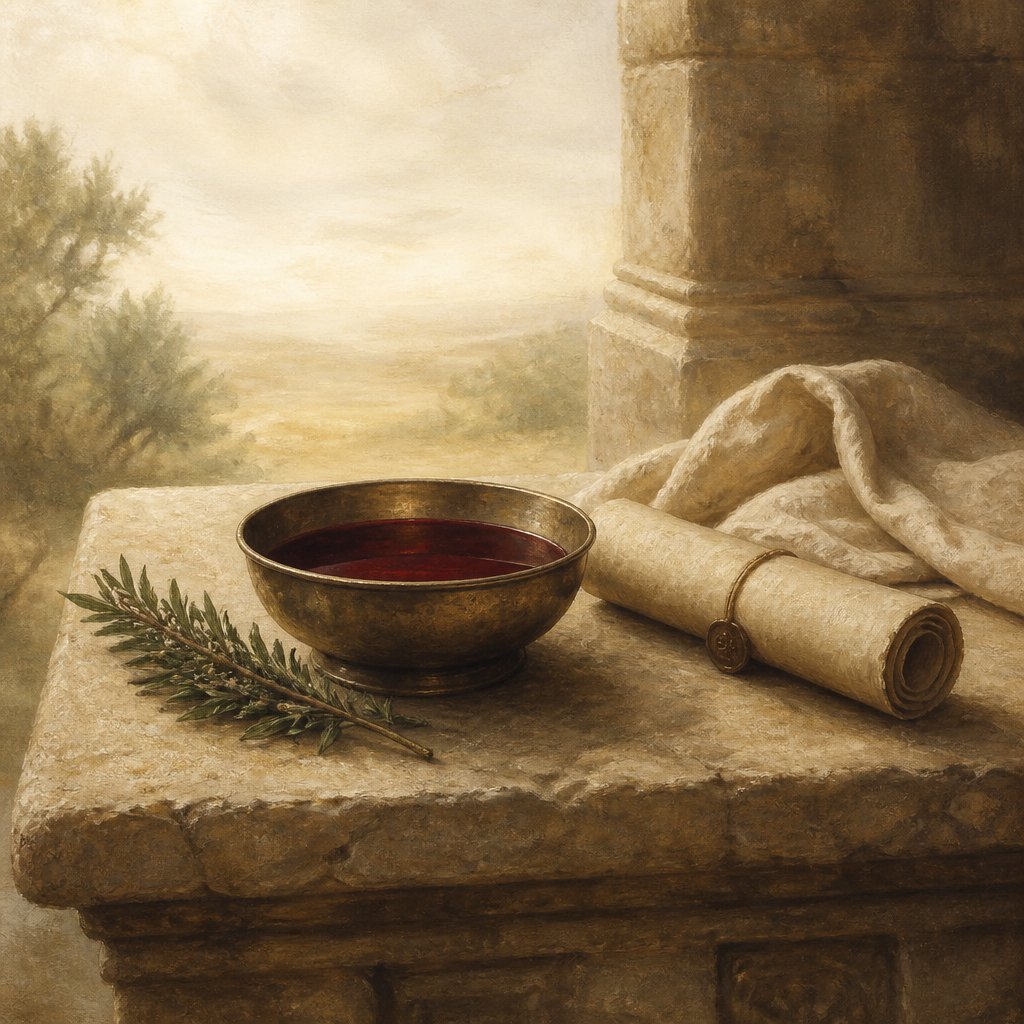
Hebrews 9:20 in the King James Version of the Bible reads, "Saying, This is the blood of the testament which God hath enjoined unto you." This verse is part of the broader context of the book of Hebrews, which is a powerful presentation of the superiority of Christ and the new covenant that He brought through His sacrifice on the cross.
To understand this verse, it is important to first set the context. The book of Hebrews was written to a Jewish audience, many of whom were likely grappling with the transition from the old covenant of the Mosaic Law to the new covenant brought by Jesus Christ. The author of Hebrews seeks to demonstrate the superiority of Christ over all things, including the institutions and practices of the old covenant.
In Hebrews 9, the author is discussing the tabernacle, the Day of Atonement, and the role of blood in the forgiveness of sins. The verse in question is part of a description of the way in which Moses, in accordance with the Law, sprinkled blood on the tabernacle and all the vessels of ministry. The author emphasizes the necessity of blood for the forgiveness of sins by drawing on a powerful historical example from the Old Testament.
The key themes of Hebrews 9:20 include the concept of the "testament," or covenant, and the crucial role of blood in the establishment of this covenant. The use of blood in the context of the old covenant and the imagery associated with it is significant. It speaks to the seriousness of sin and the high cost of forgiveness. It also foreshadows the ultimate sacrifice of Jesus Christ, whose shed blood would pave the way for the new covenant.
The symbolism of blood in Hebrews 9:20 is rich and multifaceted. In the Jewish sacrificial system, blood had a crucial symbolic function. It represented life, and the shedding of blood was necessary for the atonement of sins. This sheds light on the significance of Christ's sacrifice, as His blood was also shed for the forgiveness of sins, but it was a once-for-all sacrifice that brought about eternal redemption.
Furthermore, the use of the word "testament" in Hebrews 9:20 is also noteworthy. The author is drawing attention to the covenantal nature of God's relationship with His people. The old testament was based on the Law, and the shedding of blood was a solemn and necessary part of that covenant. However, the new testament or new covenant, which the verse alludes to, is based on grace and the sacrifice of Christ.
In conclusion, Hebrews 9:20 is a powerful and richly symbolic verse that points to the eternal significance of Christ's sacrifice. It serves as a reminder of the necessity of blood for the forgiveness of sins, while also foreshadowing the ultimate atoning sacrifice of Jesus Christ. The verse highlights the transition from the old covenant to the new covenant, emphasizing the transformative nature of Christ's redemptive work. It is a powerful affirmation of the central message of the Christian faith - that through Christ's shed blood, we have been made heirs of a new and better covenant.
Have questions about Hebrews 9:20?
Dive deeper into this scripture with Bible Chat — an AI-powered tool for exploring God's Word through conversation. Ask questions, get context, and grow in your understanding of the Bible.
Get Our Apps


Hebrews 9:20 Artwork

Hebrews 9:20 - "Saying, This is the blood of the testament which God hath enjoined unto you."
"Saying, This is the blood of the testament which God hath enjoined unto you." - Hebrews 9:20

Hebrews 10:20

Hebrews 7:20 - "And inasmuch as not without an oath he was made priest:"

hebrew 13:20

Hebrews 4:9 - "There remaineth therefore a rest to the people of God."

Hebrews 11:20 - "By faith Isaac blessed Jacob and Esau concerning things to come."

Hebrews 9:16 - "For where a testament is, there must also of necessity be the death of the testator."

Hebrews 9:18 - "Whereupon neither the first testament was dedicated without blood."

Hebrews 9:27 - "And as it is appointed unto men once to die, but after this the judgment:"

Hebrews 10:20 - "By a new and living way, which he hath consecrated for us, through the veil, that is to say, his flesh;"

Hebrews 6:20 - "Whither the forerunner is for us entered, even Jesus, made an high priest for ever after the order of Melchisedec."

Hebrews 9:3 - "And after the second veil, the tabernacle which is called the Holiest of all;"

Hebrews 9:9 - "Which was a figure for the time then present, in which were offered both gifts and sacrifices, that could not make him that did the service perfect, as pertaining to the conscience;"

Hebrews 9:13 - "For if the blood of bulls and of goats, and the ashes of an heifer sprinkling the unclean, sanctifieth to the purifying of the flesh:"

Hebrews 9:21 - "Moreover he sprinkled with blood both the tabernacle, and all the vessels of the ministry."
"And inasmuch as not without an oath he was made priest:" - Hebrews 7:20

Hebrews 9:17 - "For a testament is of force after men are dead: otherwise it is of no strength at all while the testator liveth."

Hebrews 9:2 - "For there was a tabernacle made; the first, wherein was the candlestick, and the table, and the shewbread; which is called the sanctuary."

Hebrews 9:1 - "Then verily the first covenant had also ordinances of divine service, and a worldly sanctuary."

Hebrews 9:22 - "And almost all things are by the law purged with blood; and without shedding of blood is no remission."

Hebrews 12:20 - "(For they could not endure that which was commanded, And if so much as a beast touch the mountain, it shall be stoned, or thrust through with a dart:"

Hebrews 3:9 - "When your fathers tempted me, proved me, and saw my works forty years."

Hebrews 9:5 - "And over it the cherubims of glory shadowing the mercyseat; of which we cannot now speak particularly."
"There remaineth therefore a rest to the people of God." - Hebrews 4:9

Hebrews 6:9 - "But, beloved, we are persuaded better things of you, and things that accompany salvation, though we thus speak."

Hebrews 13:20 - "Now the God of peace, that brought again from the dead our Lord Jesus, that great shepherd of the sheep, through the blood of the everlasting covenant,"

Hebrews 7:9 - "And as I may so say, Levi also, who receiveth tithes, payed tithes in Abraham."

Hebrews 9:8 - "The Holy Ghost this signifying, that the way into the holiest of all was not yet made manifest, while as the first tabernacle was yet standing:"

Hebrews 9:6 - "Now when these things were thus ordained, the priests went always into the first tabernacle, accomplishing the service of God."