What does Hebrews 7:5 mean?
"And verily they that are of the sons of Levi, who receive the office of the priesthood, have a commandment to take tithes of the people according to the law, that is, of their brethren, though they come out of the loins of Abraham:" - Hebrews 7:5
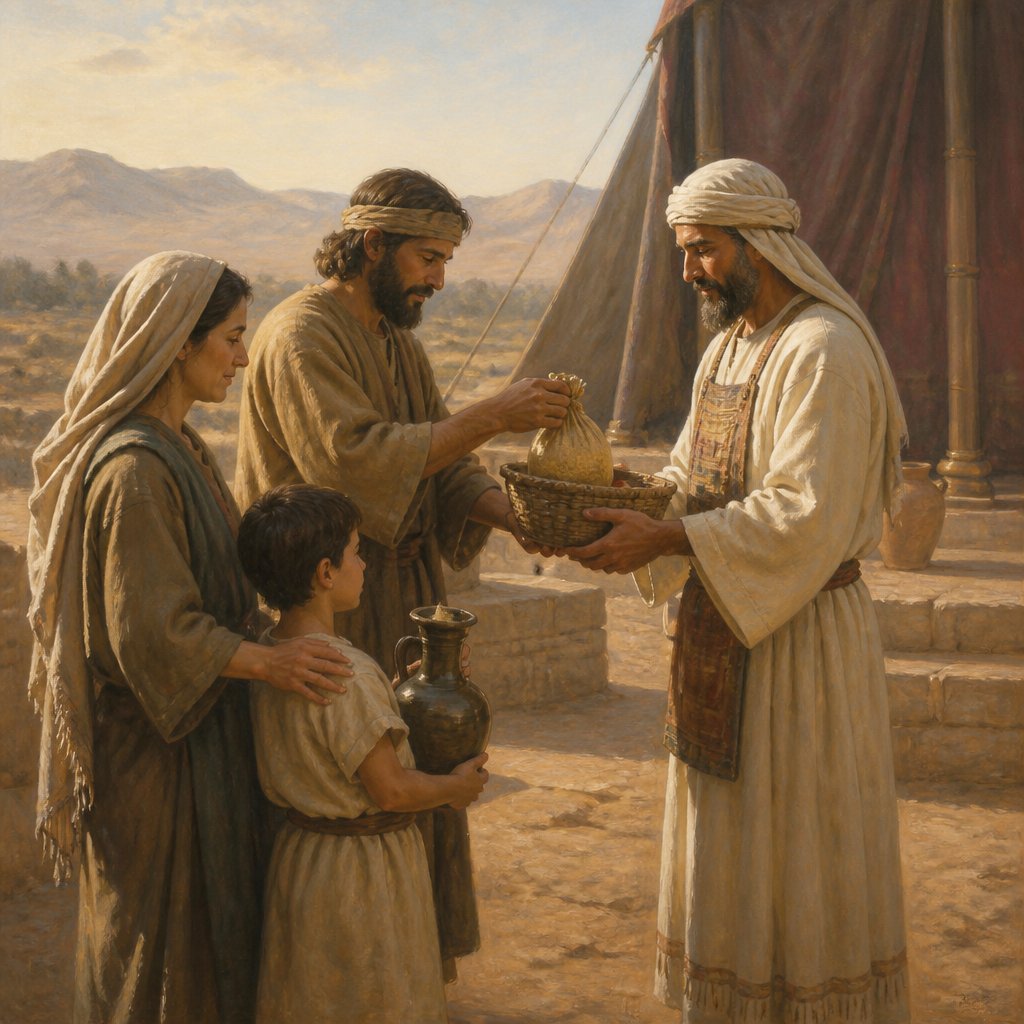
Hebrews 7:5 in the King James Version reads, "And verily they that are of the sons of Levi, who receive the office of the priesthood, have a commandment to take tithes of the people according to the law, that is, of their brethren, though they come out of the loins of Abraham." This verse is part of a larger passage in the Book of Hebrews that discusses the priesthood of Melchizedek and the superiority of Christ's priesthood over the Levitical priesthood.
To understand the significance of this verse, it is important to look at the broader context of the book of Hebrews. The author of Hebrews is writing to a Jewish Christian audience, encouraging them to remain steadfast in their faith in Christ, rather than turning back to the Old Testament law and practices. The primary theme of the book of Hebrews is the supremacy and sufficiency of Christ as the ultimate High Priest and mediator between God and humanity.
In Hebrews 7, the author compares the priesthood of Melchizedek to the Levitical priesthood. Melchizedek is a figure from the book of Genesis who is described as a "priest of God Most High" and blesses Abraham. The author of Hebrews argues that Melchizedek's priesthood is superior to the Levitical priesthood because Abraham, the patriarch of the Jewish nation, paid tithes to Melchizedek and received a blessing from him. This is contrasted with the Levitical priests, who are descended from Abraham and receive tithes from the Israelites according to the law.
The significance of this verse lies in its illustration of the superiority of Christ's priesthood over the Levitical priesthood. By emphasizing the relationship between Melchizedek and Abraham, the author of Hebrews is making the point that Jesus, as the ultimate High Priest in the order of Melchizedek, holds a higher and more effective priesthood than the Levitical priests.
The concept of tithing is also important in this verse. The Levitical priests had a commandment to take tithes from the people according to the law, as a way of supporting the priesthood and the service of the tabernacle. This practice was ingrained in the Jewish tradition and was a form of giving back to God what was rightfully His. The author of Hebrews is using this reference to tithing to further emphasize the superiority of Christ's priesthood, suggesting that the tithes paid to the Levitical priests were ultimately paid to a higher priesthood through their connection to Abraham and Melchizedek.
From a symbolic standpoint, this verse serves as a reminder of the transition from the old covenant to the new covenant. The Levitical priesthood and the practices associated with it were part of the old covenant, which was based on the Mosaic law and ceremonial rituals. The priesthood of Melchizedek, on the other hand, predated the Mosaic law and was based on a different kind of priesthood that was not bound by genealogy or time.
In conclusion, Hebrews 7:5 is a significant verse that highlights the superiority of Christ's priesthood over the Levitical priesthood. Through its discussion of tithing, ancestry, and the priesthood of Melchizedek, the verse underscores the central message of the book of Hebrews – the sufficiency and supremacy of Christ as the ultimate High Priest. It serves as a powerful reminder to the Jewish Christian audience of the time, and to Christians today, of the importance of placing their faith in Christ and His unique role as the mediator between God and humanity.
Have questions about Hebrews 7:5?
Dive deeper into this scripture with Bible Chat — an AI-powered tool for exploring God's Word through conversation. Ask questions, get context, and grow in your understanding of the Bible.
Get Our Apps


Hebrews 7:5 Artwork

Hebrews 7:5 - "And verily they that are of the sons of Levi, who receive the office of the priesthood, have a commandment to take tithes of the people according to the law, that is, of their brethren, though they come out of the loins of Abraham:"
"And verily they that are of the sons of Levi, who receive the office of the priesthood, have a commandment to take tithes of the people according to the law, that is, of their brethren, though they come out of the loins of Abraham:" - Hebrews 7:5

Hebrews 5:7 - "Who in the days of his flesh, when he had offered up prayers and supplications with strong crying and tears unto him that was able to save him from death, and was heard in that he feared;"

Hebrews 8:5

Hebrews 7:7 - "And without all contradiction the less is blessed of the better."

Zechariah 5:7 - "And, behold, there was lifted up a talent of lead: and this is a woman that sitteth in the midst of the ephah."

Hebrews 8:1-5

Hebrews 10:5-10

Hebrews 10:5-10

Hebrews 4:5 - "And in this place again, If they shall enter into my rest."

Hebrews 7:20 - "And inasmuch as not without an oath he was made priest:"

Hebrews 5:10 - "Called of God an high priest after the order of Melchisedec."

"And without all contradiction the less is blessed of the better." - Hebrews 7:7

Hebrews 7:22 - "By so much was Jesus made a surety of a better testament."

Hebrews 6:5 - "And have tasted the good word of God, and the powers of the world to come,"

Hebrews 7:12 - "For the priesthood being changed, there is made of necessity a change also of the law."

Hebrews 7:24 - "But this man, because he continueth ever, hath an unchangeable priesthood."

Hebrews 7:18 - "For there is verily a disannulling of the commandment going before for the weakness and unprofitableness thereof."

Hebrews 7:17 - "For he testifieth, Thou art a priest for ever after the order of Melchisedec."

Hebrews 7:10 - "For he was yet in the loins of his father, when Melchisedec met him."

Philippians 3:5 - "Circumcised the eighth day, of the stock of Israel, of the tribe of Benjamin, an Hebrew of the Hebrews; as touching the law, a Pharisee;"

Hebrews 5:13 - "For every one that useth milk is unskilful in the word of righteousness: for he is a babe."

Hebrews 5:4 - "And no man taketh this honour unto himself, but he that is called of God, as was Aaron."

Hebrews 7:16 - "Who is made, not after the law of a carnal commandment, but after the power of an endless life."
Hebrews 3:7 - "Wherefore (as the Holy Ghost saith, To day if ye will hear his voice,"

Hebrews 5:3 - "And by reason hereof he ought, as for the people, so also for himself, to offer for sins."

Hebrews 2:5 - "For unto the angels hath he not put in subjection the world to come, whereof we speak."

Hebrews 8:7 - "For if that first covenant had been faultless, then should no place have been sought for the second."

Hebrews 7:15 - "And it is yet far more evident: for that after the similitude of Melchisedec there ariseth another priest,"
Hebrews 7:23 - "And they truly were many priests, because they were not suffered to continue by reason of death:"