What does Hebrews 7:1-2 mean?
"Hebrews 7:1-2: 1 For this Melchizedek, king of Salem, priest of the most high God, who met Abraham returning from the slaughter of the kings, and blessed him; 2 To whom also Abraham gave a tenth part of all; first being by interpretation King of righteousness, and after that also King of Salem, which is, King of peace;" - Hebrews 7:1-2
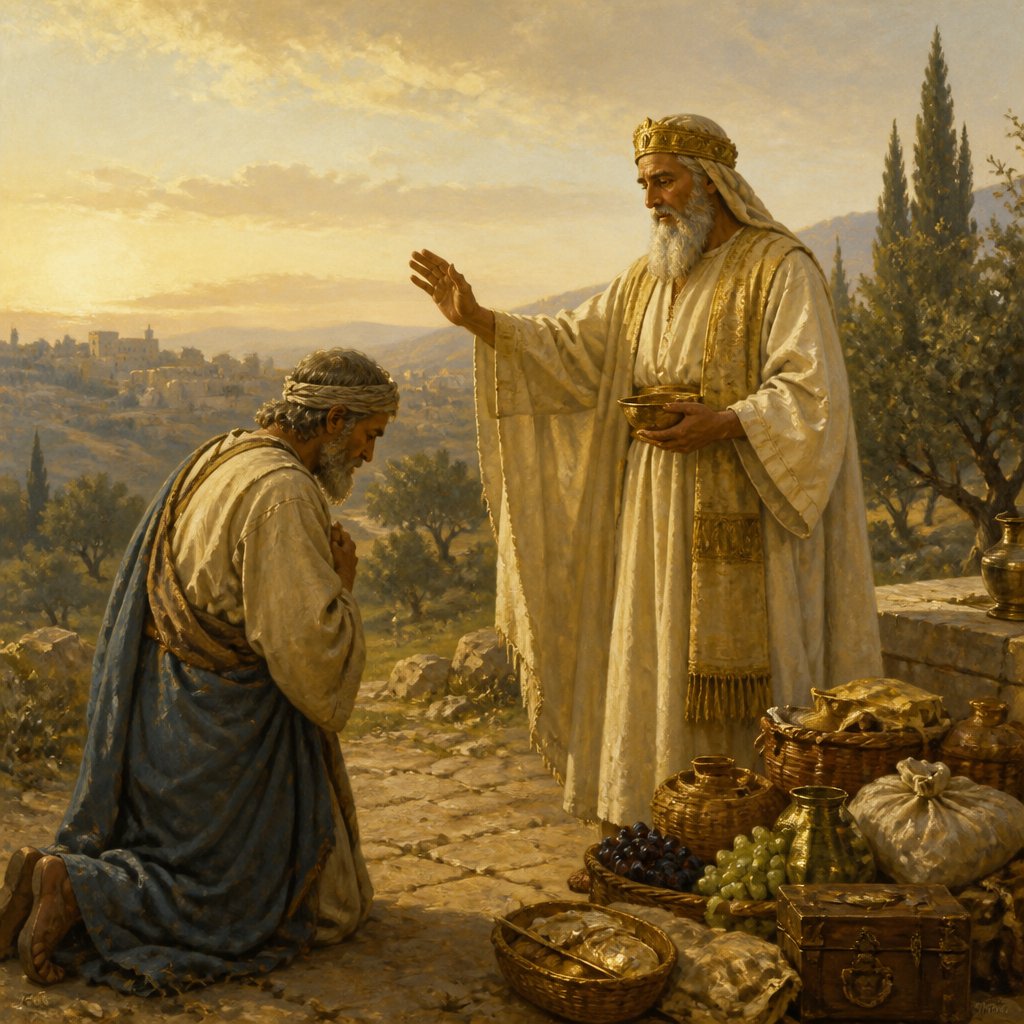
Hebrews 7:1-2 from the King James Version reads: "For this Melchisedec, king of Salem, priest of the most high God, who met Abraham returning from the slaughter of the kings, and blessed him; To whom also Abraham gave a tenth part of all; first being by interpretation King of righteousness, and after that also King of Salem, which is, King of peace."
The passage from Hebrews 7:1-2 introduces the enigmatic figure of Melchizedek, who is a key figure in both the Old and New Testaments. This passage, rich in symbolism and meaning, holds layers of significance that shed light on the nature of Christ's priesthood and the fulfillment of God's covenant with humanity.
One of the central themes in Hebrews 7:1-2 is the juxtaposition of Melchizedek, an ancient priest-king, with the figure of Abraham, the father of the Hebrew nation. This comparison serves to illustrate the superiority of Melchizedek's priesthood over that of the Levitical priesthood, which was established by the Mosaic law. The author of Hebrews argues that Melchizedek's priesthood predates and surpasses that of the Levitical priesthood, and thus, Christ's priesthood, which is after the order of Melchizedek, is also of a superior and eternal nature.
The passage also emphasizes the titles and attributes of Melchizedek. He is described as the "king of Salem" and the "priest of the most high God," embodying both a kingly and priestly role. This duality of roles in Melchizedek prefigures the dual nature of Christ as both a king and a priest, combining both righteousness and peace within his persona. The mention of Salem, which means "peace," further adds to the symbolism of Melchizedek as a harbinger of peace and righteousness, echoing Christ's role as the Prince of Peace and the embodiment of righteousness.
In the narrative of Genesis, Melchizedek's meeting with Abraham after his victory over the kings is significant. By blessing Abraham and receiving tithes from him, Melchizedek establishes his authority and superiority over Abraham, who is regarded as the patriarch of the Israelite nation. This event highlights Melchizedek's preeminence and the timeless nature of his priesthood, reinforcing the author's argument that the priesthood after the order of Melchizedek transcends earthly lineage and temporal constraints.
The symbolism and typology in Hebrews 7:1-2 also point to the fulfillment of the Old Testament in Christ. Melchizedek serves as a foreshadowing of Christ, prefiguring his role as a king and a priest who brings righteousness and peace. The author of Hebrews uses this parallel to demonstrate Christ's fulfillment of the Messianic prophecies and his superiority over the Levitical priesthood, providing a theological foundation for the new covenant established through Christ's atoning sacrifice.
In conclusion, Hebrews 7:1-2 stands as a pivotal passage in the New Testament, unveiling the significance of Melchizedek as a precursor to Christ and the superiority of his priesthood. Through rich symbolism and typology, the passage underscores Christ's role as the ultimate high priest and king, whose eternal priesthood supersedes the limitations of the Levitical priesthood. It serves as a reminder of Christ's fulfillment of the Old Testament prophecies and the establishment of a new and everlasting covenant with humanity.
Have questions about Hebrews 7:1-2?
Dive deeper into this scripture with Bible Chat — an AI-powered tool for exploring God's Word through conversation. Ask questions, get context, and grow in your understanding of the Bible.
Get Our Apps


Hebrews 7:1-2 Artwork

Hebrews 7:1-2 - "For this Melchizedek, king of Salem, priest of the Most High God, met Abraham returning from the slaughter of the kings and blessed him, and to him Abraham apportioned a tenth part of everything. He is first, by translation of his name, king of righteousness, and then he is also king of Salem, that is, king of peace."
"For this Melchizedek, king of Salem, priest of the Most High God, met Abraham returning from the slaughter of the kings and blessed him, and to him Abraham apportioned a tenth part of everything. He is first, by translation of his name, king of righteousness, and then he is also king of Salem, that is, king of peace." - Hebrews 7:1-2

Hebrews 7:1 - "For this Melchisedec, king of Salem, priest of the most high God, who met Abraham returning from the slaughter of the kings, and blessed him;"

Hebrews 1:7 - "And of the angels he saith, Who maketh his angels spirits, and his ministers a flame of fire."

Hebrews 2:7 - "Thou madest him a little lower than the angels; thou crownedst him with glory and honour, and didst set him over the works of thy hands:"

Hebrews 7:7 - "And without all contradiction the less is blessed of the better."

1 Samuel 13:7 - "And some of the Hebrews went over Jordan to the land of Gad and Gilead. As for Saul, he was yet in Gilgal, and all the people followed him trembling."

Hebrews 7:2 - "To whom also Abraham gave a tenth part of all; first being by interpretation King of righteousness, and after that also King of Salem, which is, King of peace;"
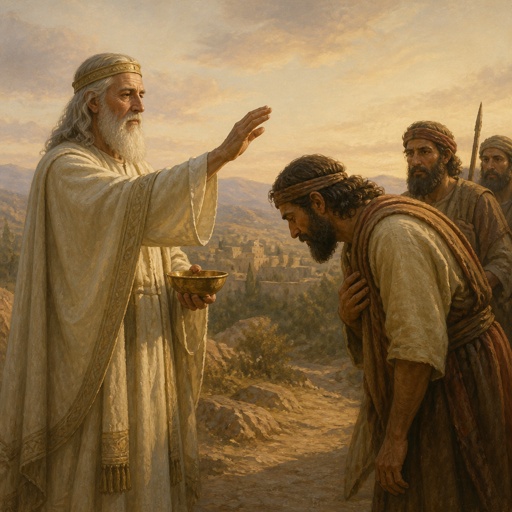
"For this Melchisedec, king of Salem, priest of the most high God, who met Abraham returning from the slaughter of the kings, and blessed him;" - Hebrews 7:1
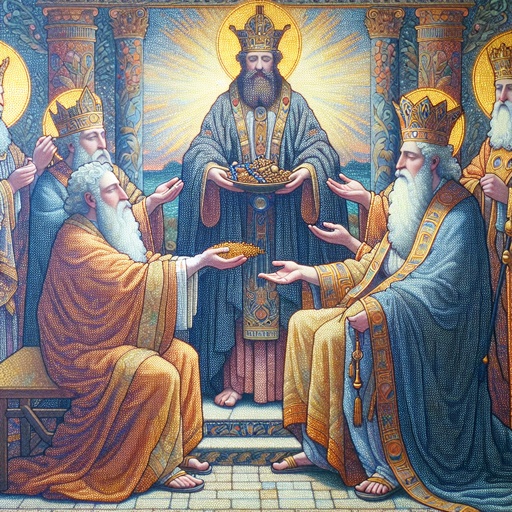
Hebrews 7:2 (KJV) 2 To whom also Abraham gave a tenth part of all; first being by interpretation King of righteousness, and after that also King of Salem, which is, King of peace;
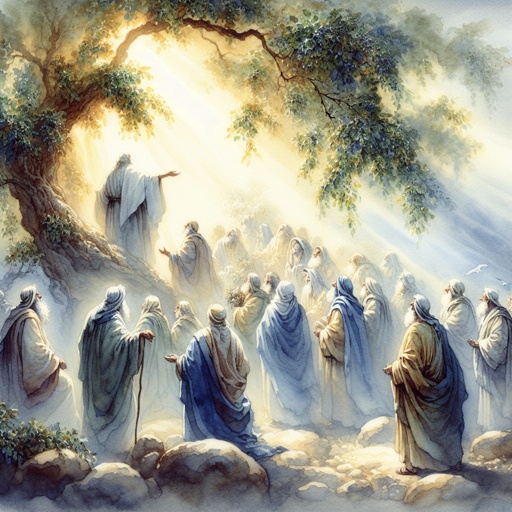
Hebrews 7:2 (KJV) 2 To whom also Abraham gave a tenth part of all; first being by interpretation King of righteousness, and after that also King of Salem, which is, King of peace;
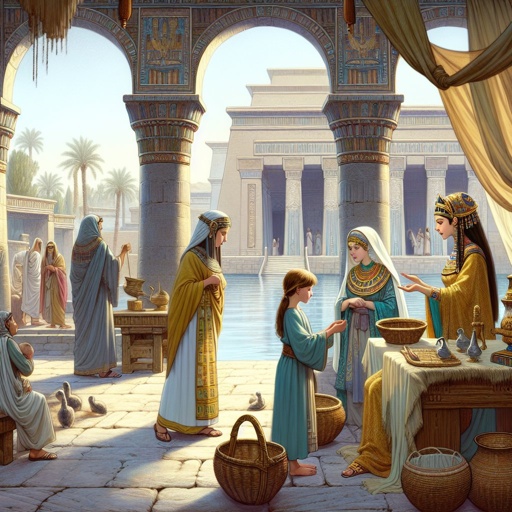
Exodus 2:7 - "Then said his sister to Pharaoh's daughter, Shall I go and call to thee a nurse of the Hebrew women, that she may nurse the child for thee?"

Hebrews 7:20 - "And inasmuch as not without an oath he was made priest:"

"And without all contradiction the less is blessed of the better." - Hebrews 7:7

Hebrews 7:22 - "By so much was Jesus made a surety of a better testament."

Hebrews 7:12 - "For the priesthood being changed, there is made of necessity a change also of the law."

Hebrews 7:24 - "But this man, because he continueth ever, hath an unchangeable priesthood."
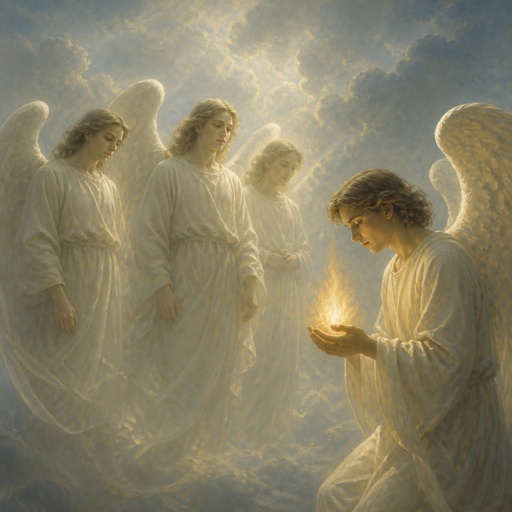
"And of the angels he saith, Who maketh his angels spirits, and his ministers a flame of fire." - Hebrews 1:7

Hebrews 7:18 - "For there is verily a disannulling of the commandment going before for the weakness and unprofitableness thereof."

Hebrews 7:17 - "For he testifieth, Thou art a priest for ever after the order of Melchisedec."

Hebrews 7:10 - "For he was yet in the loins of his father, when Melchisedec met him."

Hebrews 1:14

Hebrews 1:14

Matthew 7:1-2 - "Do not judge, or you too will be judged. For in the same way you judge others, you will be judged, and with the measure you use, it will be measured to you."

Hebrews 7:16 - "Who is made, not after the law of a carnal commandment, but after the power of an endless life."
Hebrews 3:7 - "Wherefore (as the Holy Ghost saith, To day if ye will hear his voice,"
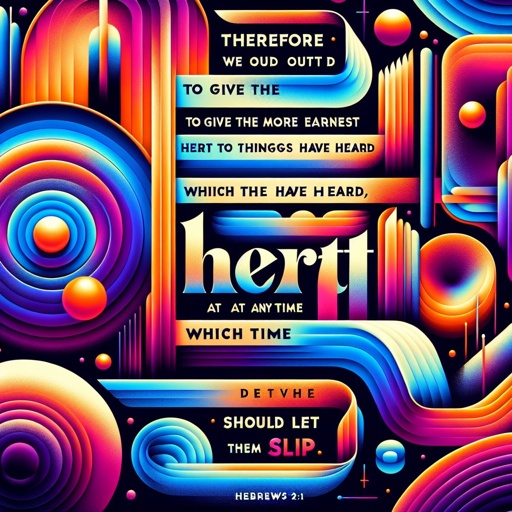
Hebrews 2:1 - "Therefore we ought to give the more earnest heed to the things which we have heard, lest at any time we should let them slip."

Hebrews 1:2 - "Hath in these last days spoken unto us by his Son, whom he hath appointed heir of all things, by whom also he made the worlds;"

1 Timothy 2:1-7

Hebrews 6:1