What does Hebrews 4:15 mean?
"For we have not an high priest which cannot be touched with the feeling of our infirmities; but was in all points tempted like as we are, yet without sin." - Hebrews 4:15
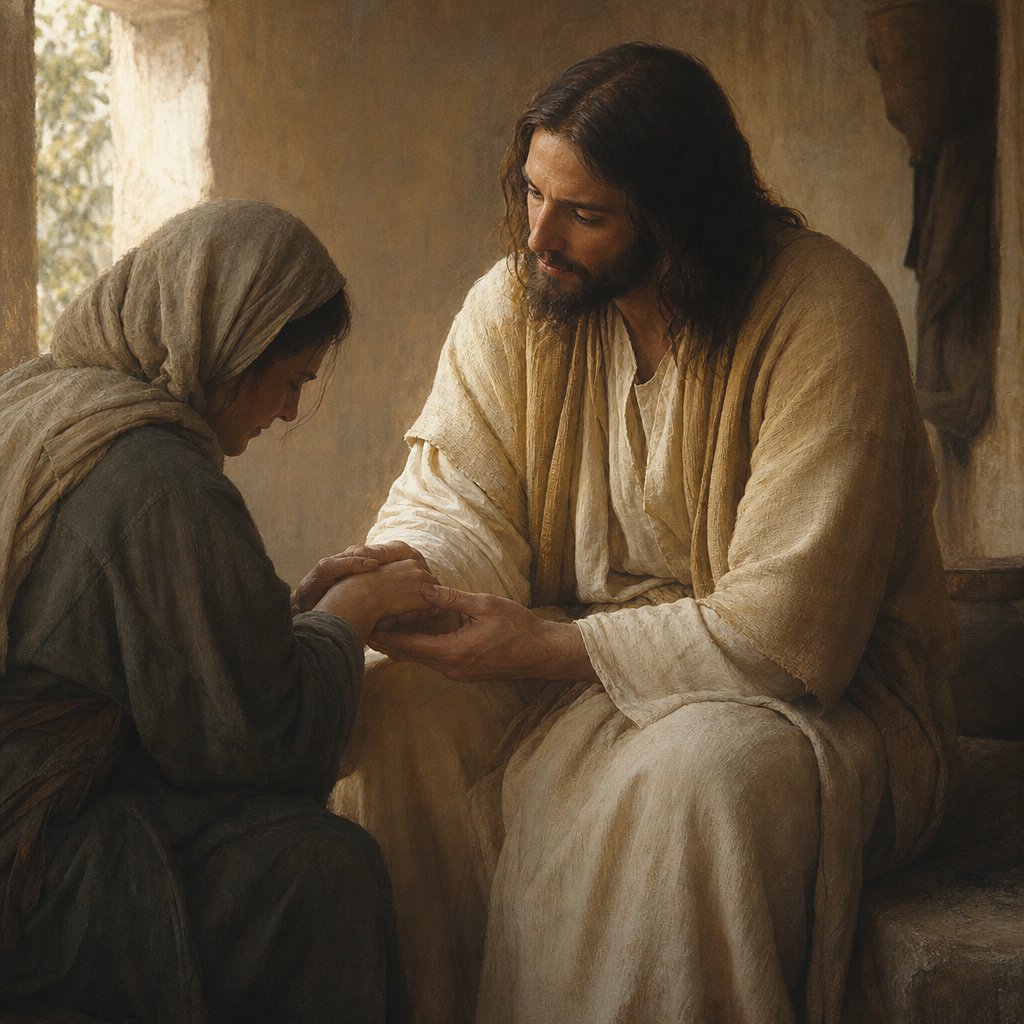
Hebrews 4:15 in the King James Version reads, “For we have not an high priest which cannot be touched with the feeling of our infirmities; but was in all points tempted like as we are, yet without sin.” Its meaning rests on the epistle’s great theme that Jesus Christ is the true and final High Priest for God’s people, and that his priesthood is not distant, cold, or merely ceremonial, but living, compassionate, and morally perfect. The verse is written to believers who were under pressure to grow weary, to draw back, or to seek safety in older, more familiar religious forms. In that setting it is not a detached theological statement; it is a pastoral assurance meant to steady trembling consciences and to draw frightened hearts toward God instead of away from him.
The immediate context amplifies its force. Just before this verse the writer has spoken of the searching power of God’s word and the inescapable gaze of God: “Neither is there any creature that is not manifest in his sight: but all things are naked and opened unto the eyes of him with whom we have to do” (Hebrews 4:13). That is an awe-inspiring and even alarming truth: nothing in us is hidden, nothing can be managed by appearances, and the Judge sees perfectly. Then the passage turns to Christ as “a great high priest, that is passed into the heavens, Jesus the Son of God” (Hebrews 4:14). Hebrews 4:15 sits right between the reality of God’s penetrating knowledge and the call that follows: “Let us therefore come boldly unto the throne of grace” (Hebrews 4:16). The verse explains why exposed sinners are not destroyed by despair when they realize that God sees everything: the one who represents them before God is not only exalted in heaven but also tender toward their weakness, and he is able to help because he knows temptation from the inside without ever yielding to it.
The central symbolism is the “high priest.” Under the law, the high priest stood as the representative of the people before God, especially on the great day of atonement, approaching God with blood and bearing the names of Israel. Hebrews takes that familiar office and shows that it was a shadow pointing to Christ. When Hebrews 4:15 says “For we have not an high priest which cannot be touched with the feeling of our infirmities,” it is using priestly language to speak of nearness and sympathy. “Touched” in the verse is not a casual word; it conveys the idea of being moved, affected, or made to feel with another. “Infirmities” refers to the frailty and weakness that mark human life in a fallen world: the pressures, fears, sorrows, limitations, and vulnerabilities in which temptations often take root and through which faith is tested. The verse is not claiming that Christ shares our sinfulness; it is insisting that he truly shares our human condition and therefore meets us with real compassion rather than with contempt.
At the same time, Hebrews 4:15 guards against a sentimental view of Christ’s sympathy by grounding it in his tested obedience: “but was in all points tempted like as we are, yet without sin.” The phrase “in all points” does not require that Christ experienced every possible individual scenario any person might face, but that he encountered the full range and reality of temptation as temptation: the pull to distrust God, to avoid suffering, to grasp at wrong relief, to seek glory without obedience, to choose self over the Father’s will. His temptations were not play-acting. He was tempted in the wilderness, tempted through opposition, tempted through weariness and hunger, tempted through the prospect of rejection and death, tempted to turn aside from the path appointed for him. Yet the verse insists “without sin,” meaning that though temptation came to him with real force, it never produced in him any sinful act, word, desire, or inward consent. That sinlessness is crucial to the argument of Hebrews: only a spotless priest can truly reconcile sinners, because a priest who needs cleansing for himself cannot finally cleanse others. The wonder of the verse is that the one who is morally spotless is not emotionally remote. The one who is “passed into the heavens” is also one who can be “touched” by our weakness.
This creates a profound paradox that is at the heart of Christian comfort. If Christ were only sympathetic but not holy, he might feel with us but could not save. If he were only holy but not sympathetic, he might be able to save but we would fear to approach. Hebrews 4:15 holds both together: he is fully able and fully merciful, perfectly righteous and truly compassionate. His sympathy is not indulgence; it is priestly mercy paired with power to help. His sinlessness does not make him less understanding; it establishes him as the only one who has met temptation in its full weight and never surrendered. Where human beings often understand temptation partly by having yielded to it, Christ understands it by having borne it to the end in obedience.
In the flow of Hebrews, the significance of this verse is that it opens the door to confidence in prayer and perseverance in faith. Immediately after, the writer concludes, “Let us therefore come boldly unto the throne of grace, that we may obtain mercy, and find grace to help in time of need” (Hebrews 4:16). The “throne” imagery might sound intimidating, but it is called “the throne of grace” because the reigning God receives believers through the High Priest who sympathizes and intercedes. Hebrews 4:15 is the reason boldness is possible without presumption: believers do not come claiming worthiness; they come admitting infirmity, trusting a High Priest who knows their condition and has provided righteousness. The verse is meant to quiet the fear that weakness disqualifies a person from approaching God. Instead, weakness becomes the very arena in which Christ’s priestly compassion is experienced, and temptation becomes the very moment in which his help is most needed and most near.
Read this way, Hebrews 4:15 is not merely a statement about Christ’s past experience; it is an invitation to present reliance. It tells the struggling conscience that Jesus Christ is neither unable to understand nor unwilling to receive. It tells the tempted believer that temptation itself is not the same as sin, and that there is One who has faced temptation truly and remained “without sin.” It tells the weary that heaven is not far away, because their High Priest has gone there on their behalf and yet remains “touched” by what burdens them on earth. In a letter calling Christians to “hold fast” (Hebrews 4:14), this verse supplies the tenderness that makes endurance possible: the holy High Priest is also the compassionate High Priest, and because of him God’s throne is, for the believer, a throne of grace.
Have questions about Hebrews 4:15?
Dive deeper into this scripture with Bible Chat — an AI-powered tool for exploring God's Word through conversation. Ask questions, get context, and grow in your understanding of the Bible.
Get Our Apps


Hebrews 4:15 Artwork

Hebrews 4:15 - "For we have not an high priest which cannot be touched with the feeling of our infirmities; but was in all points tempted like as we are, yet without sin."

Hebrews 4:15-16 - "For we do not have a high priest who is unable to empathize with our weaknesses, but we have one who has been tempted in every way, just as we are—yet he did not sin. Let us then approach God’s throne of grace with confidence, so that we may receive mercy and find grace to help us in our time of need."
"For we have not an high priest which cannot be touched with the feeling of our infirmities; but was in all points tempted like as we are, yet without sin." - Hebrews 4:15
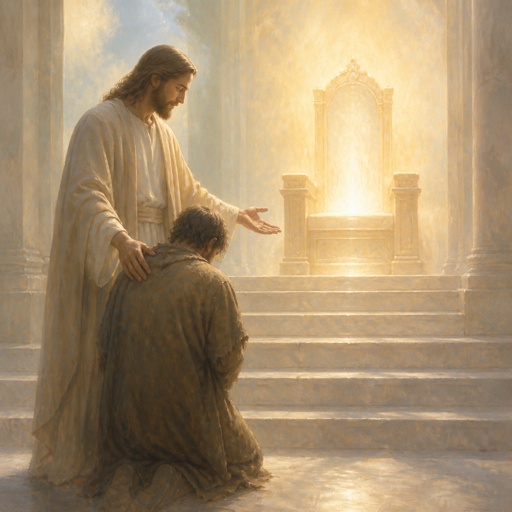
"For we do not have a high priest who is unable to empathize with our weaknesses, but we have one who has been tempted in every way, just as we are—yet he did not sin. Let us then approach God’s throne of grace with confidence, so that we may receive mercy and find grace to help us in our time of need." - Hebrews 4:15-16

Ephesians 4:1-5

Hebrews 4:9 - "There remaineth therefore a rest to the people of God."

Hebrews 6:15 - "And so, after he had patiently endured, he obtained the promise."

Hebrews 10:15 - "Whereof the Holy Ghost also is a witness to us: for after that he had said before,"

Hebrews 7:15 - "And it is yet far more evident: for that after the similitude of Melchisedec there ariseth another priest,"

Hebrews 4:5 - "And in this place again, If they shall enter into my rest."

Hebrews 3:15 - "While it is said, To day if ye will hear his voice, harden not your hearts, as in the provocation."

Hebrews 2:15 - "And deliver them who through fear of death were all their lifetime subject to bondage."

Hebrews 10:4 - "For it is not possible that the blood of bulls and of goats should take away sins."

Hebrews 4:4 - "For he spake in a certain place of the seventh day on this wise, And God did rest the seventh day from all his works."

Hebrews 12:4 - "Ye have not yet resisted unto blood, striving against sin."

Hebrews 4:12 – "For the word of God is alive and active. Sharper than any double-edged sword."

Hebrews 4:12 – "For the word of God is alive and active. Sharper than any double-edged sword."

Hebrews 13:4 - "Marriage is honourable in all, and the bed undefiled: but whoremongers and adulterers God will judge."

Hebrews 5:4 - "And no man taketh this honour unto himself, but he that is called of God, as was Aaron."

Genesis 40:15 - "For indeed I was stolen away out of the land of the Hebrews: and here also have I done nothing that they should put me into the dungeon."

Hebrews 11:15 - "And truly, if they had been mindful of that country from whence they came out, they might have had opportunity to have returned."

Hebrews 3:4 - "For every house is builded by some man; but he that built all things is God."
!["For the word of God [is] quick, and powerful, and sharper than any twoedged sword, piercing even to the dividing asunder of soul and spirit, and of the joints and marrow, and [is] a discerner of the thoughts and intents of the heart." - Hebrews 4:12](https://media.bible.art/0705b859-7ae8-4ac8-9dce-49043e2ec43b-thumbnail.jpg)
"For the word of God [is] quick, and powerful, and sharper than any twoedged sword, piercing even to the dividing asunder of soul and spirit, and of the joints and marrow, and [is] a discerner of the thoughts and intents of the heart." - Hebrews 4:12
!["For the word of God [is] quick, and powerful, and sharper than any twoedged sword, piercing even to the dividing asunder of soul and spirit, and of the joints and marrow, and [is] a discerner of the thoughts and intents of the heart." - Hebrews 4:12](https://media.bible.art/adaff66c-0dbd-4c9b-b464-740ce2459397-thumbnail.jpg)
"For the word of God [is] quick, and powerful, and sharper than any twoedged sword, piercing even to the dividing asunder of soul and spirit, and of the joints and marrow, and [is] a discerner of the thoughts and intents of the heart." - Hebrews 4:12

Hebrews 8:4 - "For if he were on earth, he should not be a priest, seeing that there are priests that offer gifts according to the law:"
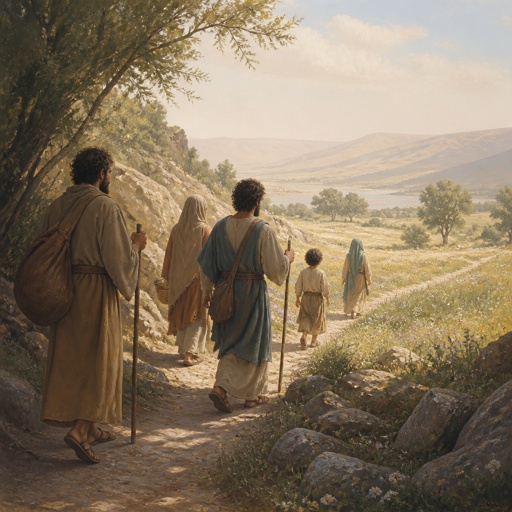
"There remaineth therefore a rest to the people of God." - Hebrews 4:9

Hebrews 13:15 - "By him therefore let us offer the sacrifice of praise to God continually, that is, the fruit of our lips giving thanks to his name."

Deuteronomy 15:12 - "¶ And if thy brother, an Hebrew man, or an Hebrew woman, be sold unto thee, and serve thee six years; then in the seventh year thou shalt let him go free from thee."

Hebrews 4:8 - "For if Jesus had given them rest, then would he not afterward have spoken of another day."

Hebrews 7:4 - "Now consider how great this man was, unto whom even the patriarch Abraham gave the tenth of the spoils."