What does Hebrews 11:39-40 mean?
"And these all, having obtained a good report through faith, received not the promise: God having provided some better thing for us, that they without us should not be made perfect." - Hebrews 11:39-40

Hebrews 11 has just finished its long witness-list of faith: Abel, Enoch, Noah, Abraham, Sarah, Moses, Rahab, and many more, along with unnamed sufferers who endured torture, scourgings, imprisonment, destitution, and death. The chapter is not merely praising “great people,” but showing what faith is when it has to live on promise rather than possession. With that background, Hebrews 11:39–40 serves as the chapter’s closing interpretation of everything that came before it, and it does so by turning the reader’s eyes from the heroes themselves to God’s timing and God’s plan in Christ.
The verses read, in the King James Version: “And these all, having obtained a good report through faith, received not the promise: God having provided some better thing for us, that they without us should not be made perfect.” The opening phrase, “And these all,” gathers up the entire parade of witnesses into one unified testimony. They are different in calling and era, some living in triumph and some dying in apparent defeat, but they share one reality: they “obtained a good report through faith.” Earlier in the chapter, the same language appears: “through faith” the elders “obtained a good report” (Hebrews 11:2). The “report” is not the world’s applause; it is God’s testimony. In the logic of Hebrews, the decisive evaluation of a life is what God says about it. Faith is counted as real not because it wins earthly outcomes, but because it rests on God’s word and moves toward God’s city.
Yet the text immediately adds a startling limitation: they “received not the promise.” This does not mean they received nothing at all, because many did receive partial fulfillments and real mercies in history. Abraham received Isaac; Israel entered Canaan; David sat on a throne. But Hebrews is insisting that the promise in its full, final sense was not delivered to them in their lifetime. The chapter itself has already prepared this point. Abraham “looked for a city which hath foundations, whose builder and maker is God” (Hebrews 11:10). The faithful “confessed that they were strangers and pilgrims on the earth” and desired “a better country, that is, an heavenly” (Hebrews 11:13–16). Even those who obtained earthly victories were ultimately reaching for something beyond their era: resurrection, everlasting inheritance, the finished redemption that the earlier covenants pointed toward but did not complete.
The phrase “the promise” is therefore charged with covenant meaning. In Hebrews, the promises given to the fathers are bound up with the coming of Christ, the establishment of the new covenant, and the actual opening of access to God. The whole book argues that Christ is better than angels, better than Moses, better than Aaron’s priesthood, and that his sacrifice is once for all. When Hebrews says the former saints “received not the promise,” it is marking the difference between anticipation and arrival. They believed toward Christ; the reader is being urged not to drift from Christ now that the promised substance has come.
Then the text says, “God having provided some better thing for us.” The word “provided” emphasizes God’s intentional arrangement. Their delay was not an accident; it was divine orchestration. And the “better thing” is not simply a more comfortable life for later believers. In Hebrews, “better” repeatedly points to Christ’s superior priesthood, sacrifice, covenant, and hope. The “better thing” is the era and reality of fulfillment: the Messiah having come, the true atonement having been offered, the new covenant blessings being established, and the way into the holiest being made manifest by his blood. Those before Christ lived under shadows; those after Christ live with the light that casts the shadows. The “better thing” is therefore deeply Christ-centered: it is the advantage of living on the far side of the cross and resurrection, where what was promised has been enacted in history and proclaimed as accomplished.
But Hebrews does something even more profound with this “better thing.” It does not set “us” against “them” as if later believers are superior people. Instead, it binds them and us into one story by adding, “that they without us should not be made perfect.” The purpose clause “that” shows the reason God arranged it this way: God intended a shared completion. The word “perfect” in Hebrews is linked to being brought to the intended goal, to being completed in what the old order could not bring to fullness. Earlier, Hebrews has said, “For the law made nothing perfect” (Hebrews 7:19), and it speaks of Christ as the one who truly perfects. Here, the thought is that the faithful of the former ages were not meant to reach the consummation in isolation from the faithful of the later ages. God’s people are one people across the covenants, and God’s saving purpose reaches its climax in a unified fulfillment. They waited for what would come; we receive it in its revealed form; and the final perfection is a corporate consummation in which all the redeemed are gathered into the completed work and final inheritance of God.
The symbolism and imagery of Hebrews 11 help this land with weight. The chapter has already framed life as pilgrimage, faith as sight of the unseen, and suffering as not disproving God’s favor. “They received not the promise” symbolizes a posture of open-handed expectancy: faith can be genuine even when it dies with the promise still ahead. It also symbolizes the incompleteness of the old covenant’s visible structures. Altars, tabernacles, priestly garments, sacrifices, promised land—these were real, God-given signs, yet they signified something greater than themselves. The “better thing” symbolizes fulfillment, not because the past was worthless, but because the past was preparatory. The “made perfect” language symbolizes arrival at the goal to which all the signs pointed: full access to God, final cleansing, and the completed inheritance.
In context, these verses also function as a pastoral warning and encouragement to the epistle’s readers. Hebrews is written to people tempted to draw back under pressure. Hebrews 11 has just said, “if any man draw back, my soul shall have no pleasure in him” (Hebrews 10:38) and then launches into the examples of faith. The conclusion in 11:39–40 presses the lesson: if those who had only the promises and types endured with such steadiness, how much more should those who have received the “better thing” in Christ endure without turning back. The logic is not, “they were strong, so try harder,” but, “God has been faithful across ages, and his plan has now reached its decisive stage in Christ; therefore do not abandon the very fulfillment the earlier saints longed for.”
The significance of Hebrews 11:39–40 is thus twofold. It honors the Old Testament faithful by affirming God’s approval of them “through faith,” while also clarifying that their story was intentionally left open-ended until Christ. And it exalts God’s wisdom in salvation history: he arranged that the promise would be fulfilled in a way that joins generations together, so that the ancient witnesses and the present believers are not rival heirs but one family moving toward one perfected end. These verses make the chapter’s message unmistakable: faith is not merely believing for immediate results; it is trusting God’s promise across time, through suffering, toward a completion that God himself has “provided,” so that all his people may be “made perfect” together in the fulfillment centered in Christ.
Have questions about Hebrews 11:39-40?
Dive deeper into this scripture with Bible Chat — an AI-powered tool for exploring God's Word through conversation. Ask questions, get context, and grow in your understanding of the Bible.
Get Our Apps


Hebrews 11:39-40 Artwork

Hebrews 11:39-40 - "And all these, having obtained a good testimony through faith, did not receive the promise, God having provided something better for us, that they should not be made perfect apart from us."

"And all these, having obtained a good testimony through faith, did not receive the promise, God having provided something better for us, that they should not be made perfect apart from us." - Hebrews 11:39-40

"And all these, having obtained a good testimony through faith, did not receive the promise, God having provided something better for us, that they should not be made perfect apart from us." - Hebrews 11:39-40

Hebrews 11:39 - "And these all, having obtained a good report through faith, received not the promise:"

Hebrews 11:40 - "God having provided some better thing for us, that they without us should not be made perfect."

"And these all, having obtained a good report through faith, received not the promise:" - Hebrews 11:39
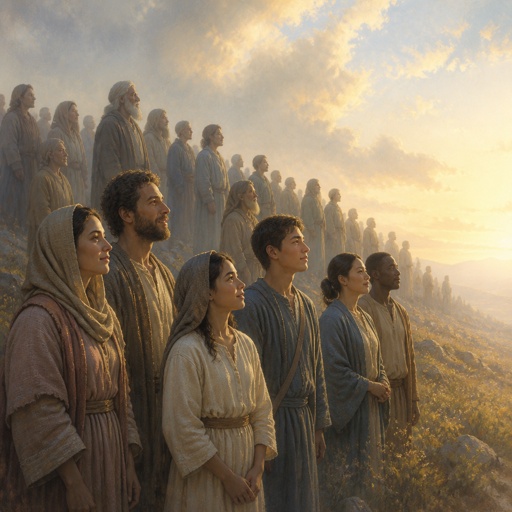
"God having provided some better thing for us, that they without us should not be made perfect." - Hebrews 11:40

1 Corinthians 14:39-40

Hebrews 10:39 - "But we are not of them who draw back unto perdition; but of them that believe to the saving of the soul."

Ezekiel 40:39 - "¶ And in the porch of the gate were two tables on this side, and two tables on that side, to slay thereon the burnt offering and the sin offering and the trespass offering."

Genesis 40:15 - "For indeed I was stolen away out of the land of the Hebrews: and here also have I done nothing that they should put me into the dungeon."

Ezekiel 39:11

Ezekiel 39:11

Hebrews 11:16

Exodus 39:40 - "The hangings of the court, his pillars, and his sockets, and the hanging for the court gate, his cords, and his pins, and all the vessels of the service of the tabernacle, for the tent of the congregation,"

Hebrews 11:16

the jewish holidays mentioned in leviticus 23:1 until 23:40 combined in one picture, with hebrew names in hebrew charactes

Psalms 40: 1:-11

Exodus 39:11 - "And the second row, an emerald, a sapphire, and a diamond."

Hebrews 11 the faith hall of fame

1 Kings 11:39 - "And I will for this afflict the seed of David, but not for ever."

Hebrews 11:2 - "For by it the elders obtained a good report."

1 Chronicles 11:40 - "Ira the Ithrite, Gareb the Ithrite,"

Hebrews 11 the faith hall of fame

Hebrews 11 the faith hall of fame

"But we are not of them who draw back unto perdition; but of them that believe to the saving of the soul." - Hebrews 10:39

Psalm 37:39-40 - "But the salvation of the righteous is from the Lord; He is their strength in time of trouble. And the Lord helps them and delivers them; He delivers them from the wicked and saves them, because they take refuge in Him."

Acts 10:39-40 - "And we are witnesses of all things which he did both in the land of the Jews, and in Jerusalem; whom they slew and hanged on a tree: Him God raised up the third day, and shewed him openly."

Hebrews 11:18 - "Of whom it was said, That in Isaac shall thy seed be called:"

Hebrews 11:14 - "For they that say such things declare plainly that they seek a country."