What does Genesis 9:28 mean?
"¶ And Noah lived after the flood three hundred and fifty years." - Genesis 9:28
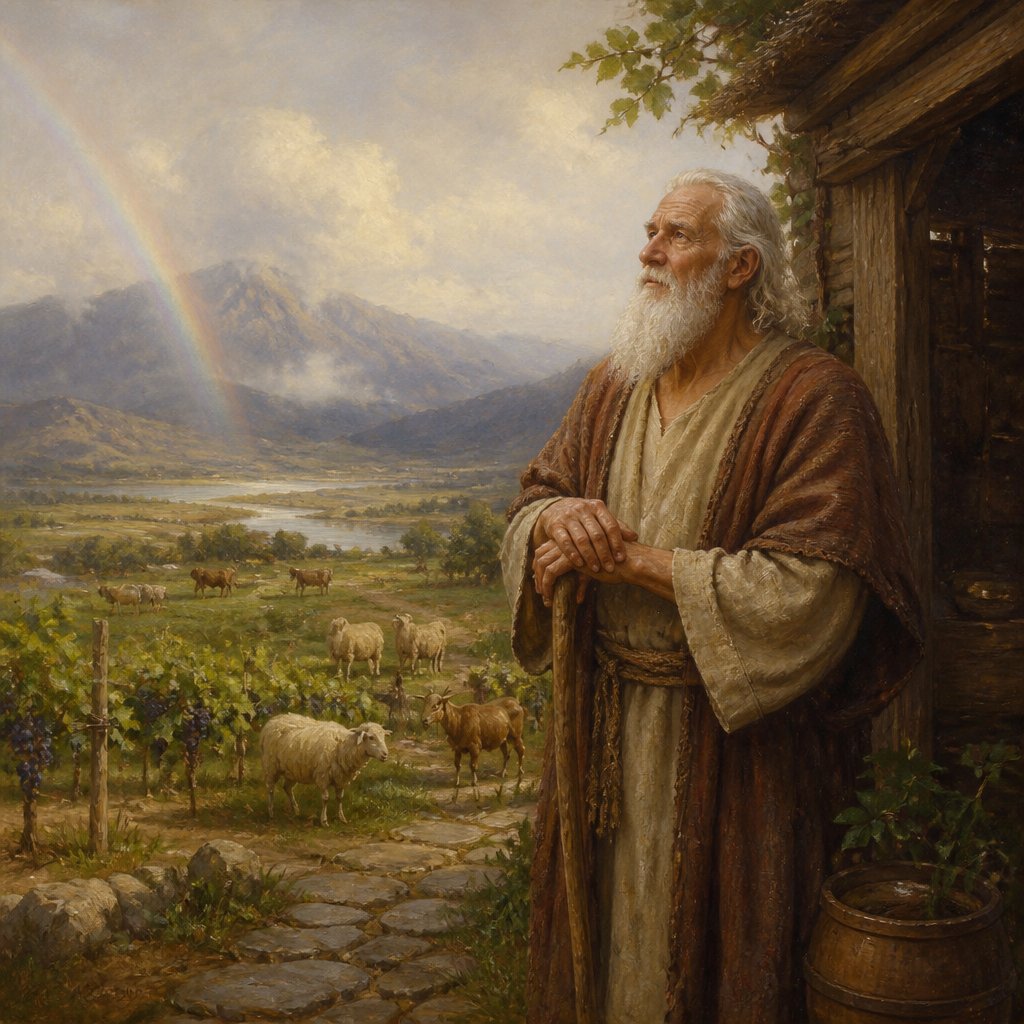
Genesis 9:28 in the King James Version of the Bible states, "And Noah lived after the flood three hundred and fifty years." This verse is part of the story of Noah and the flood, which is one of the most well-known and significant stories in the Bible. The flood account in Genesis is often seen as a historical event, but it also serves as the foundation for many theological and moral lessons.
The story of Noah and the flood begins in Genesis 6, where we are told that "the Lord saw that the wickedness of man was great on the earth, and that every intent of the thoughts of his heart was only evil continually" (Genesis 6:5). Because of this, God decides to bring a flood upon the earth to destroy all living creatures, except for Noah and his family, who are seen as righteous in God's eyes.
Noah is instructed by God to build an ark and to bring two of every kind of animal into the ark with him. The flood lasts for 40 days and 40 nights, during which time all living creatures on the earth are destroyed. After the flood, God makes a covenant with Noah, promising to never again destroy the earth with a flood, and providing a sign of this covenant in the form of a rainbow.
Genesis 9:28 comes at the end of this narrative, and it serves as a transitional verse that provides a link between the account of the flood and the subsequent events. It tells us that Noah lived for 350 years after the flood, indicating that he lived to be a very old man. This detail is important because it emphasizes the significance of Noah's role in the biblical narrative. He is not just a figure who survived a catastrophic event, but he is one who continued to live and play a vital role in the unfolding of God's plan for humanity.
The verse also serves as a reminder of the faithfulness of God. Despite the wickedness of the world and the judgment that was brought upon it, God remained faithful to Noah and his family, preserving them and providing for their future. This theme of God's faithfulness and provision is a central one in the story of the flood, and it is reflected in the broader biblical narrative as well.
Another important theme that can be drawn from this verse is the idea of perseverance and endurance. After enduring the trials of the flood and the challenges of rebuilding life on the earth, Noah lived for an extended period of time. This can be seen as a testament to his faith and his ability to endure through difficult times. It serves as a reminder to readers that even in the midst of hardship, God is present and can provide the strength to persevere.
In addition to its thematic significance, Genesis 9:28 also holds symbolic value within the context of the broader biblical narrative. The number 350 is often seen as a significant number in the Bible, representing completeness and fullness. In this verse, it can be seen as a symbol of the fullness of Noah's life and the completion of his mission to preserve life during the flood.
Overall, Genesis 9:28 is a verse that serves as a link between the account of the flood and the subsequent events, while also conveying themes of God's faithfulness, perseverance, and the fullness of life. It is a reminder of God's presence and provision in the midst of hardship, and it serves as a testament to the enduring faith of those who trust in God's promises.
Have questions about Genesis 9:28?
Dive deeper into this scripture with Bible Chat — an AI-powered tool for exploring God's Word through conversation. Ask questions, get context, and grow in your understanding of the Bible.
Get Our Apps


Genesis 9:28 Artwork

Genesis 9:28 - "¶ And Noah lived after the flood three hundred and fifty years."
"¶ And Noah lived after the flood three hundred and fifty years." - Genesis 9:28

Genesis 28:9 - "Then went Esau unto Ishmael, and took unto the wives which he had Mahalath the daughter of Ishmael Abraham's son, the sister of Nebajoth, to be his wife."

Genesis 28:9 KJV Then went Esau unto Ishmael, and took unto the wives which he had Mahalath the daughter of Ishmael Abraham's son, the sister of Nebajoth, to be his wife.

Genesis 28-15

Genesis 28-12

Genesis 28-16

Genesis 28-21

Genesis 28-22

Genesis 28-17

Genesis 21:28

Genesis 28:18

Genesis 24:28

Genesis 28:18

Genesis 28-20

Genesis 28-13

Genesis 28-19

Genesis 28-14

Genesis 28-11

Genesis 19-28

Genesis 28:10

Genesis 18-28

Genesis 10:28 - "And Obal, and Abimael, and Sheba,"

Genesis 36:28 - "The children of Dishan are these; Uz, and Aran."

Genesis 35:28 - "And the days of Isaac were an hundred and fourscore years."

Luke 9:28-45

Genesis 21:28 - "And Abraham set seven ewe lambs of the flock by themselves."

"And Obal, and Abimael, and Sheba," - Genesis 10:28

Genesis 5:28 - "¶ And Lamech lived an hundred eighty and two years, and begat a son:"

Genesis 30:28 - "And he said, Appoint me thy wages, and I will give it."