What does Genesis 5:27 mean?
"And all the days of Methuselah were nine hundred sixty and nine years: and he died." - Genesis 5:27
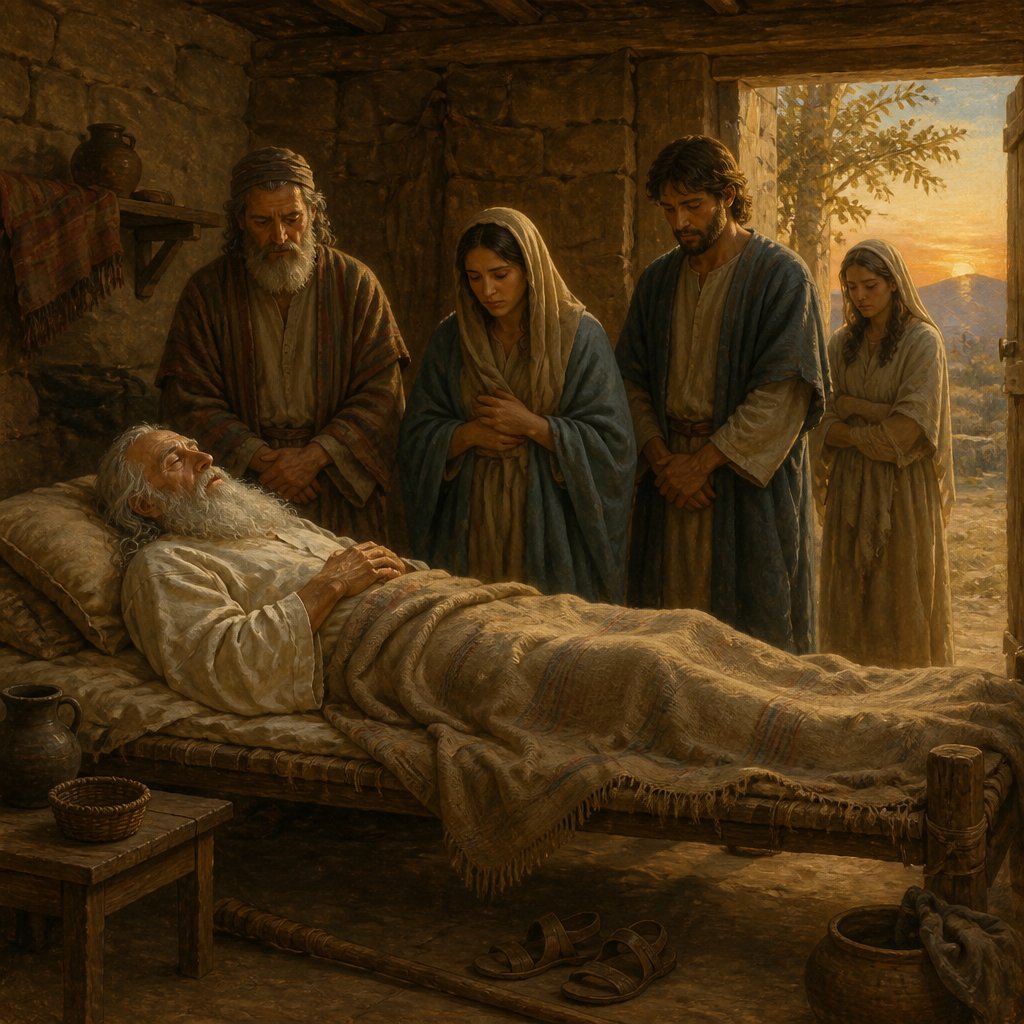
Genesis 5:27 (KJV) states, "And all the days of Methuselah were nine hundred sixty and nine years: and he died." This verse, located in the genealogy of Adam, marks the end of the life of Methuselah, the oldest person in the Bible.
The book of Genesis is the first book of the Bible and serves as a foundation for the rest of Scripture. It recounts the creation of the world, the fall of mankind, and the establishment of God's covenant with humanity. The genealogies in Genesis provide a historical account of the descendants of Adam, tracing the lineage from one generation to the next. The genealogy in Genesis 5 establishes the lifespan of each individual and demonstrates the gradual decrease in human lifespan after the flood.
Methuselah's remarkable lifespan of 969 years has captured the imagination of many and has led to various interpretations and speculations. Some scholars and theologians have speculated that Methuselah's long life was a sign of God's patience and mercy, allowing him to live for almost a millennium before the flood came. Others have seen his long life as a symbol of God's grace and longsuffering toward humanity, giving them ample time to repent and turn back to Him.
Within the context of Genesis 5, Methuselah's longevity is contrasted with the brevity of life for other individuals in the genealogy. The repeated phrase "and he died" follows each person's lifespan, serving as a reminder of the mortality and frailty of humanity. Methuselah's death at the end of his 969 years demonstrates that even the longest life eventually comes to an end. This motif serves as a sobering reminder of the fleeting nature of human existence and the inevitability of death.
The symbolic significance of Methuselah's lifespan may also be interpreted in light of other themes present in the book of Genesis. As the genealogy progresses, it establishes the lineage from Adam to Noah, who played a pivotal role in the preservation of humanity through the flood. Methuselah's son, Lamech, was the father of Noah, which means that Methuselah lived to see the birth of the man who would later build the ark and save humanity from destruction. This connection suggests that Methuselah's lifespan may have been part of God's providential plan to ensure the preservation of the human race.
Symbolically, Methuselah's long life can also be seen as a representation of God's patience and longsuffering. In the New Testament, 2 Peter 3:9 (KJV) states, "The Lord is not slack concerning his promise, as some men count slackness; but is longsuffering to us-ward, not willing that any should perish, but that all should come to repentance." Methuselah's extended lifespan serves as a symbolic reminder of God's enduring patience and desire for humanity to turn to Him in repentance.
In conclusion, Genesis 5:27 recounts the end of Methuselah's extraordinary life and serves as a poignant reminder of the fleeting nature of human existence. His longevity, within the context of the genealogy in Genesis, carries rich symbolic significance and thematic resonance. Whether viewed as a sign of God's patience, a representation of human mortality, or a part of God's providential plan, the lifespan of Methuselah continues to provoke contemplation and inspire reflection on the deeper truths contained within the pages of Scripture.
Have questions about Genesis 5:27?
Dive deeper into this scripture with Bible Chat — an AI-powered tool for exploring God's Word through conversation. Ask questions, get context, and grow in your understanding of the Bible.
Get Our Apps


Genesis 5:27 Artwork

Genesis 5:27 - "And all the days of Methuselah were nine hundred sixty and nine years: and he died."

"And all the days of Methuselah were nine hundred sixty and nine years: and he died." - Genesis 5:27

Genesis 27:5

Genesis 27:5 - "And Rebekah heard when Isaac spake to Esau his son. And Esau went to the field to hunt for venison, and to bring it."

Genesis 27:5 KJV And Rebekah heard when Isaac spake to Esau his son. And Esau went to the field to hunt for venison, and to bring it.

Genesis 27:32

Genesis 25-27

Genesis 17-27

Genesis 18-27

Genesis 24-27

Genesis 21-27

Genesis 19-27

Genesis 10:27 - "And Hadoram, and Uzal, and Diklah,"

"And Rebekah heard when Isaac spake to Esau his son. And Esau went to the field to hunt for venison, and to bring it." - Genesis 27:5

Genesis 27:10 KJV

Genesis 27:18-19

Genesis 27:1-3

Genesis 36:27 - "The children of Ezer are these; Bilhan, and Zaavan, and Akan."

"And Hadoram, and Uzal, and Diklah," - Genesis 10:27

Amos 5:21-27

Numbers 27:5 - "And Moses brought their cause before the LORD."

Genesis 38:27 - "¶ And it came to pass in the time of her travail, that, behold, twins were in her womb."

Genesis 27:44 - "And tarry with him a few days, until thy brother's fury turn away;"

Genesis 32:27 - "And he said unto him, What is thy name? And he said, Jacob."

Genesis 27:27 - "And he came near, and kissed him: and he smelled the smell of his raiment, and blessed him, and said, See, the smell of my son is as the smell of a field which the LORD hath blessed:"

Proverbs 27:5 - "Open rebuke is better than secret love."

Genesis 34:27 - "The sons of Jacob came upon the slain, and spoiled the city, because they had defiled their sister."

Genesis 27:35 - "And he said, Thy brother came with subtilty, and hath taken away thy blessing."

Genesis 19:27 - "¶ And Abraham gat up early in the morning to the place where he stood before the LORD:"

Genesis 27:28 - "Therefore God give thee of the dew of heaven, and the fatness of the earth, and plenty of corn and wine:"