What does Genesis 46:32 mean?
"And the men are shepherds, for their trade hath been to feed cattle; and they have brought their flocks, and their herds, and all that they have." - Genesis 46:32
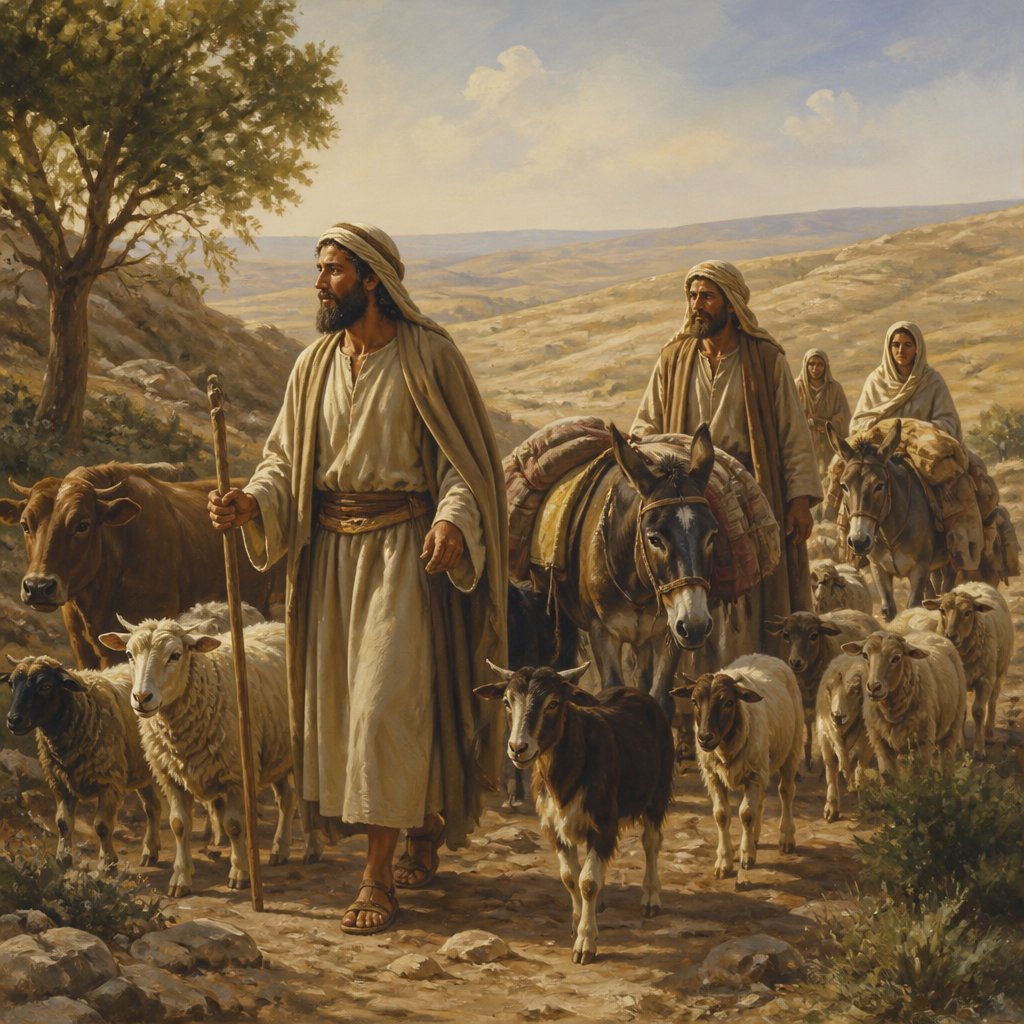
The verse Genesis 46:32 in the King James Version states, "And the men are shepherds, for their trade hath been to feed cattle; and they have brought their flocks, and their herds, and all that they have." This verse is part of the larger story of Jacob's journey to Egypt with his family, as told in the book of Genesis.
In this verse, Jacob is speaking to Pharaoh, the ruler of Egypt, about his sons and their occupation as shepherds. As the story goes, Jacob and his family had come to Egypt seeking refuge from a severe famine in their land. Pharaoh, impressed by Jacob's wisdom and demeanor, had granted them safe passage and offered them a place to settle in the land of Goshen.
The verse is significant in several ways. Firstly, it illustrates the occupation of Jacob's sons as shepherds. In the ancient world, shepherding was a common and important occupation, providing sustenance and livelihood for many people. Being shepherds, Jacob's sons were skilled in taking care of livestock, a skill that would be valuable in the agricultural society of Ancient Egypt.
Secondly, this verse highlights the humility and honesty of Jacob and his family. Despite their status as strangers in a foreign land, they did not attempt to hide their true occupation or claim to be something they were not. Instead, they openly acknowledged their occupation as shepherds, a profession that was generally looked down upon by the Egyptians.
The verse also serves as a reminder of the importance of being true to oneself and embracing one's identity without shame. Jacob and his sons did not try to present themselves as something they were not in order to gain favor in the eyes of Pharaoh. They were honest and unapologetic about their way of life, and this integrity ultimately garnered respect and favor.
Furthermore, the verse can be seen as a symbol of the contrast between the values of the world and the values of the divine. In the eyes of the Egyptians, shepherding may have been seen as a lowly and unimpressive occupation. However, in the eyes of God, shepherding held great significance and honor. Throughout the Bible, we see God often using the metaphor of a shepherd to describe himself and his relationship with his people. Jesus himself also referred to himself as the "Good Shepherd" in the New Testament.
Therefore, this verse serves as a reminder that the world's standards and judgments are not always in line with God's values. What may be considered unimpressive or insignificant in the eyes of the world can hold immense value and importance in the eyes of God.
In conclusion, Genesis 46:32 serves as a powerful reminder of the importance of honesty, humility, and integrity. It also serves as a symbol of the contrast between the values of the world and the values of the divine. It reminds us to embrace and honor our true selves without bowing to societal pressures or judgments.
Have questions about Genesis 46:32?
Dive deeper into this scripture with Bible Chat — an AI-powered tool for exploring God's Word through conversation. Ask questions, get context, and grow in your understanding of the Bible.
Get Our Apps


Genesis 46:32 Artwork

Genesis 46:32 - "And the men are shepherds, for their trade hath been to feed cattle; and they have brought their flocks, and their herds, and all that they have."
"And the men are shepherds, for their trade hath been to feed cattle; and they have brought their flocks, and their herds, and all that they have." - Genesis 46:32

Genesis 46:23 - "¶ And the sons of Dan; Hushim."

Genesis 24-46

Genesis 46:9 - "And the sons of Reuben; Hanoch, and Phallu, and Hezron, and Carmi."

Genesis 46:11 - "¶ And the sons of Levi; Gershon, Kohath, and Merari."

Genesis 46:14 - "¶ And the sons of Zebulun; Sered, and Elon, and Jahleel."

Genesis 46:24 - "¶ And the sons of Naphtali; Jahzeel, and Guni, and Jezer, and Shillem."

Genesis 46:13 - "¶ And the sons of Issachar; Tola, and Phuvah, and Job, and Shimron."

Genesis 46:19 - "The sons of Rachel Jacob's wife; Joseph, and Benjamin."

Genesis 46:22 - "These are the sons of Rachel, which were born to Jacob: all the souls were fourteen."
"¶ And the sons of Dan; Hushim." - Genesis 46:23

Genesis 46:16 - "¶ And the sons of Gad; Ziphion, and Haggi, Shuni, and Ezbon, Eri, and Arodi, and Areli."

Genesis 19-32

Genesis 46:21 - "¶ And the sons of Benjamin were Belah, and Becher, and Ashbel, Gera, and Naaman, Ehi, and Rosh, Muppim, and Huppim, and Ard."

Genesis 27:32

Genesis 25-32

Genesis 18-32

Genesis 24-32
Genesis 21-32

"¶ And the sons of Issachar; Tola, and Phuvah, and Job, and Shimron." - Genesis 46:13
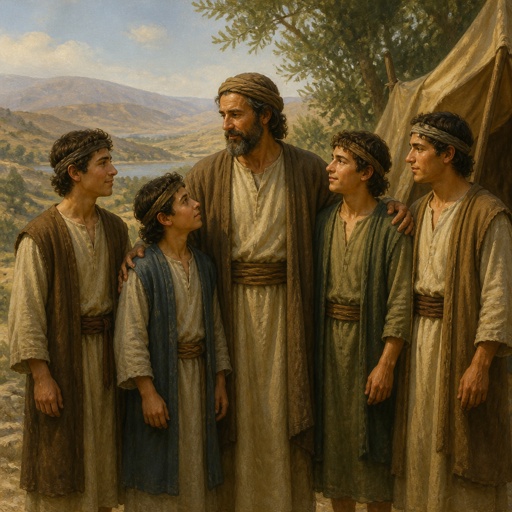
"¶ And the sons of Naphtali; Jahzeel, and Guni, and Jezer, and Shillem." - Genesis 46:24

"The sons of Rachel Jacob's wife; Joseph, and Benjamin." - Genesis 46:19

Genesis 46:2 - "And God spake unto Israel in the visions of the night, and said, Jacob, Jacob. And he said, Here am I."

Genesis 46:10 - "¶ And the sons of Simeon; Jemuel, and Jamin, and Ohad, and Jachin, and Zohar, and Shaul the son of a Canaanitish woman."

"¶ And the sons of Levi; Gershon, Kohath, and Merari." - Genesis 46:11

"¶ And the sons of Zebulun; Sered, and Elon, and Jahleel." - Genesis 46:14

Genesis 46:18 - "These are the sons of Zilpah, whom Laban gave to Leah his daughter, and these she bare unto Jacob, even sixteen souls."

Genesis 46:28 - "¶ And he sent Judah before him unto Joseph, to direct his face unto Goshen; and they came into the land of Goshen."

Genesis 31:46 - "And Jacob said unto his brethren, Gather stones; and they took stones, and made an heap: and they did eat there upon the heap."