What does Genesis 42:5 mean?
"And the sons of Israel came to buy corn among those that came: for the famine was in the land of Canaan." - Genesis 42:5
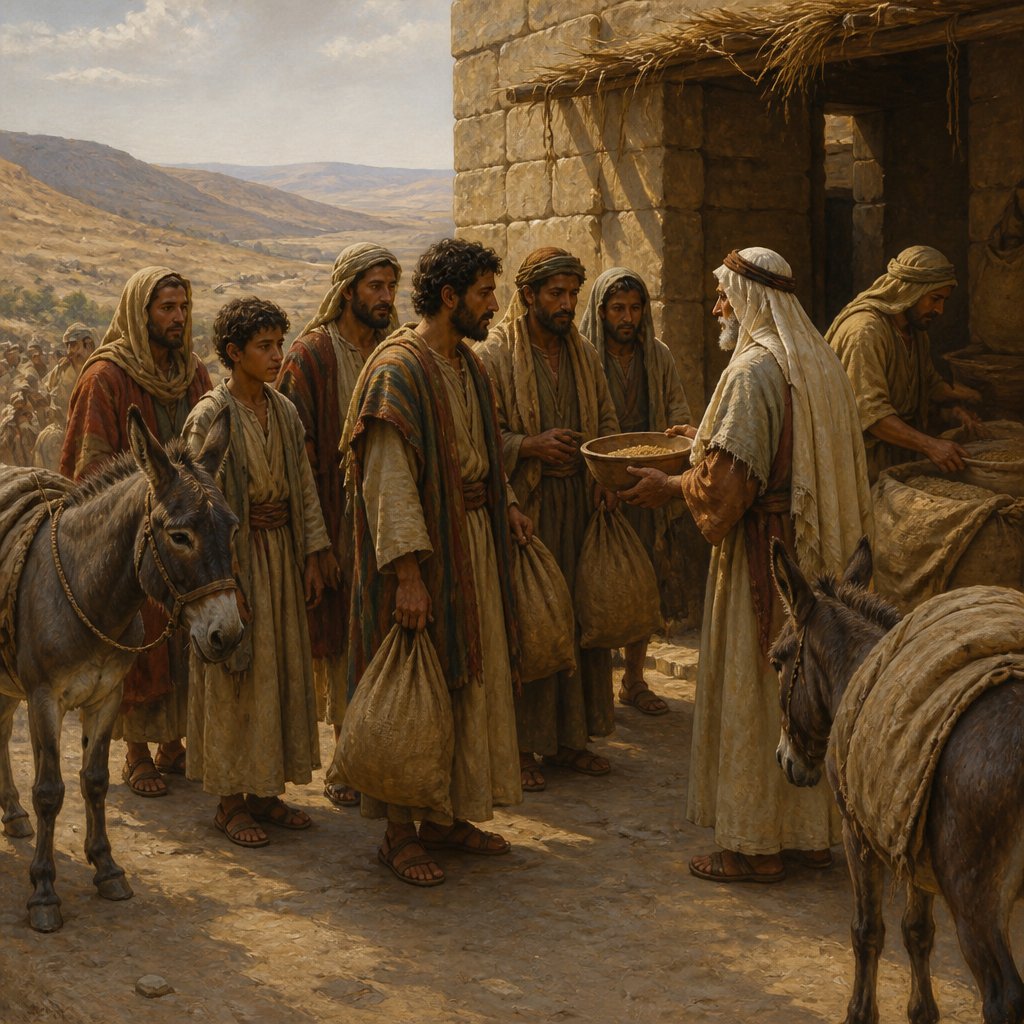
The Bible verse Genesis 42:5 from the King James Version (KJV) reads, "And the sons of Israel came to buy corn among those that came: for the famine was in the land of Canaan."
This verse is part of the larger story of Joseph and his brothers, found in the book of Genesis. Joseph, the youngest son of Jacob, was sold into slavery by his jealous brothers, who then deceived their father into thinking that Joseph had been killed by wild animals. Joseph ends up in Egypt, where he rises to power and becomes second in command to Pharaoh.
This verse occurs during a severe famine in the land of Canaan, where Joseph's family lives. Faced with hunger, Jacob sends his sons, except for Benjamin, to Egypt to buy grain. This is a pivotal moment in the story, as it sets the stage for the reconciliation between Joseph and his brothers, as well as their eventual migration to Egypt and the fulfillment of God's promise to Abraham that his descendants would become a great nation.
One of the key themes of this verse is the providence of God. The famine in Canaan forces Jacob and his sons to seek help in Egypt, which ultimately leads to their reunion with Joseph. Despite the seemingly dire circumstances, God is at work behind the scenes, using the famine to bring about the fulfillment of His plan. This theme of God's providence is a recurring motif throughout the Bible, emphasizing His sovereignty and control over all events, even those that appear to be harmful or challenging.
Another important theme in this verse is the idea of reconciliation. The reunion between Joseph and his brothers is a powerful example of forgiveness and restoration. Despite the betrayal and mistreatment that Joseph endured at the hands of his brothers, he ultimately chooses to forgive them and seek reconciliation. This theme of forgiveness and reconciliation is central to the overarching message of the Bible, as it reflects God's redemptive plan for humanity through the sacrifice of Jesus Christ.
The context of this verse is also significant. The famine in Canaan serves as a catalyst for the family's relocation to Egypt, where they will eventually become the nation of Israel. This relocation fulfills God's promise to Abraham that his descendants would inherit the land of Canaan, and it also sets the stage for the future exodus from Egypt and the establishment of the Israelite nation. Thus, this verse is a crucial turning point in the larger narrative of God's redemptive plan for His people.
Symbolism is also present in this verse, particularly in the imagery of the famine. Famine is often used metaphorically in the Bible to represent spiritual barrenness and desperation. In this context, the famine serves as a symbol of the moral and spiritual decay that had overtaken Jacob's family, as well as the need for God's intervention and sustenance. The arrival of Joseph and the provision of grain symbolize God's ability to bring life and restoration in the midst of desolation.
In conclusion, Genesis 42:5 from the King James Version offers a rich and multi-layered exploration of several important themes, including the providence of God, reconciliation, and the fulfillment of His promises. The verse also highlights the symbolism and context within the larger narrative of the book of Genesis. As such, it provides a powerful reminder of God's faithfulness and sovereignty, as well as His ability to bring about redemption and restoration in the most challenging of circumstances.
Have questions about Genesis 42:5?
Dive deeper into this scripture with Bible Chat — an AI-powered tool for exploring God's Word through conversation. Ask questions, get context, and grow in your understanding of the Bible.
Get Our Apps


Genesis 42:5 Artwork

Genesis 42:5 - "And the sons of Israel came to buy corn among those that came: for the famine was in the land of Canaan."
"And the sons of Israel came to buy corn among those that came: for the famine was in the land of Canaan." - Genesis 42:5

Genesis 42:29

Genesis 24-42

Genesis 42:1-2

job 42:5

Genesis 42:26 - "And they laded their asses with the corn, and departed thence."

Genesis 42:8 - "And Joseph knew his brethren, but they knew not him."

Genesis 36:42 - "Duke Kenaz, duke Teman, duke Mibzar,"

Genesis 42:17 - "And he put them all together into ward three days."

Genesis 42:3 - "¶ And Joseph's ten brethren went down to buy corn in Egypt."

Genesis 42:31 - "And we said unto him, We are true men; we are no spies:"

Genesis 42:23 - "And they knew not that Joseph understood them; for he spake unto them by an interpreter."

Genesis 41:41-42 focus on signet ring

Genesis 42:12 - "And he said unto them, Nay, but to see the nakedness of the land ye are come."

Genesis 42:11 - "We are all one man's sons; we are true men, thy servants are no spies."

Genesis 42:14 - "And Joseph said unto them, That is it that I spake unto you, saying, Ye are spies:"

Genesis 42:30 - "The man, who is the lord of the land, spake roughly to us, and took us for spies of the country."

Genesis 42:18 - "And Joseph said unto them the third day, This do, and live; for I fear God:"

Genesis 42:10 - "And they said unto him, Nay, my lord, but to buy food are thy servants come."

"And they laded their asses with the corn, and departed thence." - Genesis 42:26

John 5:42 - "But I know you, that ye have not the love of God in you."

Acts 5:42 - "And daily in the temple, and in every house, they ceased not to teach and preach Jesus Christ."

Genesis 30:42 - "But when the cattle were feeble, he put them not in: so the feebler were Laban's, and the stronger Jacob's."

Genesis 42:32 - "We be twelve brethren, sons of our father; one is not, and the youngest is this day with our father in the land of Canaan."

"Duke Kenaz, duke Teman, duke Mibzar," - Genesis 36:42

"And Joseph knew his brethren, but they knew not him." - Genesis 42:8

Genesis 42:4 - "But Benjamin, Joseph's brother, Jacob sent not with his brethren; for he said, Lest peradventure mischief befall him."

Genesis 42:29 - "¶ And they came unto Jacob their father unto the land of Canaan, and told him all that befell unto them; saying,"

Job 42:5 - "I have heard of thee by the hearing of the ear: but now mine eye seeth thee."