What does Genesis 41:50 mean?
"And unto Joseph were born two sons before the years of famine came, which Asenath the daughter of Poti-pherah priest of On bare unto him." - Genesis 41:50
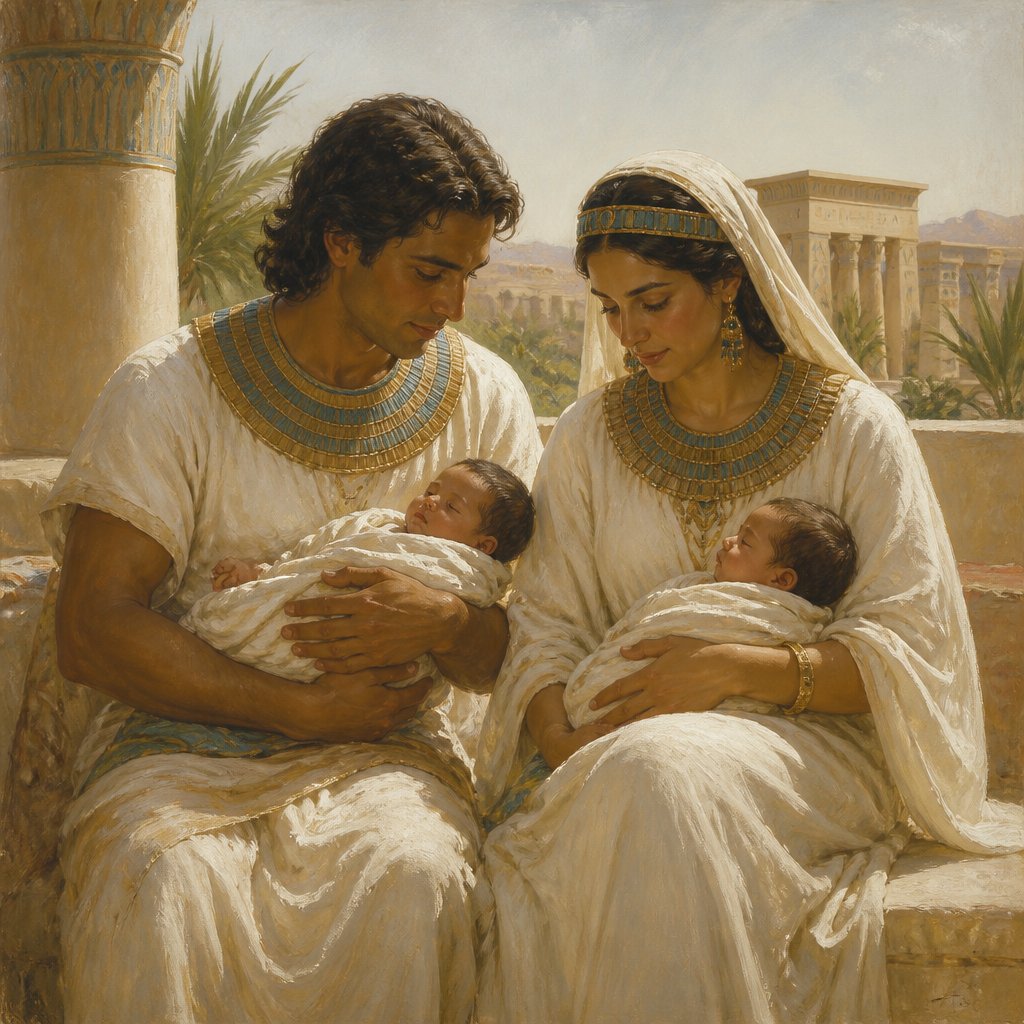
The Bible verse Genesis 41:50 in the King James Version reads, "And unto Joseph were born two sons before the years of famine came, which Asenath the daughter of Potipherah priest of On bare unto him."
This verse comes from the story of Joseph in the book of Genesis. Joseph, the son of Jacob, had been sold into slavery by his jealous brothers and had been taken to Egypt. Through a series of events, Joseph had risen to power as the second in command to Pharaoh, the king of Egypt, because of his ability to interpret dreams. This verse specifically refers to the birth of Joseph's two sons, Manasseh and Ephraim, before the years of famine came upon the land.
Before diving into the specific meaning and commentary of this verse, it's important to understand the broader context of the story of Joseph. The overarching theme of this story is the providence and sovereignty of God. Despite the trials and tribulations Joseph faces – being sold into slavery, being falsely accused and thrown into prison – God is always with him, guiding and protecting him. This idea is summarized by Joseph himself in Genesis 50:20 when he says to his brothers, "But as for you, ye thought evil against me; but God meant it unto good, to bring to pass, as it is this day, to save much people alive."
In the midst of the famine that spreads across the land, Joseph's brothers come to Egypt seeking food. When they encounter Joseph, they do not recognize him as their brother, and Joseph ultimately reveals himself to them. This serves as a powerful example of forgiveness and reconciliation, as Joseph forgives his brothers for their past mistreatment of him and brings his family to Egypt, ensuring their survival during the famine.
Going back to Genesis 41:50, the birth of Joseph's sons before the years of famine carries significant symbolism. The names of Joseph's sons are important in their own right. Manasseh means "causing to forget," symbolizing Joseph's ability to forget the pain and hardship of his past. Ephraim means "fruitful," symbolizing Joseph's fruitful life in the midst of scarcity and famine. These names and their meanings reinforce the themes of providence and abundance that run through the story of Joseph.
Furthermore, the fact that Joseph's wife, Asenath, is the daughter of Potipherah, priest of On, holds symbolic significance. On is believed to be a city devoted to the worship of the sun god, Ra. Despite the pagan religious background of Asenath's family, Joseph's marriage to her signifies the way in which God can work through unconventional means to bring about His purposes. It is a reminder that God's plans and blessings are not limited by cultural or religious boundaries.
The birth of Joseph's sons also foreshadows the theme of redemption and the restoration of blessings. The famine that strikes the land is a time of scarcity and hardship, yet in the midst of this, Joseph's family continues to grow and thrive. This serves as a powerful symbol of hope and perseverance, emphasizing the idea that God's blessings are not diminished by external circumstances.
In conclusion, Genesis 41:50 serves as a meaningful and powerful verse within the broader story of Joseph. It encapsulates the themes of providence, forgiveness, and the restoration of blessings. The symbolism inherent in the birth of Joseph's sons and his marriage to Asenath adds depth and richness to the story, emphasizing the ways in which God's plans and blessings transcend human limitations. This verse reminds believers that even in the midst of scarcity and hardship, God's providence remains steadfast, and His blessings continue to abound.
Have questions about Genesis 41:50?
Dive deeper into this scripture with Bible Chat — an AI-powered tool for exploring God's Word through conversation. Ask questions, get context, and grow in your understanding of the Bible.
Get Our Apps


Genesis 41:50 Artwork

Genesis 41:50 - "And unto Joseph were born two sons before the years of famine came, which Asenath the daughter of Poti-pherah priest of On bare unto him."
"And unto Joseph were born two sons before the years of famine came, which Asenath the daughter of Poti-pherah priest of On bare unto him." - Genesis 41:50

Genesis 24-50

Genesis 50:26

Genesis 50:25

Genesis 50:25

Genesis 50:26

Genesis 50:26

Genesis 50:26

Genesis 50:25

Jeremiah 50:41 - "Behold, a people shall come from the north, and a great nation, and many kings shall be raised up from the coasts of the earth."

Genesis 41:41 and make pharaoh black

Genesis 24-41

Genesis 41:41-42 focus on signet ring

Genesis 50:12 - "And his sons did unto him according as he commanded them:"

Genesis 50:19 - "And Joseph said unto them, Fear not: for am I in the place of God?"

Create a coffin for Joseph Genesis 50:26

Genesis 41:41 - "And Pharaoh said unto Joseph, See, I have set thee over all the land of Egypt."

Genesis 50:1 - "And Joseph fell upon his father's face, and wept upon him, and kissed him."

Genesis 50:9 - "And there went up with him both chariots and horsemen: and it was a very great company."

Genesis 50:22 - "¶ And Joseph dwelt in Egypt, he, and his father's house: and Joseph lived an hundred and ten years."

Genesis 50:2 - "And Joseph commanded his servants the physicians to embalm his father: and the physicians embalmed Israel."

Genesis 41:47 - "And in the seven plenteous years the earth brought forth by handfuls."

Genesis 36:41 - "Duke Aholibamah, duke Elah, duke Pinon,"

Genesis 50:6 - "And Pharaoh said, Go up, and bury thy father, according as he made thee swear."

Genesis 41:53 - "¶ And the seven years of plenteousness, that was in the land of Egypt, were ended."

Genesis 50:16 - "And they sent a messenger unto Joseph, saying, Thy father did command before he died, saying,"

Genesis 50:18 - "And his brethren also went and fell down before his face; and they said, Behold, we be thy servants."

Genesis 50:26 - "So Joseph died, being an hundred and ten years old: and they embalmed him, and he was put in a coffin in Egypt."

Genesis 41:37 - "¶ And the thing was good in the eyes of Pharaoh, and in the eyes of all his servants."