What does Genesis 41:44 mean?
"And Pharaoh said unto Joseph, I am Pharaoh, and without thee shall no man lift up his hand or foot in all the land of Egypt." - Genesis 41:44

The verse Genesis 41:44 in the King James Version of the Bible reads, "And Pharaoh said unto Joseph, I am Pharaoh, and without thee shall no man lift up his hand or foot in all the land of Egypt." This verse comes from the story of Joseph, who was sold into slavery by his jealous brothers and eventually rose to become a powerful leader in Egypt.
In this verse, Pharaoh is speaking to Joseph after appointing him as the second-in-command in all of Egypt. Pharaoh's statement is a acknowledgement of Joseph's authority and power, as well as a declaration of his complete trust in Joseph's leadership and management abilities. The phrase "I am Pharaoh, and without thee shall no man lift up his hand or foot in all the land of Egypt" is a powerful affirmation of Joseph's position as a ruler and his control over the land.
The story of Joseph is one of the most well-known and beloved narratives in the Bible. It is a story of hardship, betrayal, redemption, and ultimately, forgiveness. Genesis 41:44 is a pivotal moment in Joseph's journey, as it marks the point at which he is officially given authority by Pharaoh to oversee all of Egypt. This verse is significant in the context of the broader story, as it represents the fulfillment of Joseph's dreams and the beginning of his rise to power.
One of the key themes in the story of Joseph is the idea of divine providence and God's ultimate control over events. Throughout the narrative, Joseph experiences numerous trials and tribulations, including being sold into slavery, falsely accused, and imprisoned. However, through it all, he remains faithful to God and ultimately emerges as a powerful and influential figure. Genesis 41:44 is a testament to God's faithfulness and Joseph's unwavering trust in God's plan for his life.
Another important theme in the story of Joseph is the concept of forgiveness and reconciliation. Despite the betrayal and mistreatment he endured at the hands of his brothers, Joseph ultimately forgives them and is able to reconcile with them. This theme is particularly evident in the later chapters of Genesis, as Joseph's brothers come to him seeking food during a famine and he is able to offer them forgiveness and reconciliation. The verse Genesis 41:44 serves as a precursor to this theme, as it marks the point at which Joseph's fortunes begin to change and he is able to exercise mercy and grace towards others.
In addition to its thematic significance, Genesis 41:44 also holds symbolic importance within the broader context of the Bible. Joseph's story is often seen as a foreshadowing of the ultimate redemption and salvation brought about by Jesus Christ. Joseph's experiences of suffering, betrayal, and eventual exaltation mirror the life and ministry of Jesus, and his ability to forgive and reconcile with his brothers serves as a powerful symbol of the grace and mercy offered through Christ.
In conclusion, Genesis 41:44 is a pivotal verse in the story of Joseph, signaling his rise to power and authority in Egypt. It is a testament to the themes of divine providence, forgiveness, and reconciliation that permeate the narrative, and holds symbolic significance within the larger context of the Bible. This verse serves as a powerful reminder of God's faithfulness and sovereignty, as well as the transformative power of forgiveness and grace.
Have questions about Genesis 41:44?
Dive deeper into this scripture with Bible Chat — an AI-powered tool for exploring God's Word through conversation. Ask questions, get context, and grow in your understanding of the Bible.
Get Our Apps


Genesis 41:44 Artwork

Genesis 41:44 - "And Pharaoh said unto Joseph, I am Pharaoh, and without thee shall no man lift up his hand or foot in all the land of Egypt."

"And Pharaoh said unto Joseph, I am Pharaoh, and without thee shall no man lift up his hand or foot in all the land of Egypt." - Genesis 41:44

Mark 12:41 - 44
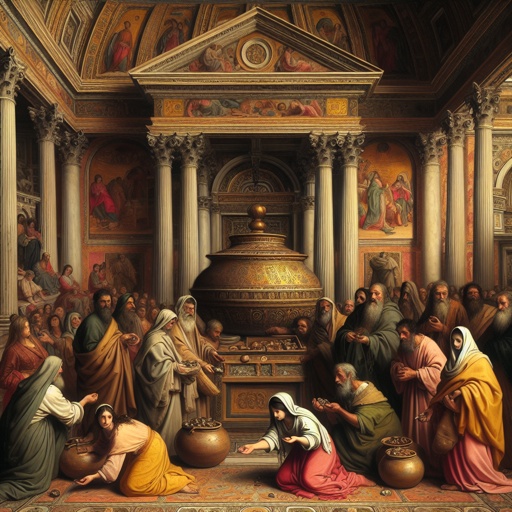
Mark 12:41 - 44

Mark 12:41 - 44

Mark 12:41 - 44

Mark 12:41 - 44

Genesis 24-44

Genesis 41:41 and make pharaoh black

Genesis 24-41

Genesis 41:41-42 focus on signet ring

Genesis 41:41 - "And Pharaoh said unto Joseph, See, I have set thee over all the land of Egypt."

Genesis 44:3 - "As soon as the morning was light, the men were sent away, they and their asses."

Genesis 44:13 - "Then they rent their clothes, and laded every man his ass, and returned to the city."

Genesis 44:25 - "And our father said, Go again, and buy us a little food."

Genesis 41:47 - "And in the seven plenteous years the earth brought forth by handfuls."

Genesis 44:19 - "My lord asked his servants, saying, Have ye a father, or a brother?"

Genesis 27:44 - "And tarry with him a few days, until thy brother's fury turn away;"

Genesis 44:12 - "And he searched, and began at the eldest, and left at the youngest: and the cup was found in Benjamin's sack."

Genesis 44:6 - "¶ And he overtook them, and he spake unto them these same words."

Genesis 36:41 - "Duke Aholibamah, duke Elah, duke Pinon,"

Genesis 41:53 - "¶ And the seven years of plenteousness, that was in the land of Egypt, were ended."

Genesis 44:14 - "¶ And Judah and his brethren came to Joseph's house; for he was yet there: and they fell before him on the ground."

Genesis 41:37 - "¶ And the thing was good in the eyes of Pharaoh, and in the eyes of all his servants."

Genesis 41:31 - "And the plenty shall not be known in the land by reason of that famine following; for it shall be very grievous."

Genesis 41:29 - "Behold, there come seven years of great plenty throughout all the land of Egypt:"

Genesis 44:5 - "Is not this it in which my lord drinketh, and whereby indeed he divineth? ye have done evil in so doing."

Genesis 41:6 - "And, behold, seven thin ears and blasted with the east wind sprung up after them."

Genesis 44:9 - "With whomsoever of thy servants it be found, both let him die, and we also will be my lord's bondmen."

Genesis 44:11 - "Then they speedily took down every man his sack to the ground, and opened every man his sack."