What does Genesis 3:1-7 mean?
"1 Now the serpent was more subtil than any beast of the field which the Lord God had made. And he said unto the woman, Yea, hath God said, Ye shall not eat of every tree of the garden? 2 And the woman said unto the serpent, We may eat of the fruit of the trees of the garden: 3 But of the fruit of the tree which is in the midst of the garden, God hath said, Ye shall not eat of it, neither shall ye touch it, lest ye die. 4 And the serpent said unto the woman, Ye shall not surely die: 5 For God doth know that in the day ye eat thereof, then your eyes shall be opened, and ye shall be as gods, knowing good and evil. 6 And when the woman saw that the tree was good for food, and that it was pleasant to the eyes, and a tree to be desired to make one wise, she took of the fruit thereof, and did eat, and gave also unto her husband with her; and he did eat. 7 And the eyes of them both were opened, and they knew that they were naked; and they sewed fig leaves together, and made themselves aprons." - Genesis 3:1-7
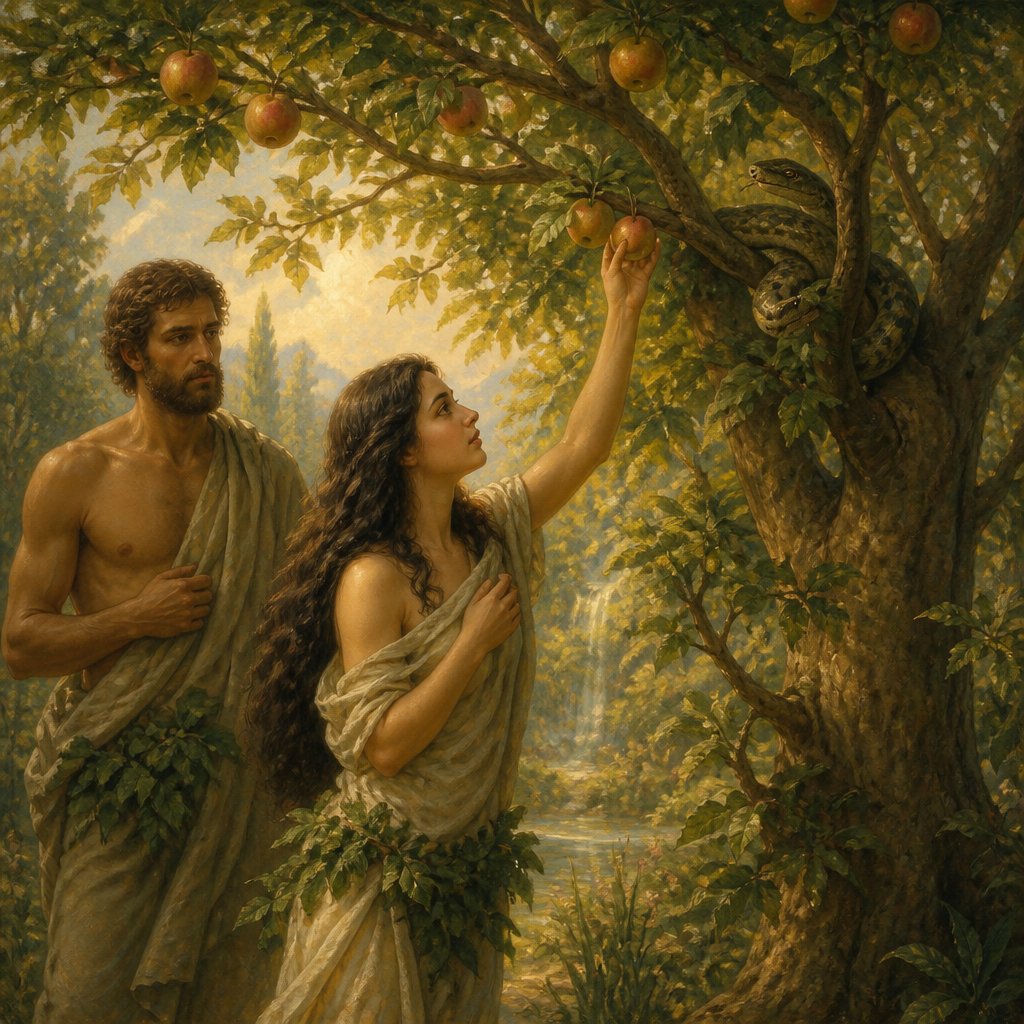
Genesis 3:1-7 from the King James Version of the Bible reads:
"Now the serpent was more subtil than any beast of the field which the Lord God had made. And he said unto the woman, Yea, hath God said, Ye shall not eat of every tree of the garden? And the woman said unto the serpent, We may eat of the fruit of the trees of the garden: But of the fruit of the tree which is in the midst of the garden, God hath said, Ye shall not eat of it, neither shall ye touch it, lest ye die. And the serpent said unto the woman, Ye shall not surely die: For God doth know that in the day ye eat thereof, then your eyes shall be opened, and ye shall be as gods, knowing good and evil. And when the woman saw that the tree was good for food, and that it was pleasant to the eyes, and a tree to be desired to make one wise, she took of the fruit thereof, and did eat, and gave also unto her husband with her; and he did eat. And the eyes of them both were opened, and they knew that they were naked; and they sewed fig leaves together, and made themselves aprons."
The passage is the well-known story of the Fall of Man, which has deep theological and symbolic significance. It illustrates the entrance of sin into the world and its consequences for humanity.
The passage begins with the introduction of the character of the serpent, described as "more subtil than any beast of the field." In Christian theology, the serpent is often identified as Satan or the devil, who seeks to tempt and deceive humanity. The serpent engages Eve in a conversation, questioning the commandment of God and subtly sowing doubt in her mind. This sets the stage for the temptation and subsequent fall of Adam and Eve.
The serpent's tactic of casting doubt on God's commandment is a theme that has been repeated throughout history. The passage serves as a warning about the dangers of succumbing to temptation and the consequences of disobedience to God's will.
The dialogue between the serpent and Eve highlights the themes of deception and disobedience. The serpent's cunning words lead Eve to question the commandment of God, and ultimately, to disobey it. This emphasizes the importance of obedience and the consequences of straying from God's will.
Eve's response to the serpent reveals her understanding of God's commandment, but also her vulnerability to temptation. Despite knowing that they should not eat from the tree, the serpent's persuasive words lead her to doubt and ultimately disobey God.
The passage also deals with the theme of the knowledge of good and evil. The serpent suggests to Eve that by eating the forbidden fruit, she and Adam will become like gods, knowing good and evil. This is a temptation to attain a level of knowledge and wisdom that is not meant for them, and it signifies the desire for autonomy and self-determination apart from God.
The act of eating the forbidden fruit represents the disobedience and rebellion of Adam and Eve against God's command. The consequences of their actions are immediate and profound. Their eyes are opened, and they become aware of their nakedness and vulnerability. This newfound awareness leads them to sew fig leaves together to cover themselves, symbolizing their shame and guilt.
The story of the Fall of Man in Genesis 3:1-7 is rich in symbolism and theological implications. It serves as a cautionary tale about the dangers of disobedience and the consequences of succumbing to temptation. It also explores themes of deception, disobedience, and the desire for autonomy apart from God. Ultimately, the passage sets the stage for the need for redemption and the hope of restoration through the promised Messiah.
Have questions about Genesis 3:1-7?
Dive deeper into this scripture with Bible Chat — an AI-powered tool for exploring God's Word through conversation. Ask questions, get context, and grow in your understanding of the Bible.
Get Our Apps


Genesis 3:1-7 Artwork

Genesis 3:1-7 - "1 Now the serpent was more crafty than any of the wild animals the Lord God had made. He said to the woman, “Did God really say, ‘You must not eat from any tree in the garden’?” 2 The woman said to the serpent, “We may eat fruit from the trees in the garden, 3 but God did say, ‘You must not eat fruit from the tree that is in the middle of the garden, and you must not touch it, or you will die.’” 4 “You will not certainly die,” the serpent said to the woman. 5 “For God knows that when you eat from it your eyes will be opened, and you will be like God, knowing good and evil.” 6 When the woman saw that the fruit of the tree was good for food and pleasing to the eye, and also desirable for gaining wisdom, she took some and ate it. She also gave some to her husband, who was with her, and he ate it. 7 Then the eyes of both of them were opened, and they realized they were naked; so they sewed fig leaves together and made coverings for themselves."

"1 Now the serpent was more crafty than any of the wild animals the Lord God had made. He said to the woman, “Did God really say, ‘You must not eat from any tree in the garden’?” 2 The woman said to the serpent, “We may eat fruit from the trees in the garden, 3 but God did say, ‘You must not eat fruit from the tree that is in the middle of the garden, and you must not touch it, or you will die.’” 4 “You will not certainly die,” the serpent said to the woman. 5 “For God knows that when you eat from it your eyes will be opened, and you will be like God, knowing good and evil.” 6 When the woman saw that the fruit of the tree was good for food and pleasing to the eye, and also desirable for gaining wisdom, she took some and ate it. She also gave some to her husband, who was with her, and he ate it. 7 Then the eyes of both of them were opened, and they realized they were naked; so they sewed fig leaves together and made coverings for themselves." - Genesis 3:1-7

Genesis 3:7

GENESIS 3:7

Genesis 3:7

Genesis 3:7

create image of Genesis 3:7

Genesis 3:16

Create a picture of Genesis 1:3

Genesis 1:2 3

Genesis 21:1-3

Genesis 27:1-3

Genesis 12:1-3

Genesis 21:1-3

Genesis 7:3 - "Of fowls also of the air by sevens, the male and the female; to keep seed alive upon the face of all the earth."

Genesis 3:1-6 the scene where the serpent tempt adam and eve. create this like realistic person. make it like engaging animation.

Genesis 1:3 - "And God said, Let there be light: and there was light."

Genesis 3:7 - "And the eyes of them both were opened, and they knew that they were naked; and they sewed fig leaves together, and made themselves aprons."

Genesis 3:1 - "Now the serpent was more subtil than any beast of the field which the LORD God had made. And he said unto the woman, Yea, hath God said, Ye shall not eat of every tree of the garden?"

1 Chronicles 3:7 - "And Nogah, and Nepheg, and Japhia,"
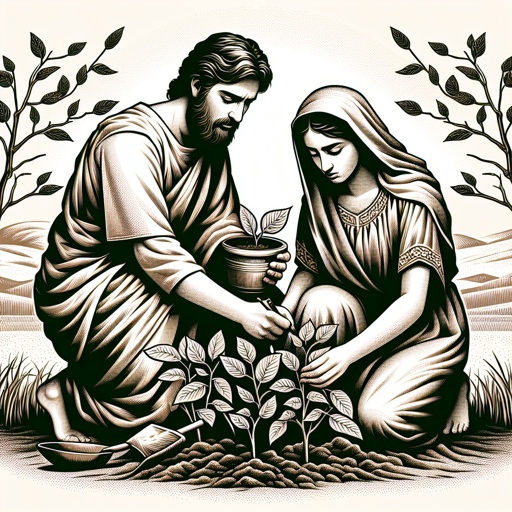
create image of Genesis 3:7, Show them sowing fig leaves together

"And God said, Let there be light: and there was light." - Genesis 1:3

"And God said, Let there be light: and there was light." - Genesis 1:3

3 John 1:7 - "Because that for his name's sake they went forth, taking nothing of the Gentiles."

"And Nogah, and Nepheg, and Japhia," - 1 Chronicles 3:7

Genesis 1:7 - "And God made the firmament, and divided the waters which were under the firmament from the waters which were above the firmament: and it was so."

Genesis 7:1 - "And the LORD said unto Noah, Come thou and all thy house into the ark; for thee have I seen righteous before me in this generation."

1 Kings 7:3 - "And it was covered with cedar above upon the beams, that lay on forty five pillars, fifteen in a row."

1 Corinthians 7:3 - "Let the husband render unto the wife due benevolence: and likewise also the wife unto the husband."

1 Corinthians 3:7 - "So then neither is he that planteth any thing, neither he that watereth; but God that giveth the increase."