What does Genesis 39:6 mean?
"And he left all that he had in Joseph's hand; and he knew not ought he had, save the bread which he did eat. And Joseph was a goodly person, and well favoured." - Genesis 39:6
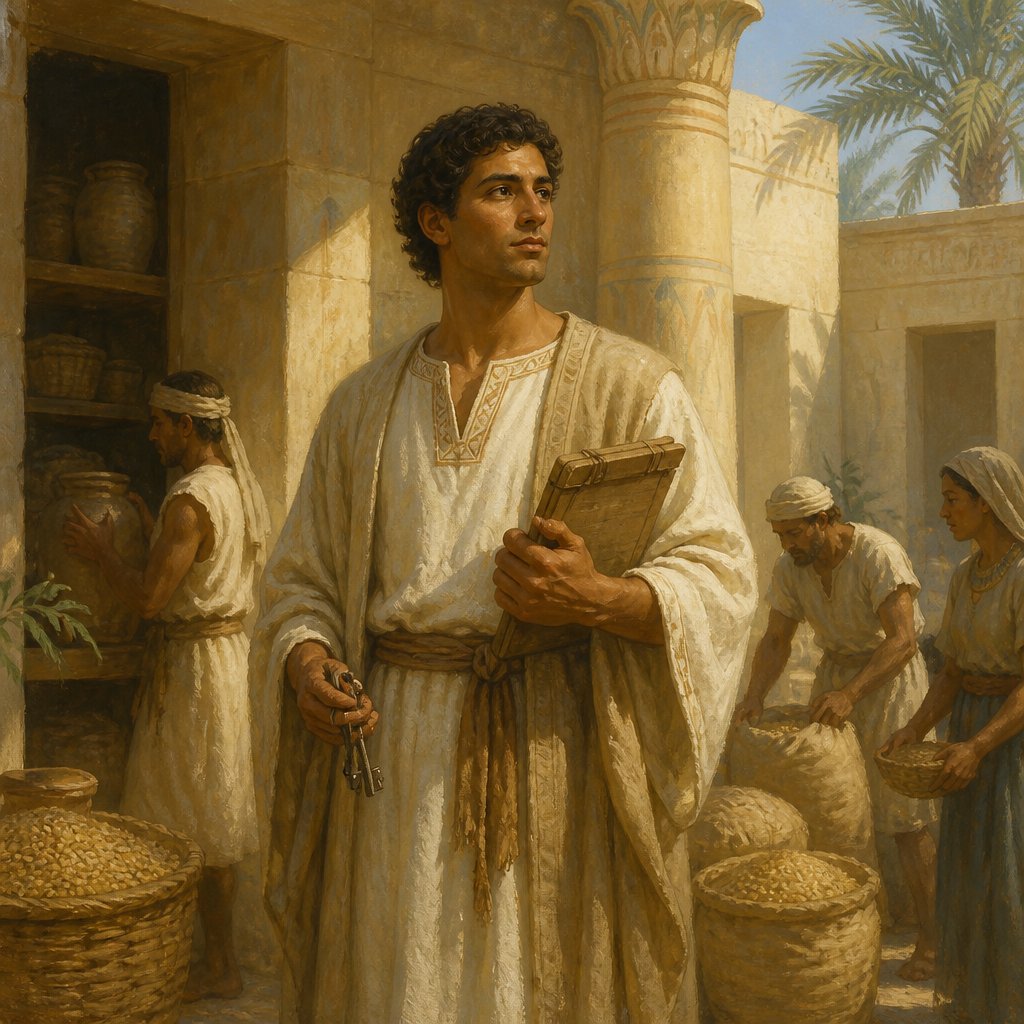
Genesis 39:6 (KJV) - "And he left all that he had in Joseph's hand; and he knew not ought he had, save the bread which he did eat. And Joseph was a goodly person, and well favoured."
This verse is part of the story of Joseph, who was the eleventh son of Jacob and the first son of his beloved wife, Rachel. Joseph's story is one of the most famous and compelling narratives in the Bible, and it is filled with themes of betrayal, forgiveness, and God's providence.
In this particular verse, Joseph has been sold into slavery by his jealous brothers and has been taken to Egypt, where he is bought by Potiphar, an officer of Pharaoh and captain of the guard. Despite the difficult circumstances he finds himself in, Joseph's character and integrity shine through. The verse begins with the statement, "And he left all that he had in Joseph's hand," which tells us that Potiphar trusted Joseph to such an extent that he was willing to entrust all of his possessions to him. This level of trust suggests that Joseph's conduct and work ethic were exceptional, even in the face of adversity.
The verse goes on to say, "and he knew not ought he had, save the bread which he did eat." This shows that Potiphar had complete confidence in Joseph and did not concern himself with anything other than the food he ate, trusting Joseph with everything else. This trust and responsibility placed upon Joseph underscore his character and reliability.
The verse concludes by describing Joseph as "a goodly person, and well favoured." This highlights Joseph's physical appearance, but it also means that he was not only good-looking but also his character was commendable. His demeanor and behavior earned him favor in the eyes of others, even in the midst of his enslavement.
This verse is significant in that it sets the stage for the larger story of Joseph's rise to power and influence in Egypt. It illustrates Joseph's faithfulness and integrity, which ultimately lead to his promotion and success. Furthermore, it serves as a reminder of God's hand in Joseph's life, orchestrating events and using Joseph's circumstances for a greater purpose.
One of the key themes in this verse is the idea of faithfulness and integrity in difficult circumstances. Despite being sold into slavery and facing immense hardship, Joseph remains faithful to his responsibilities and maintains his integrity. This theme resonates throughout the entire narrative of Joseph's life, as he consistently demonstrates moral uprightness and devotion to God, even when faced with temptation and betrayal.
Another theme in this verse is the idea of God's providence and sovereignty. Although Joseph's situation seems dire, God is working behind the scenes to bring about a greater purpose. This foreshadows the eventual fulfillment of God's plan for Joseph to rise to a position of power and influence in Egypt, where he will ultimately save his family and numerous others from famine.
The symbolism in this verse centers around Joseph as a model of righteousness and trustworthiness. He becomes a symbol of hope and resilience in the face of adversity, as well as an example of how God can work through the most challenging circumstances to bring about his purposes. Joseph's character and conduct serve as a representation of God's faithfulness and grace, even in the midst of suffering.
In conclusion, Genesis 39:6 is a powerful and significant verse in the larger narrative of Joseph's life. It highlights themes of faithfulness, integrity, and God's providential care, and it serves as a poignant reminder of how God can use even the most difficult circumstances for his greater purposes. Joseph's example continues to inspire and challenge readers to remain steadfast in their faith and character, trusting in God's sovereignty and goodness.
Have questions about Genesis 39:6?
Dive deeper into this scripture with Bible Chat — an AI-powered tool for exploring God's Word through conversation. Ask questions, get context, and grow in your understanding of the Bible.
Get Our Apps


Genesis 39:6 Artwork

Genesis 39:6-12

Genesis 39:6 - "And he left all that he had in Joseph's hand; and he knew not ought he had, save the bread which he did eat. And Joseph was a goodly person, and well favoured."
"And he left all that he had in Joseph's hand; and he knew not ought he had, save the bread which he did eat. And Joseph was a goodly person, and well favoured." - Genesis 39:6

Genesis 24-39

Genesis 39:12

Genesis 24:39 - "And I said unto my master, Peradventure the woman will not follow me."

Genesis 39:2 - "And the LORD was with Joseph, and he was a prosperous man; and he was in the house of his master the Egyptian."

Genesis 30:39 - "And the flocks conceived before the rods, and brought forth cattle ringstraked, speckled, and spotted."

Genesis 39:21 - "¶ But the LORD was with Joseph, and shewed him mercy, and gave him favour in the sight of the keeper of the prison."

Genesis 39:16 - "And she laid up his garment by her, until his lord came home."

Genesis 39:3 - "And his master saw that the LORD was with him, and that the LORD made all that he did to prosper in his hand."

Genesis 39:22 - "And the keeper of the prison committed to Joseph's hand all the prisoners that were in the prison; and whatsoever they did there, he was the doer of it."

Genesis 39:11 - "And it came to pass about this time, that Joseph went into the house to do his business; and there was none of the men of the house there within."

Genesis 39:10 - "And it came to pass, as she spake to Joseph day by day, that he hearkened not unto her, to lie by her, or to be with her."

Genesis 39:13 - "And it came to pass, when she saw that he had left his garment in her hand, and was fled forth,"

Job 39:6 - "Whose house I have made the wilderness, and the barren land his dwellings."

Genesis 39:18 - "And it came to pass, as I lifted up my voice and cried, that he left his garment with me, and fled out."

Genesis 39:20 - "And Joseph's master took him, and put him into the prison, a place where the king's prisoners were bound: and he was there in the prison."

Mark 6:39 - "And he commanded them to make all sit down by companies upon the green grass."

Exodus 39:6 - "¶ And they wrought onyx stones inclosed in ouches of gold, graven, as signets are graven, with the names of the children of Israel."

Genesis 41:39 - "And Pharaoh said unto Joseph, Forasmuch as God hath shewed thee all this, there is none so discreet and wise as thou art:"

Genesis 39:7 - "¶ And it came to pass after these things, that his master's wife cast her eyes upon Joseph; and she said, Lie with me."

Genesis 39:23 - "The keeper of the prison looked not to any thing that was under his hand; because the LORD was with him, and that which he did, the LORD made it to prosper."

Genesis 27:39 - "And Isaac his father answered and said unto him, Behold, thy dwelling shall be the fatness of the earth, and of the dew of heaven from above;"

Luke 6:39 - "And he spake a parable unto them, Can the blind lead the blind? shall they not both fall into the ditch?"

Genesis 39:12 - "And she caught him by his garment, saying, Lie with me: and he left his garment in her hand, and fled, and got him out."

Ezekiel 39:6 - "And I will send a fire on Magog, and among them that dwell carelessly in the isles: and they shall know that I am the LORD."

1 Chronicles 6:39 - "And his brother Asaph, who stood on his right hand, even Asaph the son of Berachiah, the son of Shimea,"

Mark 6:39 – "Then Jesus directed them to have all the people sit down in groups on the green grass."

Genesis 39:15 - "And it came to pass, when he heard that I lifted up my voice and cried, that he left his garment with me, and fled, and got him out."