What does Genesis 38:8 mean?
"And Judah said unto Onan, Go in unto thy brother's wife, and marry her, and raise up seed to thy brother." - Genesis 38:8
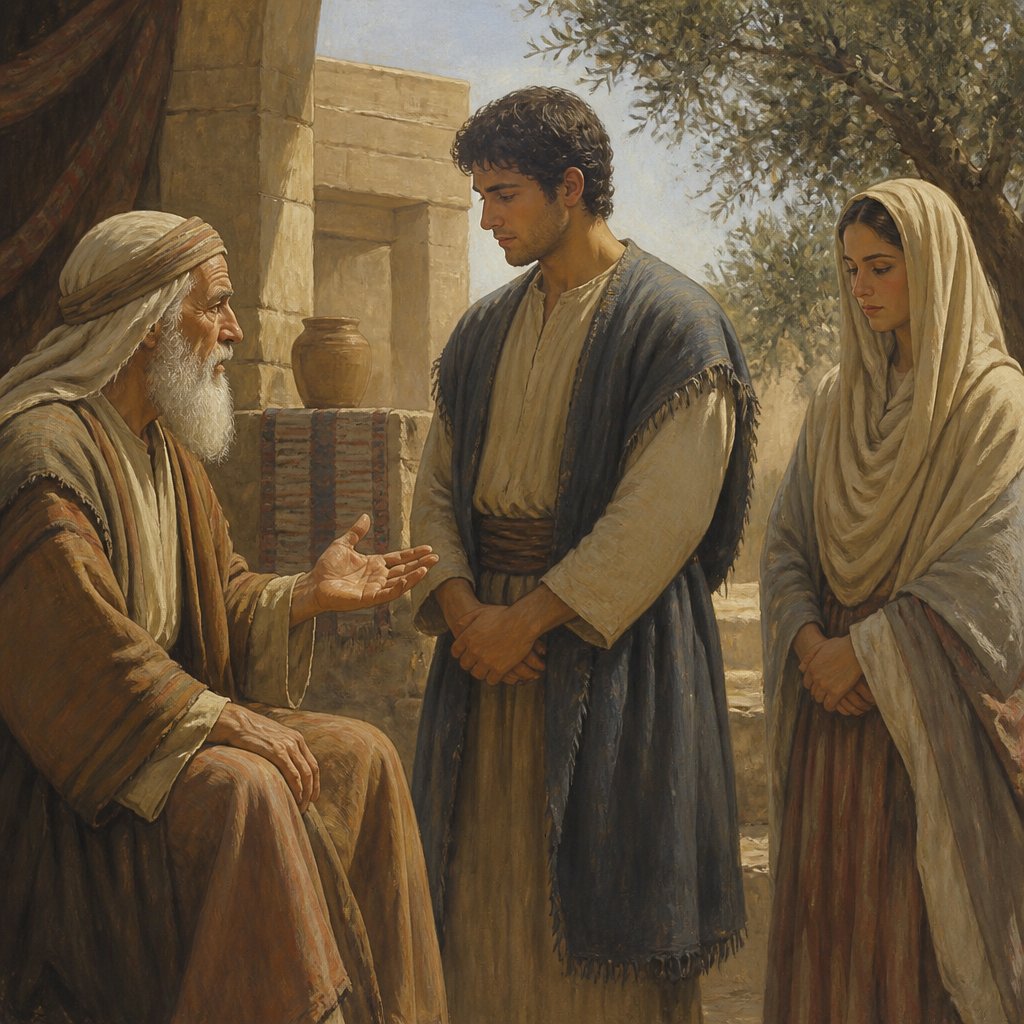
Genesis 38:8 (KJV) - "And Judah said unto Onan, Go in unto thy brother's wife, and marry her, and raise up seed to thy brother."
This verse comes from the book of Genesis, which is the first book of the Bible. It is a part of the story of Judah and Tamar, which is a complex and morally ambiguous tale with several important themes and lessons woven throughout.
The story of Judah and Tamar takes place during a significant period in biblical history. Judah was the son of Jacob and Leah, making him a key figure in the lineage of Jesus Christ. The events of this story occur at a time when the customs and laws regarding marriage and inheritance were different from what they are today. In this verse, Judah is instructing his son Onan to fulfill his duty as a brother-in-law by marrying his deceased brother's wife and raising up children in his brother's name.
One of the primary themes in this verse is the concept of levirate marriage, which was a custom in ancient Israel. According to this custom, if a man died without leaving a male heir, it was the duty of his brother to marry the widow and produce a son who would inherit the deceased man's property. This practice was seen as a way to preserve the family line and inheritance, as well as provide for the widow in a society where women had few rights and little means of support.
Judah's command to Onan reflects the importance of familial duty and the preservation of lineage. It also illustrates the practical and legal concerns of inheritance and property rights in ancient Israel. It is important to note that from a modern perspective, levirate marriage may seem archaic and even oppressive to the widow, but in its historical context, it served a specific purpose within the social and legal framework of the time.
The story of Judah and Tamar is also a reflection of the complexity of human relationships and the moral dilemmas that can arise. After Onan goes in unto Tamar but refuses to fulfill his duty to his deceased brother, he is punished by God and ultimately dies, leaving Tamar without a child to carry on her husband's name. This leads to a series of events where Tamar deceives Judah and becomes pregnant by him, highlighting the themes of deception and betrayal.
From a symbolic perspective, this verse can be seen as a representation of the interconnectedness of family and the obligations that come with it. It also serves as a reminder of the consequences of flouting tradition and neglecting one's responsibilities. The story of Judah and Tamar is a cautionary tale about the importance of fulfilling one's obligations and the moral repercussions of failing to do so.
In conclusion, Genesis 38:8 is a verse that reflects the historical context and customs of ancient Israel, as well as the moral and ethical complexities of human relationships. It is a part of a larger narrative that explores themes of duty, inheritance, betrayal, and deception. Through its portrayal of levirate marriage and the consequences of neglecting familial obligations, it offers valuable insights into the values and dynamics of ancient Israelite society.
Have questions about Genesis 38:8?
Dive deeper into this scripture with Bible Chat — an AI-powered tool for exploring God's Word through conversation. Ask questions, get context, and grow in your understanding of the Bible.
Get Our Apps


Genesis 38:8 Artwork

Genesis 38:8 - "And Judah said unto Onan, Go in unto thy brother's wife, and marry her, and raise up seed to thy brother."
"And Judah said unto Onan, Go in unto thy brother's wife, and marry her, and raise up seed to thy brother." - Genesis 38:8

Genesis 19-38

Genesis 24-38

Psalm 38:8

romans 8:38

Romans 8:38-39

Genesis 38:6 - "And Judah took a wife for Er his firstborn, whose name was Tamar."

Genesis 38:7 - "And Er, Judah's firstborn, was wicked in the sight of the LORD; and the LORD slew him."

Genesis 38:3 - "And she conceived, and bare a son; and he called his name Er."

Genesis 36:38 - "And Saul died, and Baal-hanan the son of Achbor reigned in his stead."

Genesis 38:27 - "¶ And it came to pass in the time of her travail, that, behold, twins were in her womb."

Genesis 38:4 - "And she conceived again, and bare a son; and she called his name Onan."

Genesis 38:10 - "And the thing which he did displeased the LORD: wherefore he slew him also."

Genesis 38:18 - "And he said, What pledge shall I give thee? And she said, Thy signet, and thy bracelets, and thy staff that is in thine hand. And he gave it her, and came in unto her, and she conceived by him."

Jeremiah 38:8 - "Ebed-melech went forth out of the king's house, and spake to the king, saying,"

Genesis 38:21 - "Then he asked the men of that place, saying, Where is the harlot, that was openly by the way side? And they said, There was no harlot in this place."

Genesis 41:38 - "And Pharaoh said unto his servants, Can we find such a one as this is, a man in whom the Spirit of God is?"

Genesis 38:19 - "And she arose, and went away, and laid by her vail from her, and put on the garments of her widowhood."

Genesis 38:22 - "And he returned to Judah, and said, I cannot find her; and also the men of the place said, that there was no harlot in this place."

Genesis 38:2 - "And Judah saw there a daughter of a certain Canaanite, whose name was Shuah; and he took her, and went in unto her."

Genesis 38:15 - "When Judah saw her, he thought her to be an harlot; because she had covered her face."

Genesis 24:38 - "But thou shalt go unto my father's house, and to my kindred, and take a wife unto my son."

Genesis 38:1 - "And it came to pass at that time, that Judah went down from his brethren, and turned in to a certain Adullamite, whose name was Hirah."

Psalms 38:8 - "I am feeble and sore broken: I have roared by reason of the disquietness of my heart."

Genesis 38:30 - "And afterward came out his brother, that had the scarlet thread upon his hand: and his name was called Zarah."

Genesis 38:20 - "And Judah sent the kid by the hand of his friend the Adullamite, to receive his pledge from the woman's hand: but he found her not."

Job 38:8 - "Or who shut up the sea with doors, when it brake forth, as if it had issued out of the womb?"

Genesis 38:5 - "And she yet again conceived, and bare a son; and called his name Shelah: and he was at Chezib, when she bare him."

Genesis 19:38 - "And the younger, she also bare a son, and called his name Ben-ammi: the same is the father of the children of Ammon unto this day."