What does Genesis 34:26 mean?
"And they slew Hamor and Shechem his son with the edge of the sword, and took Dinah out of Shechem's house, and went out." - Genesis 34:26
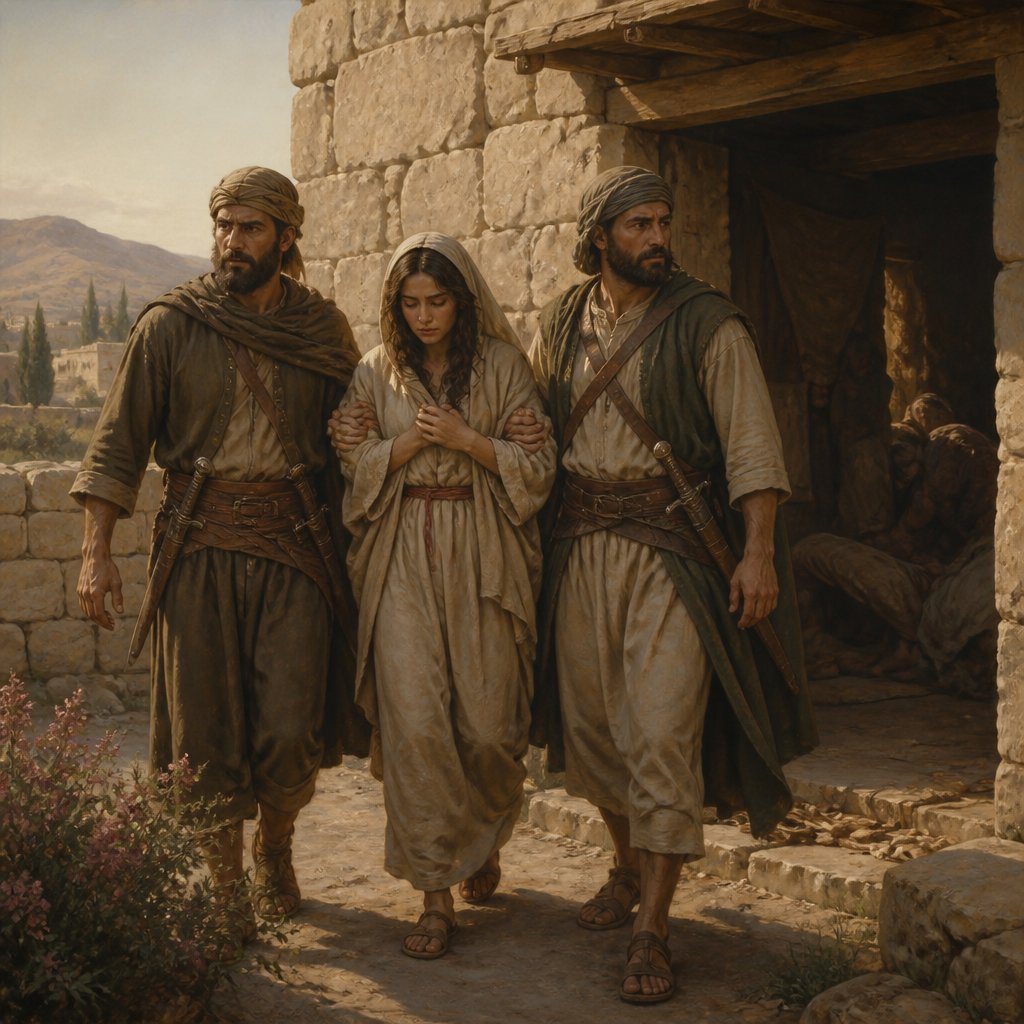
Genesis 34:26 (KJV) reads, "And they slew Hamor and Shechem his son with the edge of the sword, and took Dinah out of Shechem's house, and went out."
This verse is part of the larger narrative in Genesis 34, which tells the story of Dinah, the daughter of Jacob, and the subsequent actions taken by her brothers, Simeon and Levi. The verse itself marks the climax of the narrative, where Simeon and Levi exact their revenge on Shechem and his father Hamor for the violation of their sister Dinah.
The context of this verse is important for understanding its meaning and implications. Earlier in the chapter, it is revealed that Shechem, a Hivite prince, has taken an interest in and subsequently violated Dinah, causing her brothers to be filled with anger and a desire for retribution. Shechem then seeks to marry Dinah, and his father Hamor seeks to negotiate a peaceful solution with Jacob and his sons. However, Simeon and Levi, in their anger and desire for revenge, deceive and kill the men of the city, including Shechem and Hamor, in a violent act of vengeance.
The themes present in this verse and the surrounding narrative include justice, vengeance, and the consequences of unchecked anger and violence. The actions of Simeon and Levi can be seen as a portrayal of the destructive nature of anger and the ethical complexities of seeking retribution. While their desire to protect their sister and seek justice for her violation is understandable, the violent and deceitful means by which they achieve it raises moral questions about the appropriate response to wrongdoing.
The use of the "edge of the sword" in the killing of Hamor and Shechem is a symbolic representation of the violent and destructive nature of their actions. The sword is a recurring symbol throughout the Bible, often representing the use of force, judgment, and power. In this case, it symbolizes the harsh and unforgiving nature of Simeon and Levi's retribution.
Additionally, the act of taking Dinah out of Shechem's house can be seen as a representation of the rescue and restoration of her honor and dignity. By removing her from the household of her violator, Simeon and Levi seek to reclaim her honor and protect her from further harm. This act reflects the theme of protecting the vulnerable and seeking to right the wrongs done to them.
From a broader theological perspective, this verse can also be interpreted as a cautionary tale about the dangers of unchecked anger and the importance of seeking justice through ethical and lawful means. The consequences of Simeon and Levi's actions result in a loss of trust and reputation for their family, as well as a condemnation from their father Jacob. This serves as a warning about the destructive nature of vengeance and the importance of seeking justice in accordance with moral and ethical principles.
In conclusion, Genesis 34:26, within the context of the larger narrative of Dinah and her brothers, serves as a powerful portrayal of the complexities of justice, vengeance, and the consequences of unchecked anger. The themes of protection and restoration, as well as the symbolism of the sword, provide a rich and multifaceted understanding of this verse within the biblical text. This verse challenges readers to grapple with the ethical and moral implications of seeking retribution and calls us to consider the importance of seeking justice in a manner that is consistent with moral principles and ethical conduct.
Have questions about Genesis 34:26?
Dive deeper into this scripture with Bible Chat — an AI-powered tool for exploring God's Word through conversation. Ask questions, get context, and grow in your understanding of the Bible.
Get Our Apps


Genesis 34:26 Artwork

Genesis 34:26 - "And they slew Hamor and Shechem his son with the edge of the sword, and took Dinah out of Shechem's house, and went out."
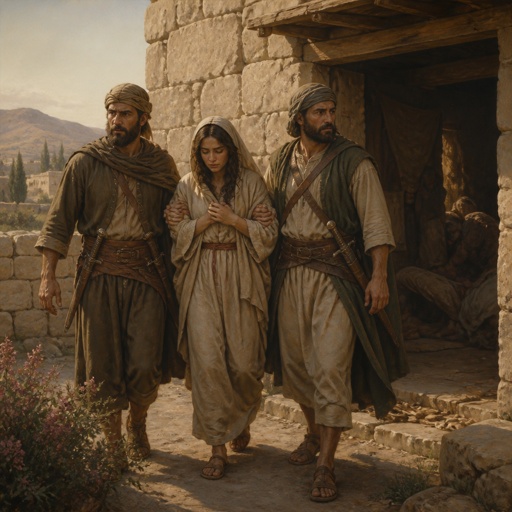
"And they slew Hamor and Shechem his son with the edge of the sword, and took Dinah out of Shechem's house, and went out." - Genesis 34:26

Genesis 26:34 - "¶ And Esau was forty years old when he took to wife Judith the daughter of Beeri the Hittite, and Bashemath the daughter of Elon the Hittite:"

Genesis 21-34

Genesis 19-34

Genesis 24-34
"¶ And Esau was forty years old when he took to wife Judith the daughter of Beeri the Hittite, and Bashemath the daughter of Elon the Hittite:" - Genesis 26:34

Numbers 34:26 - "And the prince of the tribe of the children of Issachar, Paltiel the son of Azzan."

Job 34:26 - "He striketh them as wicked men in the open sight of others;"

Genesis 1:26

Genesis 1:26

Genesis 1:26

Genesis 21:34 - "And Abraham sojourned in the Philistines' land many days."

Genesis 1:26

Exodus 26:34 - "And thou shalt put the mercy seat upon the ark of the testimony in the most holy place."

Genesis 34:18 - "And their words pleased Hamor, and Shechem Hamor's son."

Genesis 24:34 - "And he said, I am Abraham's servant."

Numbers 26:34 - "These are the families of Manasseh, and those that were numbered of them, fifty and two thousand and seven hundred."

Genesis 34:31 - "And they said, Should he deal with our sister as with an harlot?"

Genesis 36:34 - "And Jobab died, and Husham of the land of Temani reigned in his stead."

Genesis 34:28 - "They took their sheep, and their oxen, and their asses, and that which was in the city, and that which was in the field,"

Genesis 24-26

Genesis 26:35

Genesis 50:26

Genesis 26:25

Genesis 21-26

Genesis 25-26

Genesis 50:26

Genesis 19-26

Genesis 26:29