What does Genesis 32:23 mean?
"And he took them, and sent them over the brook, and sent over that he had." - Genesis 32:23
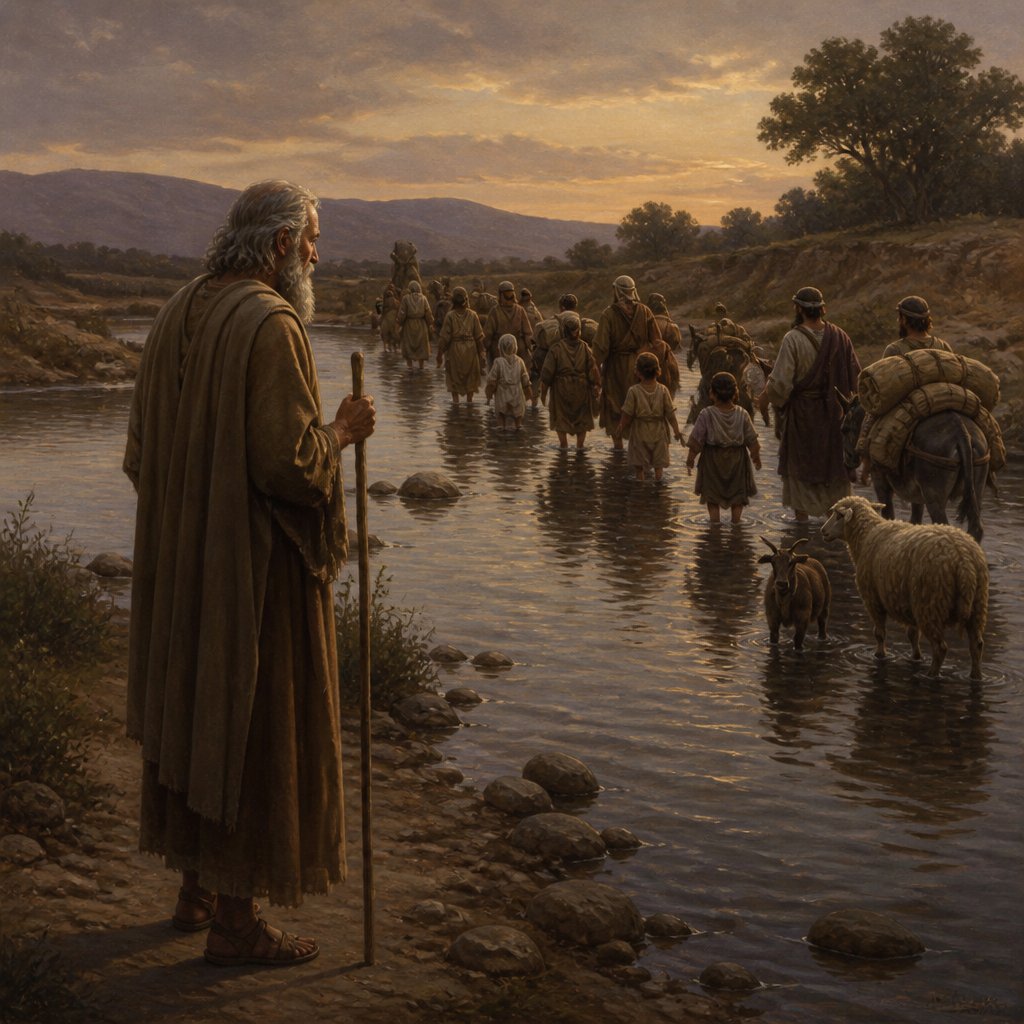
Genesis 32:23 (KJV) says, "And he took them, and sent them over the brook, and sent over that he had." This verse is part of the larger story of Jacob's encounter with God at the Jabbok River, and it holds significant themes of struggle, transformation, and reconciliation.
In this verse, Jacob is in the process of preparing to meet his estranged brother, Esau. Jacob had previously deceived his brother and stolen his birthright, and he is understandably anxious about the impending confrontation. As part of his preparations, Jacob sends his family and possessions across the Jabbok River, and he remains alone on the other side.
The act of sending his family and possessions across the river can be seen as Jacob's attempt to protect his loved ones from any potential danger that may arise from a confrontation with Esau. It also symbolizes a turning point for Jacob, as he prepares to face the consequences of his past actions and seek reconciliation with his brother.
The Jabbok River itself holds symbolic significance in this story. In Hebrew, the word Jabbok means "emptying out," and the river serves as a metaphor for Jacob's own inner turmoil and struggle. It represents the emotional and spiritual journey that Jacob must embark upon in order to find peace and reconciliation with his past.
As Jacob sends his family and possessions across the river, he is left alone to grapple with his own inner demons. This is a pivotal moment in Jacob's life, as he is forced to confront the consequences of his actions and seek reconciliation with his past. The act of "sending over that he had" can be seen as a symbolic gesture of surrender, as Jacob relinquishes control and begins to seek God's guidance and mercy.
This verse also highlights the theme of transformation. In the moments leading up to this encounter, Jacob wrestles with a mysterious figure, who is commonly interpreted as an angel of God. Through this struggle, Jacob undergoes a profound transformation, both physically and spiritually. He is given a new name, Israel, which means "he struggles with God," and he emerges from the encounter forever changed.
The act of sending his possessions across the river can also be seen as a symbolic shedding of his old identity and a readiness to embrace his new identity as Israel. This transformation signifies Jacob's willingness to let go of his deceitful past and embrace a new way of living and relating to God and those around him.
In a broader context, this verse speaks to the universal human struggle for reconciliation and redemption. Jacob's story resonates with many people, as we all grapple with our own past mistakes and seek to make amends with those we have wronged. The act of sending his possessions across the river can be seen as a call for each of us to surrender our burdens and seek reconciliation with God and others.
In conclusion, Genesis 32:23 (KJV) is a powerful verse that speaks to the themes of struggle, transformation, and reconciliation. It captures a pivotal moment in Jacob's life and serves as a reminder of the universal human journey towards seeking forgiveness and redemption. Through Jacob's story, we are encouraged to confront our past, surrender our burdens, and seek reconciliation with God and those around us.
Have questions about Genesis 32:23?
Dive deeper into this scripture with Bible Chat — an AI-powered tool for exploring God's Word through conversation. Ask questions, get context, and grow in your understanding of the Bible.
Get Our Apps


Genesis 32:23 Artwork

Genesis 32:23 - "And he took them, and sent them over the brook, and sent over that he had."
"And he took them, and sent them over the brook, and sent over that he had." - Genesis 32:23

Genesis 19-32

Genesis 27:32

Genesis 25-32

Genesis 18-32

Genesis 24-32
Genesis 21-32

Matthew 23:32 - "Fill ye up then the measure of your fathers."

2 Samuel 23:32 - "Eliahba the Shaalbonite, of the sons of Jashen, Jonathan,"

Exodus 23:32 - "Thou shalt make no covenant with them, nor with their gods."

Proverbs 23:32 - "At the last it biteth like a serpent, and stingeth like an adder."

Acts 23:32 - "On the morrow they left the horsemen to go with him, and returned to the castle:"

Genesis 49:32 - "The purchase of the field and of the cave that is therein was from the children of Heth."

Luke 23:32 - "And there were also two other, malefactors, led with him to be put to death."

Genesis 32:1 - "And Jacob went on his way, and the angels of God met him."

Genesis 32:32 - "Therefore the children of Israel eat not of the sinew which shrank, which is upon the hollow of the thigh, unto this day: because he touched the hollow of Jacob's thigh in the sinew that shrank."

Deuteronomy 32:23 - "I will heap mischiefs upon them; I will spend mine arrows upon them."

Genesis 23-19

Genesis 23-3

Genesis 23-13

Genesis 23-17

Genesis 23:11

Genesis 23-9

Genesis 23:2

Genesis 23-18

Genesis 23-5

Genesis 23-12

Genesis 36:32 - "And Bela the son of Beor reigned in Edom: and the name of his city was Dinhabah."

Genesis 32:24 - "¶ And Jacob was left alone; and there wrestled a man with him until the breaking of the day."